7 Best Skin Care Experts Revolutionizing Beauty in 2026
Discover the 7 types of skin care experts revolutionizing beauty in 2026, from board-certified dermatologists to regenerative treatment specialists.


After two years, scars rarely fade on their own — professional treatments like microneedling, laser resurfacing, and Morpheus8 can significantly improve even old scars with the right approach.
Morpheus8 RF microneedling combines radiofrequency energy with microneedling to penetrate deeper than standard microneedling, making it especially effective for deep acne and surgical scars in 1-3 sessions.
Dermal fillers provide immediate results for pitted acne scars by lifting depressed areas to match surrounding skin, lasting 6 months to over a year and working well combined with other treatments.
Different scar types require different treatments: atrophic scars respond to fillers and laser, hypertrophic scars benefit from topical silicone treatments, and discolored scars improve with BBL light therapy.
Most non-surgical scar treatments require minimal downtime (1-5 days) and multiple sessions spaced over weeks, making consistency with your treatment schedule critical for achieving visible results.
Wearing SPF 30+ daily on treated skin, following post-care instructions carefully, and staying hydrated are essential to support healing and maximize the effectiveness of professional scar treatments.
Scars can affect how you feel about your skin — and your confidence. Whether it’s old acne scars, surgical marks, or stretch marks, you don’t have to live with them forever. Today’s medical aesthetics industry offers powerful, non-surgical scar treatment options that really work. The best part? Most are quick, comfortable, and require little to no downtime.
This guide walks you through 11 of the most effective scar treatments available in 2026. You’ll learn how each one works, what to expect, and which type of scar it targets best. If you’ve been wondering where to start, you’re in the right place.
A quick reminder: scars are permanent, but they can significantly improve with the right treatment. After about two years, scars rarely fade on their own — so professional treatment makes a real difference. Let’s dive in.

Before choosing a scar treatment, it helps to know what type of scar you have. Different scars respond to different methods. Here are the most common types treated at med spas:
Knowing your scar type helps your provider recommend the right plan. A consultation at Enhanced Aesthetics & Wellness in Pahrump, Nevada can help you figure out exactly what will work best for your skin.
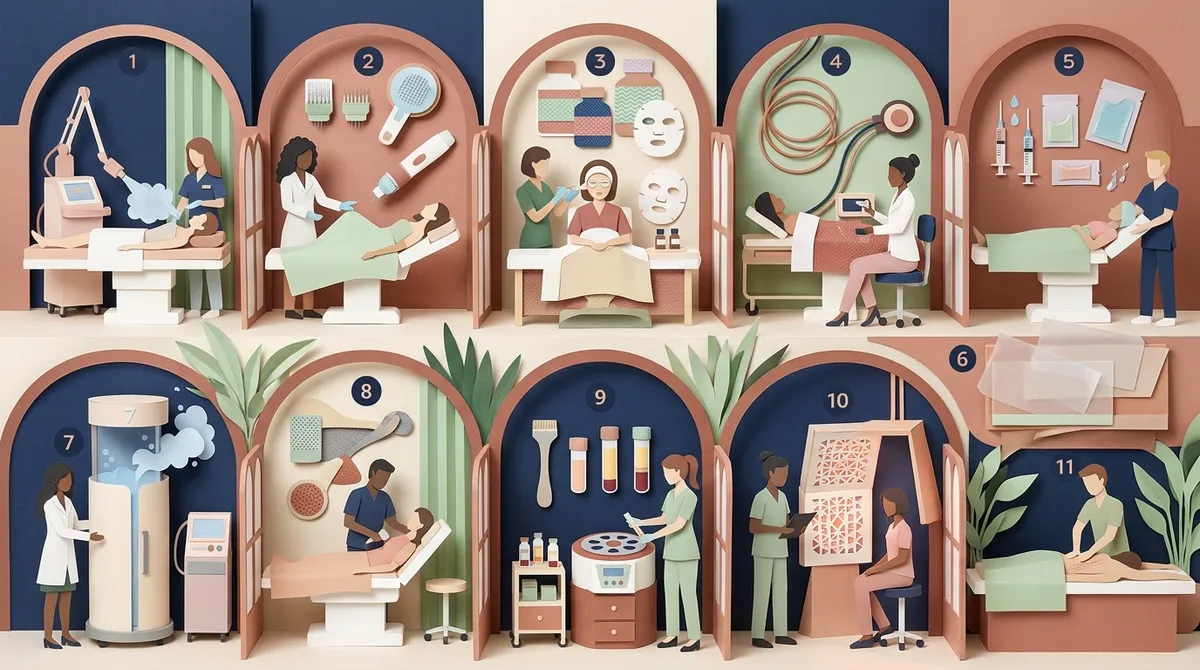
SkinPen Microneedling is one of the most popular scar treatments today. It uses tiny, controlled needles to create micro-channels in the skin. This triggers your body’s natural healing response — producing fresh collagen and elastin to replace damaged tissue.
It works well for acne scars, surgical scars, and stretch marks. Most people need a series of sessions to see the best results. Many clients notice smoother, softer skin after just a few treatments. Learn more about microneedling for acne scars and how it transforms skin.
Morpheus8 takes microneedling up a notch. It combines radiofrequency (RF) energy with microneedling to go deeper into the skin. This combination drives collagen production and remodels scar tissue more aggressively than standard microneedling alone.
Morpheus8 is excellent for deeper acne scars, surgical scars, and skin laxity. Treatments usually take 30 to 60 minutes. It’s a favorite among clients who want impressive results without surgery. Check out Morpheus8 microneedling benefits for acne scars to see how it compares.
Laser resurfacing uses heat or light energy to target scar tissue. It removes the damaged outer layer of skin while stimulating new collagen deep within. The result is smoother, more even skin over time. This is one of the most clinically proven scar treatments available.
Options include ablative and non-ablative lasers — each suited to different scar types and depths. A session typically takes 30 to 90 minutes. The Deep Laser Peel is ideal for more significant scarring. You can also explore how laser resurfacing creates younger, smoother skin.
The CoolPeel® Treatment delivers the power of a CO2 laser with less downtime. It targets the skin’s surface to reduce scars, texture irregularities, and pigmentation issues. CoolPeel is a great option for people with busy schedules who still want real results.
It’s especially effective for mild to moderate scar texture. Many patients return to normal activities within a few days. It’s a smart starting point if you’re new to laser scar treatment.
The Nanolaser Peel gently removes a very thin layer of skin. This promotes rapid cell turnover and can improve the appearance of surface-level scars. It’s one of the gentlest laser options available.
Sessions are quick — usually under 30 minutes. Minimal downtime makes this a great choice for those with mild scarring. It’s also a good maintenance treatment after more intensive scar therapy.
The Microlaser Peel goes a bit deeper than the nano peel. It targets moderate scarring and uneven texture by removing a precise, thin layer of skin. This encourages new skin growth that is smoother and clearer.
Most patients experience some redness for a few days after treatment. Results become visible as the skin heals over 1 to 2 weeks. It’s a wonderful middle-ground option between gentle peels and intensive laser treatments.
Dermal Fillers are a smart solution for atrophic or pitted scars, especially acne scars. A hyaluronic acid or collagen-based filler is injected directly into the depressed area. This lifts the scar to match the surrounding skin, creating a smoother appearance instantly.
Results are immediate and can last anywhere from 6 months to over a year. Fillers don’t permanently remove scars, but they’re an excellent quick fix. They pair beautifully with other scar treatments for a comprehensive approach. Learn more about how dermal fillers create smooth, even skin.
PRP Therapy (Platelet-Rich Plasma) uses your own blood’s healing power. A small blood draw is processed to concentrate growth factors. This platelet-rich solution is then applied or injected into scarred areas to speed up healing and stimulate tissue regeneration.
PRP is a natural approach to scar treatment with minimal risk. It works great when combined with microneedling or laser treatments. It’s a favorite for clients who prefer biologically-based options. Explore more about PRP injection therapy for skin rejuvenation.
Chemical peels use carefully selected acids to exfoliate the outer skin layers. This removes damaged cells and encourages fresh, new skin to grow in their place. Peels can help fade post-inflammatory hyperpigmentation (the dark marks left after acne) and improve scar texture.
The ZO 3-Step Peel is a medical-grade option that delivers visible results. Lighter peels may need multiple sessions. Deeper peels can show more dramatic improvement in fewer visits. Peels are often used as part of a broader scar treatment plan.
The Sciton Joule BBL Treatment uses broad-band light to target discoloration and redness in scars. It’s especially useful for scars with noticeable pigmentation differences from the surrounding skin. BBL doesn’t resurface the skin but corrects the color of existing scars.
Sessions are fast — usually 20 to 30 minutes. Results improve gradually with each treatment. It’s ideal for red or purple surgical scars and post-inflammatory marks from acne. Visit Sciton Joule BBL for skin restoration to learn more.
Topical treatments are often the first step in scar management. Silicone gel sheets, corticosteroid creams, and retinoic acid can soften, flatten, and fade scars over time. They work best on newer, raised scars like hypertrophic or keloid types.
They’re non-invasive and easy to use at home. Medical-grade topical options are far more effective than drugstore products. Your provider can recommend the right products to complement your professional scar treatments. Check out how medical-grade skincare outperforms over-the-counter options.
| Treatment | Best For | Downtime | Sessions Needed |
|---|---|---|---|
| SkinPen Microneedling | Acne scars, stretch marks | 1–3 days | 3–6 |
| Morpheus8 | Deep acne/surgical scars | 2–5 days | 1–3 |
| Deep Laser Peel | Significant scarring | 5–10 days | 1–2 |
| CoolPeel | Mild–moderate texture | 2–4 days | 2–4 |
| Dermal Fillers | Pitted/atrophic scars | None–1 day | 1–2 (maintenance) |
| PRP Therapy | All scar types (combined) | 1–2 days | 3–4 |
| Chemical Peels | Surface texture, pigment | 2–7 days | 3–6 |
| BBL Treatment | Scar discoloration | None–1 day | 3–5 |
Choosing the best scar treatment depends on several factors. Here’s a simple way to think through your options:
No two skin types are exactly alike. A custom approach always delivers better results than a one-size-fits-all method. You can also follow our Facebook page for tips, before-and-after photos, and treatment updates.
Consistency is key. The American Society for Dermatologic Surgery notes that laser therapy promotes new collagen production — an essential part of skin repair. But collagen takes time to build. Stick with your plan and the results will come. For inspiring stories and treatment updates, follow us on our Instagram.
Scar revision surgery is rarely the first answer. It’s typically only recommended when all non-surgical options have been tried and failed — especially for large, deep, or painful scars like keloids. Most scars respond very well to the non-surgical treatments listed above.
If you’re unsure where to start, a professional consultation is the best first step. The team at Enhanced Aesthetics & Wellness in Pahrump, Nevada, will evaluate your skin and recommend the safest, most effective path forward. You can also visit Enhanced Aesthetics & Wellness on Google to read real client reviews and get directions.
Walking into your first consultation is a brave and exciting step. The professionals at a quality med spa want you to feel comfortable, informed, and excited about your skin journey. For more on what laser and resurfacing treatments look like at a professional setting, read what to expect at a med spa for skin resurfacing.
For a deeper look at what these procedures involve, explore the most effective skin rejuvenation treatments available today. You’ll find helpful comparisons and real results from people just like you.
Living with scars is tough — but improving them doesn’t have to be. There are more effective, non-surgical scar treatment options available in 2026 than ever before. From SkinPen Microneedling to Morpheus8 and Dermal Fillers, there’s something for every scar type and skin goal.
You deserve to feel confident in your skin. The right treatment plan can get you there — one session at a time. Don’t let another year pass wishing things looked different. Take action today.
Ready to find out which scar treatment is right for you? Book your consultation appointment with Enhanced Aesthetics & Wellness in Pahrump, Nevada and take the first step toward the smooth, radiant skin you deserve.
Q: What is the best non-surgical scar treatment for acne scars?
A: Great news — you have several wonderful options! Microneedling, Morpheus8 RF microneedling, laser resurfacing, and dermal fillers are all highly effective for acne scars. The best choice depends on whether your scars are pitted, raised, or discolored. A quick consultation with a med spa provider will point you in the right direction!
Q: How many sessions of scar treatment will I need?
A: It really depends on your scar type and the treatment chosen. Most people need anywhere from 1 to 6 sessions for noticeable results. Laser peels may only need 1 to 2 sessions, while microneedling and chemical peels typically require 3 to 6. Your provider will build a custom plan that fits your skin goals and schedule.
Q: Is scar treatment painful?
A: Most scar treatments are surprisingly comfortable! Providers often apply a topical numbing cream before procedures like microneedling or laser treatments to minimize discomfort. You might feel a mild warmth or tingling sensation, but serious pain is rare. Many clients say the results are absolutely worth the minor temporary sensations!
Q: Can old scars be treated, or is treatment only for new scars?
A: Old scars can definitely be improved with the right treatment! While scars are less likely to fade on their own after two years, professional treatments like laser resurfacing, Morpheus8, and dermal fillers can still make a significant difference. Older scars may simply require more sessions than newer ones — but improvement is very achievable.
Q: Do dermal fillers work for deep acne scars, and how long do results last?
A: Yes, dermal fillers are a fantastic option for deep, pitted acne scars! Hyaluronic acid fillers are injected directly into the depressed area to lift it up to the level of the surrounding skin. Results are immediate and typically last 6 months to over a year depending on the product used. They can be combined with microneedling or laser treatments for even better, longer-lasting results.
Discover the 7 types of skin care experts revolutionizing beauty in 2026, from board-certified dermatologists to regenerative treatment specialists.
Discover trusted laser hair removal close to Pahrump, real pricing, prep tips, and how to choose a safe, experienced provider nearby.
