
7 Things to Know About Filler for Nasolabial Folds
Curious about filler for nasolabial folds? Discover 7 key things to know — from filler types and costs to what to expect and how long results last.


Laser hair removal uses targeted light energy to damage hair follicles, offering 70-90% permanent hair reduction in 3-5 professional sessions.
Modern AI-powered laser systems dynamically adjust treatment based on individual skin and hair characteristics, enhancing precision and safety.
At-home laser devices have significantly improved, now offering professional-grade diode laser technology with FDA-cleared effectiveness.
Different laser types (Alexandrite, Diode, Nd:YAG) work best for specific skin tones and hair textures, making personalized treatment crucial.
While initial investment ranges from $200-3,200, laser hair removal saves money long-term compared to ongoing temporary hair removal methods.
Laser hair removal is safe for all skin tones when using appropriate wavelengths and professional guidance, dispelling previous technological limitations.
Let’s talk about something that’s probably crossed your mind more than once: getting rid of unwanted hair for good. If you’re tired of the endless cycle of shaving, waxing, or plucking, you’re definitely not alone. Laser hair removal has become one of the most popular cosmetic treatments worldwide, and for good reason—it works! But with so much information (and misinformation) floating around, it’s easy to feel overwhelmed. The good news? By 2025, laser hair removal technology has evolved dramatically, making it safer, more effective, and accessible than ever before. Whether you’re considering professional treatments or exploring at-home options, understanding how this technology works and what results you can realistically expect is crucial. In this article, we’ll break down nine essential facts that will help you make an informed decision about whether laser hair removal is right for you. Ready to say goodbye to razors and hello to smoother skin? Let’s dive in!
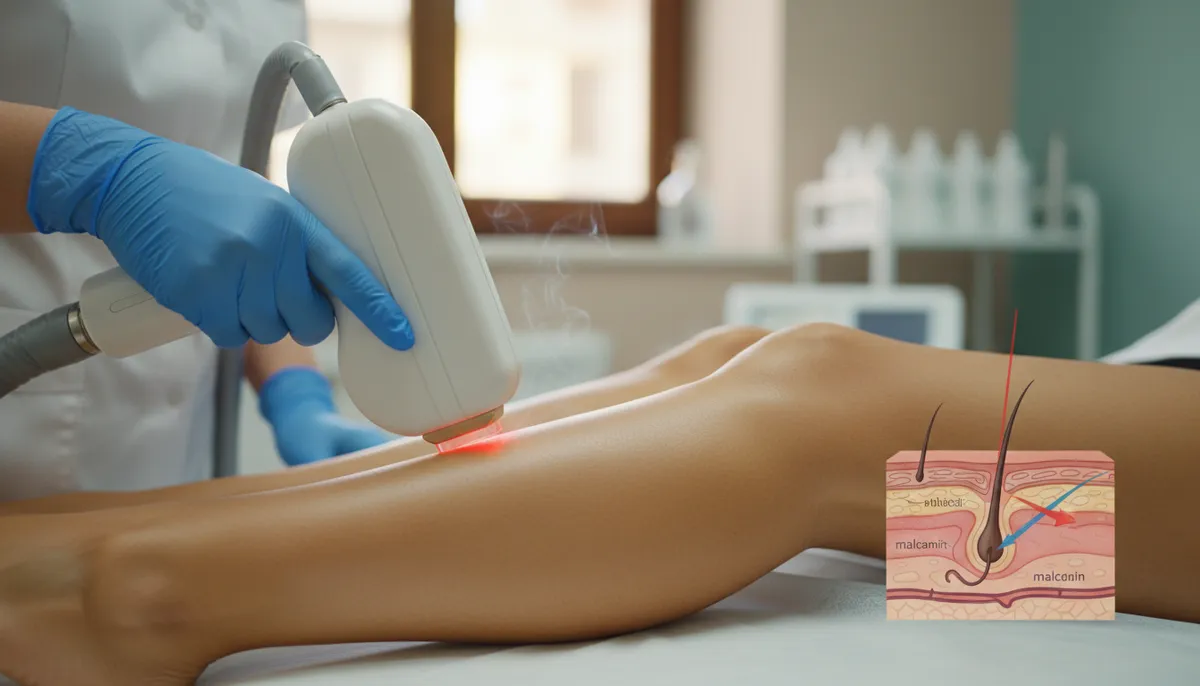
Here’s the science made simple: laser hair removal uses concentrated beams of light energy to target the melanin (pigment) in your hair shaft. This light energy travels down the hair follicle and converts to heat, which damages the follicle enough to significantly slow down future hair growth. The technical term for this process is “selective photothermolysis,” but you don’t need to remember that—just know that it’s a proven, FDA-cleared method that’s been refined over decades.
The key thing to understand is that laser hair removal is most effective during the anagen phase, which is when your hair is actively growing. Since not all your hair is in this phase at the same time, you’ll need multiple sessions to catch all the follicles at the right moment. Think of it like trying to catch fireflies—you need several attempts to get them all! According to research published in medical journals, this targeted approach results in permanent or semi-permanent hair reduction that dramatically outperforms temporary methods like shaving or waxing.
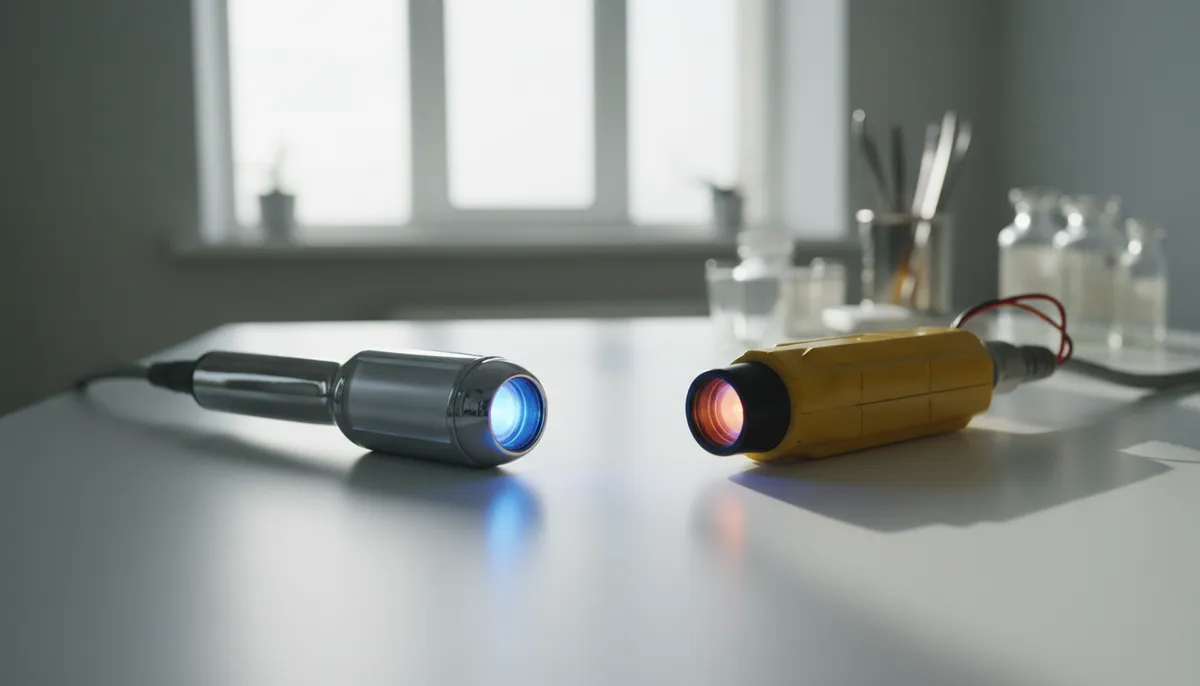
If you’ve started researching laser hair removal, you’ve probably encountered confusing acronyms like IPL, Alexandrite, Diode, and Nd:YAG. Let’s clear that up! The three most effective laser types for hair removal are Alexandrite lasers (755 nm wavelength) which work beautifully for fair skin and blonde hair, Diode lasers (808-810 nm) that offer versatile performance across different skin and hair types, and Nd:YAG lasers (1064 nm) specifically designed for darker skin tones and coarser hair textures.
Here’s something important: IPL (Intense Pulsed Light) isn’t technically a laser—it’s a broad-spectrum light technology. While IPL devices are popular for at-home use, clinical comparisons show that diode laser technology is up to 90.1% more effective for hair removal than IPL. This doesn’t mean IPL doesn’t work, but if you’re investing time and money into hair removal, understanding these differences helps you choose the most effective option for your specific needs.

Welcome to the future! By 2025, advanced laser hair removal systems now feature AI-powered technology that’s changing the game completely. These cutting-edge machines use triple-wavelength lasers (808nm/755nm/1064nm) that dynamically adjust energy levels based on real-time skin and hair data. What does this mean for you? More consistent results, fewer sessions, and enhanced safety across all skin types.
According to the latest AI-powered systems, you can achieve 70-90% hair reduction in just 3-5 sessions—that’s significantly fewer than the traditional 6-8 sessions required with older technology. These smart systems analyze your unique characteristics and optimize treatment parameters automatically, taking the guesswork out of the process. It’s like having a personalized hair removal specialist who never has an off day!

Let’s set realistic expectations right from the start. Professional laser hair removal typically requires 6-8 treatment sessions spaced 4-6 weeks apart for optimal results. Why so many? Remember that hair growth cycle we mentioned earlier? Your hair grows in phases, and we need to catch each follicle during its active growth phase for maximum effectiveness.
| Timeline | Professional Treatment | At-Home Devices |
|---|---|---|
| Initial Results | 2-3 weeks after first session | 4 weeks with consistent use |
| Significant Reduction | After 3-4 sessions | 8-12 weeks of regular treatments |
| Optimal Results | 6-8 sessions (6-12 months) | 12+ weeks of consistent use |
| Maintenance | 1-2 sessions yearly | Periodic touch-ups as needed |
The good news is that you’ll start seeing results pretty quickly—many people notice reduced hair growth after just 2-3 sessions. By the time you complete your full treatment course, you can expect a 70-90% reduction in hair growth. Some maintenance sessions might be needed once or twice a year, but that’s minimal compared to daily shaving or monthly waxing appointments!
Here’s something exciting: at-home laser hair removal devices have evolved from glorified toys into legitimate hair removal solutions. In 2025, these devices have graduated from IPL-only options to include actual diode laser technology—the same type used in professional clinics. Some advanced at-home devices now offer up to 233% more power than traditional IPL devices, with impressive clinical results to back up their claims.
Take the Tria 4X, for example—it’s an FDA-cleared diode laser device that achieves up to 75% hair removal after just 2 treatments and up to 100% after a full course. That’s pretty remarkable for a device you can use in your pajamas while watching Netflix! While at-home devices do require more frequent treatments (usually 2-3 times per week initially), they’re considerably more affordable than professional treatments and offer the convenience of treating yourself on your own schedule. If you’re interested in exploring professional options with expert guidance, Enhanced Aesthetics & Wellness offers comprehensive laser hair removal services tailored to your unique needs.
Let’s address a common concern: laser hair removal is absolutely safe for all skin types, including darker skin tones—but only when using the appropriate equipment and settings. This is crucial because earlier laser technologies weren’t always suitable for melanin-rich skin, which led to concerns about hyperpigmentation, burns, or uneven results.
The game-changer for darker skin is the Nd:YAG laser (1064 nm wavelength), which penetrates deeper into the skin without being absorbed by surface melanin. Diode lasers also work well across a range of skin tones when properly calibrated. If you have darker skin, it’s absolutely essential to work with an experienced provider who understands how to adjust treatment parameters for your specific skin type. The right professional will conduct a patch test and customize the settings to ensure both safety and effectiveness. People with darker complexions should definitely seek treatment from certified specialists rather than attempting at-home treatments without proper guidance.
One of the best things about laser hair removal? The side effects are surprisingly mild and short-lived. The most common reactions are erythema (redness) and perifollicular edema (slight swelling around the hair follicles), which typically resolve within a few hours to a few days. Clinical studies have consistently shown no long-term adverse effects when treatments are performed correctly.
You might experience a sensation during treatment that people describe as a rubber band snapping against the skin—not exactly comfortable, but totally manageable for most people. Modern devices often include cooling mechanisms that significantly reduce discomfort. After treatment, your skin might be slightly pink or sensitive for 24-48 hours, similar to a mild sunburn. Following proper aftercare (avoiding sun exposure, using gentle skincare products, and keeping the area moisturized) helps minimize even these minor effects. The vast majority of people find laser hair removal far less uncomfortable than waxing and infinitely more pleasant than years of daily shaving!
Let’s break down the real differences between professional treatments and at-home devices so you can make the best choice for your situation, budget, and goals. Professional treatments at clinics like Enhanced Aesthetics & Wellness use medical-grade equipment that delivers significantly more power per pulse, which means faster, more comprehensive results in fewer sessions.
The truth is, many people find success with a hybrid approach: starting with professional treatments for major areas or stubborn hair, then maintaining results with at-home devices. Whatever route you choose, consistency is key—sporadic treatments won’t give you the results you’re hoping for!
Let’s talk money, because understanding the financial picture helps you make a smart decision. While laser hair removal requires an upfront investment, let’s calculate what you’re currently spending on temporary solutions. The average person spends about $200-300 annually on razors, shaving cream, waxing appointments, or depilatory creams. Over a 10-year period, that’s $2,000-3,000—and you’re still dealing with unwanted hair!
Professional laser hair removal typically costs between $200-400 per session, depending on the treatment area and your location. For a complete series of 6-8 sessions, you’re looking at an investment of $1,200-3,200. At-home devices range from $200-600 for quality options. While this might seem like a lot initially, you’re essentially prepaying for years of smooth, hair-free skin. Plus, think about all the time you’ll save—the average person spends nearly 2 months of their lifetime shaving! That’s time you could spend doing literally anything else.
Beyond the financial calculation, there’s the confidence factor. Imagine never worrying about razor burn before a beach vacation, never rushing through a last-minute shave before a date, and never dealing with painful ingrown hairs. For many people, that peace of mind is priceless. When you view laser hair removal as a long-term investment in your comfort, convenience, and confidence, the value becomes crystal clear.
Now that you’re armed with these nine game-changing facts about laser hair removal, you’re ready to make an informed decision about your hair removal journey. The technology has never been more advanced, the results have never been more reliable, and the options have never been more accessible. Whether you’re considering professional treatments or exploring at-home devices, the key is to start with realistic expectations, choose the right technology for your skin and hair type, and commit to the full treatment process.
Remember that laser hair removal is a process, not a one-time miracle treatment. But with patience and consistency, you can achieve the long-lasting results you’ve been dreaming about. If you’re ready to explore professional laser hair removal with experienced specialists who understand the latest technology and techniques, schedule a consultation with Enhanced Aesthetics & Wellness in Pahrump, Nevada. Their state-of-the-art med spa offers customized treatment plans designed specifically for your unique needs, ensuring optimal results with maximum safety and comfort. Say goodbye to the daily hassle of unwanted hair and hello to the confidence that comes with smooth, beautiful skin!
Q: How many laser hair removal sessions do I need to see permanent results?
A: Most people need 6-8 professional treatment sessions spaced 4-6 weeks apart to achieve optimal results, with 70-90% hair reduction expected. Advanced AI-powered systems in 2025 may achieve similar results in just 3-5 sessions. You might need maintenance sessions once or twice yearly to maintain your smooth, hair-free results long-term.
Q: Is laser hair removal safe for dark skin tones?
A: Absolutely! Laser hair removal is safe for all skin types when using appropriate equipment and settings. Darker skin tones should be treated with Nd:YAG lasers (1064 nm) or properly calibrated diode lasers, which minimize the risk of pigmentation changes or burns. Always work with experienced professionals who understand how to customize treatments for your specific skin type.
Q: What’s the difference between professional laser hair removal and at-home devices?
A: Professional treatments use medical-grade equipment with significantly more power, delivering faster and more comprehensive results in fewer sessions (typically 6-8). At-home devices, while less powerful, offer convenience and lower cost, though they require more frequent treatments (12+ sessions) and may not achieve the same level of hair reduction. Many people find success using at-home devices for maintenance after completing professional treatments.
Q: What are the common side effects of laser hair removal?
A: Side effects are minimal and temporary, typically including mild redness (erythema) and slight swelling around hair follicles that resolve within hours to a few days. You might experience a sensation similar to a rubber band snap during treatment. Clinical studies show no long-term adverse effects when treatments are performed correctly, making laser hair removal one of the safest cosmetic procedures available.
Q: How much does laser hair removal cost in 2025?
A: Professional laser hair removal typically costs $200-400 per session, with a complete series of 6-8 sessions totaling $1,200-3,200 depending on the treatment area and location. Quality at-home devices range from $200-600 for one-time purchase with unlimited use. While the upfront investment may seem significant, it’s often less than what you’d spend over 10 years on temporary solutions like waxing, shaving, and depilatory products.
Curious about filler for nasolabial folds? Discover 7 key things to know — from filler types and costs to what to expect and how long results last.

Are you tired of dealing with stubborn acne or dull skin? Look no further than salicylic acid! This beloved skincare ingredient has gained a reputation
