
What is the difference between FormaV and vTone?
Discover the difference between FormaV and vTone, two non-surgical treatments for vaginal rejuvenation and pelvic floor health.

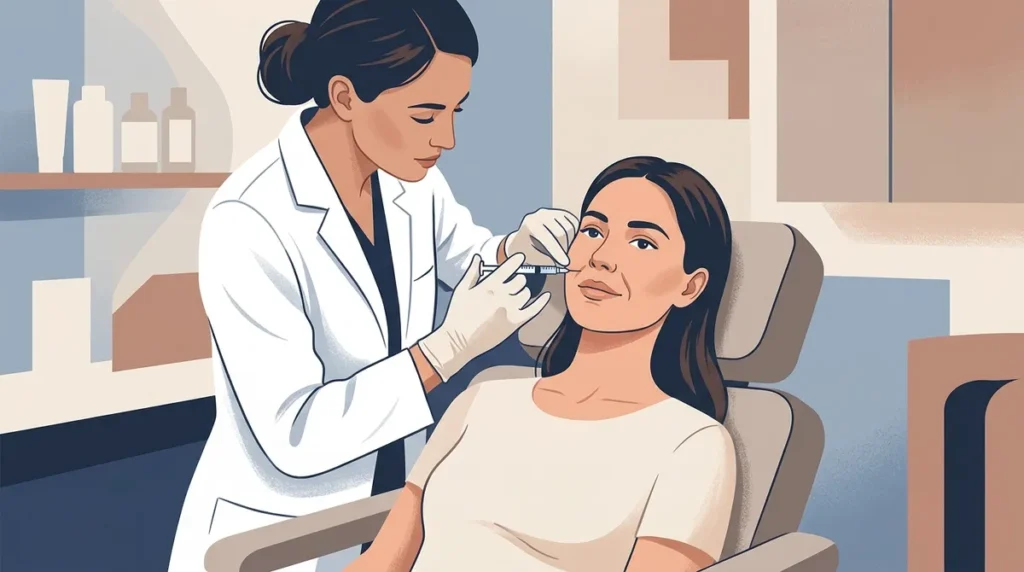
Deep filler placement at the bone level (periosteal level) rather than directly into the fold delivers more natural results and often requires less product, distinguishing experienced providers from average ones.
Hyaluronic acid fillers like Juvéderm and Restylane are the gold standard for smile lines with immediate results, natural appearance, and reversibility via hyaluronidase enzyme if needed.
Sculptra stimulates your body's own collagen production gradually over 3-6 months with results lasting up to 2+ years, offering a more natural long-term alternative to traditional fillers.
Smile lines deepen due to collagen breakdown starting in your mid-20s, repetitive facial expressions, and lifestyle factors like UV exposure and smoking that accelerate the aging process.
Non-injectable alternatives like laser resurfacing, radiofrequency treatments (Morpheus8), and retinoid therapy effectively treat smile lines, especially when combined with dermal fillers for enhanced results.
Maintaining filler results requires touch-up appointments before complete dissolution, daily SPF 30+ sunscreen, hydration, avoiding smoking, and considering complementary treatments like Botox or PRF therapy.
That moment when you catch your reflection and notice deepening lines from nose to mouth might feel like a sudden surprise, but these nasolabial folds have been gradually forming for years through thousands of smiles, laughs, and expressions. The good news? In 2026, there are more effective, natural-looking solutions than ever before. But here’s something most people never think to ask: where the filler is placed matters just as much as how much is used. Skilled injectors often place filler deep at the bone level rather than directly into the fold itself. This technique delivers more natural results and often requires less product overall. It’s a detail that separates an experienced provider from an average one. Whether you’re exploring smile lines treatment for the first time or looking to refine your approach, this guide will walk you through every option—from Dermal Fillers to laser therapies—so you can make a confident, informed decision.

Smile lines, also known as nasolabial folds or laugh lines, are the creases that run from the sides of your nose down to the corners of your mouth. They’re a completely natural part of your face. But over time, they can deepen in ways that feel less like character and more like concern.
Starting in your mid-20s, your body gradually produces less collagen and elastin. These proteins are what keep skin firm, plump, and smooth. As they decline, skin loses its structural support. The fat pads in your cheeks also shift downward with age. This creates a fold where the cheek meets the upper lip area.
Every time you smile, laugh, or squint, your facial muscles contract. Over decades, these repeated movements etch creases into the skin. Think of it like folding a piece of paper in the same place thousands of times—eventually, the crease becomes permanent.
UV exposure breaks down collagen faster than normal aging alone. Smoking reduces blood flow to the skin and accelerates collagen loss significantly. Poor hydration and a diet low in antioxidants can also speed up the process. These lifestyle factors don’t cause smile lines on their own, but they make them deepen much sooner.
Dynamic lines only appear when your face is moving—during expressions. Static lines are visible even when your face is at rest. Early smile lines are usually dynamic. Deeper, more established nasolabial folds are static, meaning they need more than just relaxing the muscle to treat them effectively.
Most people first notice smile lines becoming more defined in their 30s. By the 40s and 50s, they’re often prominent enough to affect overall facial appearance. However, genetics, skin type, and sun exposure can make them visible earlier in some individuals.
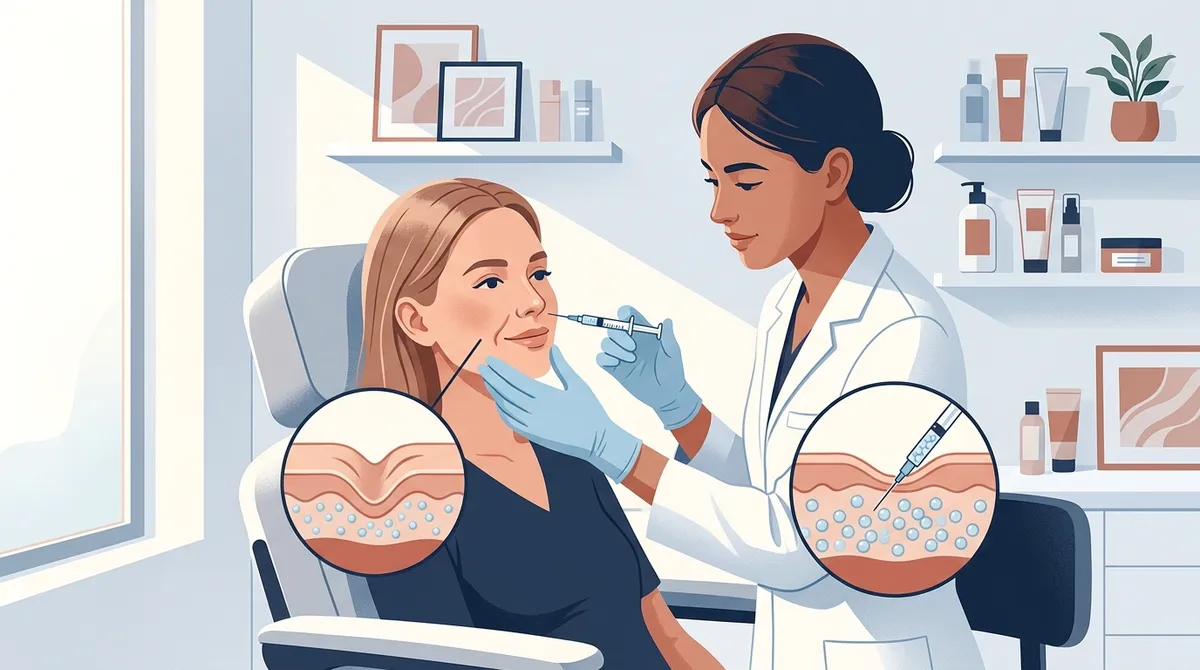
When it comes to smile lines treatment, Dermal Fillers consistently rank as the most popular and effective option. They offer immediate, visible results with minimal downtime. Here’s what makes them stand out.
Hyaluronic acid (HA) is a substance your body naturally produces. It attracts and holds water molecules, creating volume and hydration in the skin. When injected, HA fillers restore lost volume in the nasolabial area. The result is a smoother, more lifted appearance almost instantly.
There are several well-known HA filler brands used for smile line treatment. Each has slightly different consistencies suited to different depths and areas:
Your injector will recommend the best product based on your specific anatomy and treatment goals.
This is where technique really matters. Many patients don’t realize that placing filler directly into the fold can sometimes look unnatural or create an overfilled appearance. Experienced providers often inject filler deep at the periosteal level—right above the bone. This lifts the overlying tissue and softens the fold from the foundation. The result looks more natural and often requires fewer syringes, making it more cost-effective too.
One of the biggest advantages of filler for smile lines is that results are visible immediately after treatment. Some initial swelling is normal, but as it resolves over a few days, the final result looks even more refined and natural. Most patients are comfortable returning to their normal routine the same day.
HA fillers offer a safety net that other treatments don’t. If you’re unhappy with your results—or if any complications arise—an enzyme called hyaluronidase can dissolve the filler quickly. This reversibility makes HA fillers an excellent starting point for first-time patients. Results typically last 6 to 18 months, depending on the specific product used and your individual metabolism.
HA fillers are excellent, but they’re not the only game in town. Several other injectable options offer unique benefits—especially for patients seeking longer-lasting results.
Sculptra is made from poly-L-lactic acid (PLLA). Unlike HA fillers, it doesn’t add immediate volume. Instead, it stimulates your body to produce new collagen over time. Results develop gradually over three to six months. The payoff? Results can last up to two years or more, and the improvement looks incredibly natural because it’s your own collagen doing the work. Sculptra pairs beautifully with PRP Therapy for an enhanced collagen-boosting effect.
Calcium hydroxylapatite (CaHA) is a mineral-like compound found naturally in human bones. As a filler, it provides immediate structural support while also stimulating collagen production. It tends to be thicker than HA fillers, making it ideal for deeper folds. Results typically last 12 to 18 months, sometimes longer.
PMMA (polymethylmethacrylate) microspheres are suspended in a collagen gel. Once injected, the PMMA remains permanently in the skin while the collagen carrier dissolves. Your body then forms its own collagen around the microspheres. This option is best suited for patients who have already tried temporary fillers and know exactly what results they want. Because it’s not reversible, it requires a highly experienced injector.
| Filler Type | Duration | Reversible | Best For |
|---|---|---|---|
| Hyaluronic Acid | 6–18 months | Yes | First-time patients, natural results |
| Sculptra (PLLA) | Up to 2+ years | No | Gradual, collagen-building improvement |
| Calcium Hydroxylapatite | 12–18+ months | No | Deeper folds, structural support |
| PMMA Microspheres | Permanent | No | Long-term commitment, experienced patients |
Discussing these options with a qualified provider helps ensure you choose what’s right for your goals and budget.
Not everyone is ready for injections—and that’s completely okay! There are several non-injectable treatments that can visibly improve smile lines, either on their own or as part of a combination plan.
Laser resurfacing removes the outer layers of damaged skin and stimulates collagen production deep within. It’s particularly effective for fine lines and surface-level folds. Options like the Deep Laser Peel and Microlaser Peel offer different levels of intensity. More aggressive treatments can cost $1,500 to $6,000+ per session but deliver results that last up to five years.
For a gentler entry point, the CoolPeel® Treatment and Nanolaser Peel offer effective resurfacing with less downtime. The Sciton Joule BBL Treatment is another excellent option for overall skin rejuvenation and tone improvement.
Radiofrequency (RF) energy heats the deep layers of skin to stimulate collagen and elastin. It firms and tightens loose skin around the nasolabial area without any needles. Morpheus8 combines microneedling with radiofrequency for an especially powerful skin-tightening result. It’s one of the most requested treatments at Enhanced Aesthetics & Wellness in Pahrump, Nevada.
Chemical peels remove the top layer of skin to reveal smoother, fresher skin underneath. They work best for fine lines and mild smile lines. Light peels like the ZO 3-Step Peel have little to no downtime. Deeper peels range from $150 to $3,000 depending on intensity and require 7 to 14 days of healing time. Peels also improve skin texture and tone, which enhances any other treatment you pair with them.
Retinoids (vitamin A derivatives) are one of the most well-researched topical ingredients for aging skin. They boost cell turnover and stimulate collagen production over time. Consistent use can soften fine smile lines and prevent new ones from forming. While not as dramatic as injectables or lasers, retinoids are a valuable part of any long-term anti-aging strategy.
Many patients see the best results when treatments are combined. For example, pairing SkinPen Microneedling with dermal fillers addresses both surface texture and volume loss simultaneously. A personalized combination plan ensures you’re targeting all contributing factors to smile line depth.
Knowing what to expect helps you feel calm and prepared. Here’s a step-by-step overview of a typical smile lines filler session.
Your provider will begin by examining your face from multiple angles. They’ll assess the depth and location of your nasolabial folds, your skin quality, and your overall facial structure. This assessment guides the injection plan—including which filler to use, how much product is needed, and where precisely to place it.
A topical numbing cream is applied to the treatment area and left on for about 15 to 30 minutes. Most fillers also contain lidocaine, an anesthetic that makes the injection itself more comfortable. Most patients describe the sensation as mild pressure rather than real pain.
Using a fine needle or blunt-tipped cannula, your injector delivers the filler with precision. As discussed earlier, deep placement near the bone level is often preferred for the most natural outcome. Your injector will massage the area gently after injection to ensure even distribution.
Right after treatment, you may notice some redness, minor swelling, or small bumps at the injection sites. This is completely normal. You can return to most daily activities right away. Avoid strenuous exercise, alcohol, and excessive heat for 24 hours post-treatment.
Most swelling resolves within 24 to 72 hours. By day three to five, your full result will begin to show. Any residual bruising fades within one to two weeks. Many patients schedule their treatment a week before a special event to allow time for full results to settle in beautifully.
You can follow our Instagram for real patient transformations and treatment updates from our team.
Getting great results is just the beginning. Keeping them looking their best for as long as possible is equally important.
Most HA fillers last 6 to 18 months. Planning a touch-up appointment before the filler has completely dissolved helps maintain consistent results. Regular maintenance is usually less expensive than starting from scratch. Your provider can recommend the ideal schedule based on how your body metabolizes the product.
Layering complementary treatments extends the life of your results and improves overall skin quality. Consider combining fillers with:
Your daily habits play a big role in how long results last. These lifestyle choices help preserve your investment:
Watch for these signs that your filler is wearing off and a touch-up appointment is due:
You can also check out our Facebook page for before-and-after photos and patient stories to see real results from real people.
At Enhanced Aesthetics & Wellness, our experienced team in Pahrump, Nevada creates fully customized smile lines treatment plans. We combine the latest techniques with a warm, personalized approach so every patient feels confident and cared for. Visit us on Google to read our patient reviews and see why so many trust us with their aesthetic goals.
Ready to smooth those smile lines and refresh your look? Schedule your personalized consultation today and let our team help you discover the best treatment path for your unique needs and goals.
Q: Can smile line fillers migrate to other areas of my face?
A: Migration is a very rare occurrence when filler is placed correctly by a skilled injector. Using the right product consistency for the right depth—and avoiding overfilling—greatly minimizes this risk. This is exactly why choosing an experienced, qualified provider makes such a big difference in your outcome!
Q: What’s the difference between treating smile lines versus marionette lines?
A: Smile lines (nasolabial folds) run from the nose to the corners of the mouth, while marionette lines extend downward from the mouth corners toward the chin. Both are treated with dermal fillers, but the placement technique and filler selection may differ based on the anatomy of each area. Many patients address both areas in a single session for a more complete facial rejuvenation result.
Q: How much filler is typically needed for moderate smile lines?
A: Most patients with moderate nasolabial folds need between 1 and 2 syringes of filler total—sometimes even less when the deep placement technique is used. Your provider will assess your specific fold depth, skin quality, and facial structure during a consultation to give you an accurate estimate. It’s always better to start conservatively and add more if needed!
Q: Will my smile look unnatural after filler treatment?
A: Not at all when treatment is done well! An experienced injector focuses on restoring volume naturally rather than overfilling, and the deep bone-level placement technique is specifically designed to avoid that telltale “overdone” appearance. The goal is always to make you look like a refreshed, well-rested version of yourself—not like you’ve had work done.
Q: Can I combine smile line treatment with other facial procedures?
A: Absolutely—combining treatments is actually one of the best ways to achieve comprehensive, long-lasting results! Many patients pair smile line fillers with neurotoxins for dynamic lines, Morpheus8 for skin tightening, or PRF Therapy for added collagen stimulation. Your provider at Enhanced Aesthetics & Wellness can create a personalized combination plan that targets all of your concerns in a safe and effective way.
Discover the difference between FormaV and vTone, two non-surgical treatments for vaginal rejuvenation and pelvic floor health.

Achieve your ideal weight with the leading weightloss clinic in Pahrump, Enhanced Aesthetics & Wellness. Contact us today!
