Home » How to Choose a Safe IV Hydration Drip in Pahrump
Share This Post
Key Takeaways
IV hydration drips lack high-quality scientific evidence for wellness benefits in healthy people; 2023 and 2025 evidence reviews found limited support for energy, immunity, hangover relief, and skin rejuvenation claims.
Choose a provider with a licensed clinician who reviews your full health history, sources sterile ingredients, and explains risks clearly; avoid clinics making cure promises or pushing package deals.
IV drips carry medical risks including infection, vein irritation, allergic reactions, electrolyte imbalance, and rarely serious complications; poor sterile compounding has caused illness and death according to FDA warnings.
People with heart, kidney, liver conditions, those on medications, pregnant or nursing individuals, or those with allergies should consult their doctor before elective IV therapy.
For everyday hydration in healthy people, drinking water and eating balanced meals is sufficient; reserve IV drips for faster fluid delivery guided by a clinician, not as a primary wellness strategy.
Treat IV drips as a supportive supplement to core habits like adequate sleep, balanced nutrition, sun protection, and consistent skincare rather than a standalone solution for health or beauty goals.
IV hydration drips are everywhere right now. Scroll through social media and you will see glowing selfies, cheerful clinic photos, and big promises about energy, skin, and recovery. If you have ever wondered whether an IV hydration drip is right for you, you are in good company. It is a fair question, and a smart one.
Here is the honest truth. IV therapy has real medical uses. But many popular claims for healthy people have limited research behind them. That does not mean you should skip it. It means you should go in informed, with a trusted team and realistic goals.
This friendly guide walks you through what an IV hydration drip is, what it can and cannot do, and how to pick a safe provider. Think of it as a chat with a knowledgeable friend who wants you to feel great and stay safe. Let’s dive in.
What Is an IV Hydration Drip?
An IV hydration drip delivers fluids straight into a vein. Some drips also include vitamins, minerals, or amino acids. Because the fluid skips the digestive system, it enters your bloodstream right away.
In a medical spa, a drip is usually an elective wellness service. It is not the same as hospital care for a diagnosed condition. That difference matters, and a good provider will explain it clearly.
Common ingredients in a wellness drip include:
Saline or lactated Ringer’s: the fluid base that supports hydration
B vitamins: often added for general wellness
Vitamin C: a popular add-in
Magnesium and zinc: minerals that clinics often include
Glutathione or biotin: common add-ons for skin and beauty goals
At Enhanced Aesthetics & Wellness, our IV hydration therapy includes a Myers Cocktail with add-ons like glutathione, biotin, and zinc, so you can customize your visit.
What the Science Says (and Does Not Say)
Let’s keep it real. IV fluids and nutrients are well established for certain medical needs. These include some cases of dehydration, nutrient deficiency, or poor absorption.
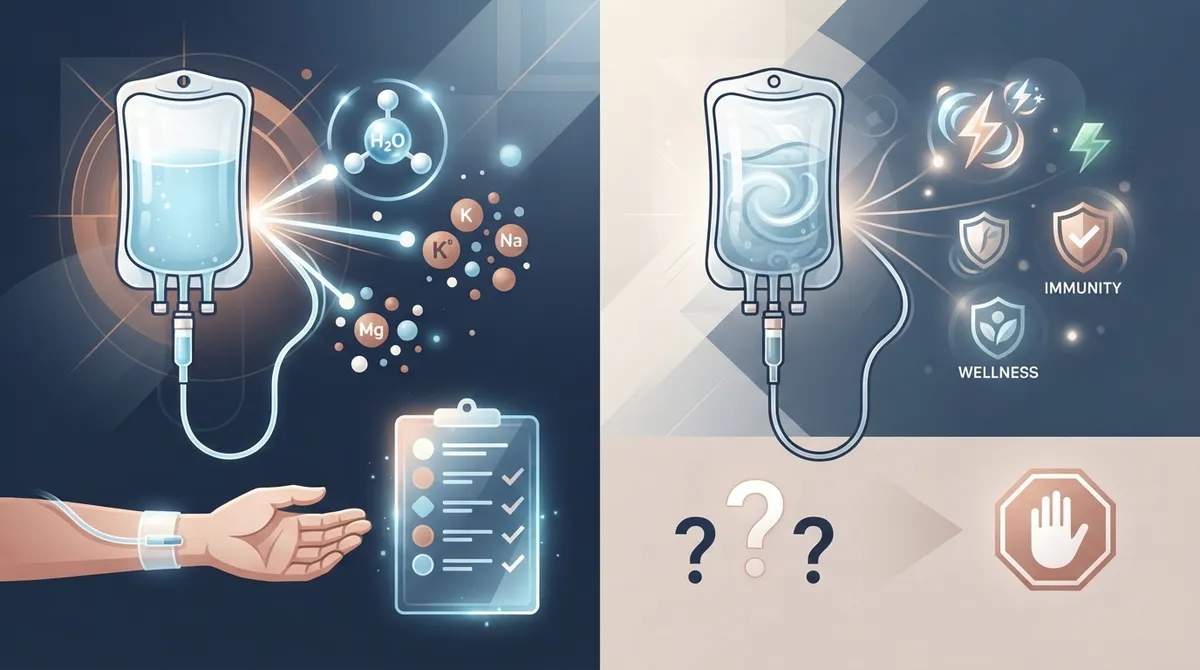
But the research looks different for otherwise healthy people. A 2023 evidence review found a lack of high-quality evidence that high-dose vitamin infusions help people without a specific deficiency or medical condition. A 2025 review also called the evidence for general wellness benefits in healthy people limited and insufficient.
Here is how popular claims stack up:
Common Claim
What the Evidence Suggests
Treating real dehydration
Well established for certain medical cases
Fixing a diagnosed deficiency
Established when a clinician identifies the need
Boosting energy in healthy people
Limited evidence
Strengthening immunity
Limited evidence
Curing a hangover
Limited evidence; fluids may help you feel better
Skin rejuvenation or lightening
Not reliably proven; safety not fully studied
One example is IV glutathione, which some people use for skin lightening. Current research does not show reliable, lasting results, and its safety is not fully mapped out. Higher blood levels of vitamin C from an IV also do not prove a cosmetic or wellness benefit on their own.
Many people still enjoy how they feel after a drip. Feeling refreshed is a valid experience. Just keep your expectations grounded, and treat a drip as a supportive extra, not a miracle.
How to Choose a Safe IV Hydration Drip: Step by Step
Safety is the heart of this whole topic. Here is a simple path to follow before you book.
Get clear on your goal. Are you dehydrated after a long desert day, curious about wellness, or hoping for a skin boost? Naming your goal helps your provider guide you honestly.
Ask about the licensed clinician. A qualified medical professional should review your history and oversee the treatment. Do not skip this.
Share your full health history. Tell them about medications, kidney or heart concerns, allergies, and pregnancy. Honesty keeps you safe.
Ask where the ingredients come from. Sterile sourcing and preparation are central to safety. A good clinic will happily explain its process.
Read the consent form. You should understand the benefits, limits, and risks before you sign.
Check the emergency plan. Trained staff and emergency readiness should be part of every infusion service.
Watch for hype. Be cautious of any clinic that promises cures or guaranteed results.
An IV is a medical procedure, even in a relaxing spa setting. Most people do fine, but it is smart to know what can happen.
Possible risks include:
Bruising or soreness where the needle goes in
Vein irritation or inflammation
Infection at the site
Allergic reactions to an ingredient
Dosing mistakes
Fluid or electrolyte imbalance
Rarely, more serious problems can occur. These include serious infection, fluid overload, or kidney-related complications. People with certain health conditions face higher risk.
Sterile preparation is a big deal here. The FDA has warned that poor-quality or contaminated compounded drugs have caused serious illness and even death. Medical spas, IV hydration clinics, and mobile infusion services are among the places where sterile compounding concerns have come up.
Rules also vary by state. In the United States, requirements depend on state law, professional scope of practice, and how the infusion is prepared. Wisconsin, for example, treats adding ingredients to an IV bag as compounding and points to federal and state rules plus USP <797> sterile standards. That is one state’s example, not a nationwide rule, so always ask your clinic how it follows Nevada requirements.
Who Should Be Extra Careful?
Some people should talk with their own doctor before choosing an elective drip. Please check in first if you:
Have heart, kidney, or liver conditions
Take regular prescription medications
Are pregnant or nursing
Have a history of allergic reactions
Have a condition that affects fluid balance
This is not meant to scare you. It is simply the kind of care a trusted provider will want to confirm. A good team will never rush this part.
IV Drip vs. Other Ways to Hydrate
For most healthy people, drinking water and eating well covers daily hydration. An IV is not required for that. So when might a drip make sense?
Here is a gentle reminder. No single treatment builds glowing, healthy skin or lasting well-being. Habits do the heavy lifting. Sleep, balanced meals, sun protection, and steady skincare matter most.
A drip can be a nice supportive step for some people. It pairs well with a thoughtful plan that may include:
For many of our guests, this blended approach feels more satisfying than chasing a single quick fix. It also fits the way busy professionals, active adults, and anyone who wants natural-looking results tend to think about self-care.
What to Expect During Your Visit
Knowing the flow can ease any nerves. A typical visit looks like this:
Check-in and health review. A clinician talks with you about your history and goals.
Plan and consent. You choose a suitable option and review the details.
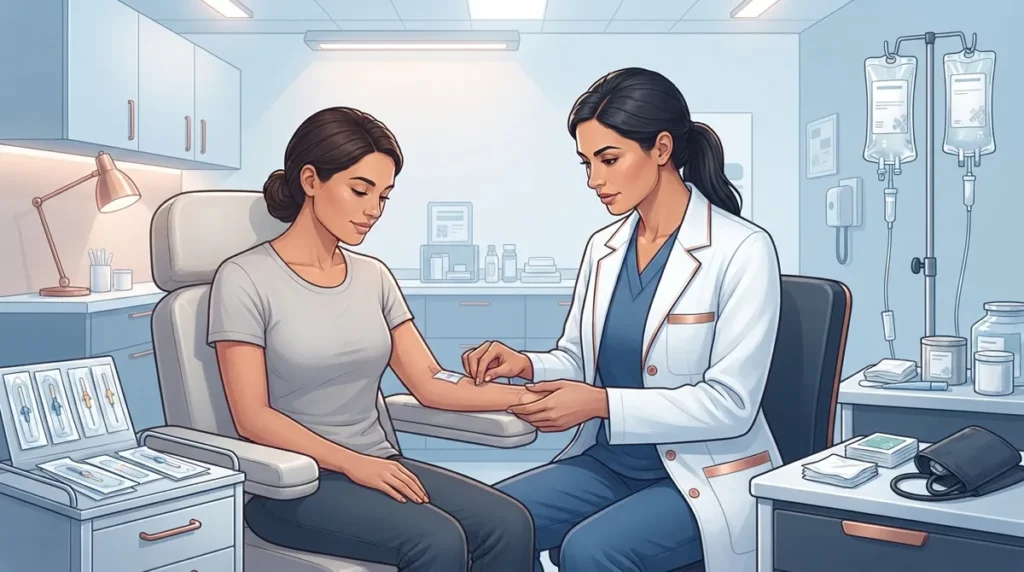
Setup. A trained team member places a small IV in your arm using sterile technique.
Relax. The drip usually runs for a set time while you rest, read, or chat.
Finish and aftercare. The IV comes out, and you get simple instructions.
Afterward, mild bruising at the site is common. Drink water, eat something nourishing, and let your team know right away if you notice swelling, redness, or anything that feels off.
Smart Questions to Ask Any Med Spa
Bring this short list with you. A confident, caring clinic will welcome every question.
Who is the licensed clinician overseeing my treatment?
How do you prepare and source your ingredients?
How do you screen for health conditions that raise risk?
What are the possible side effects, and what is your emergency plan?
What does the research say about my specific goal?
Living in the Mojave means dry air, strong sun, and hot days that can leave anyone feeling drained. We get it. Our team at Enhanced Aesthetics & Wellness in Pahrump, Nevada, focuses on customized care that supports how you look and feel, with safety and honesty first.
We would rather explain the limits of a treatment than oversell it. If a drip is a good fit for you, we will help you build a plan. If something else would serve you better, we will say so. You can also see what our Enhanced Aesthetics & Wellness guests say on Google to learn more about the experience.
Final Thoughts
An IV hydration drip can be a pleasant, supportive wellness choice when done safely and with realistic expectations. It is not a cure-all, and the research for healthy people is still limited. The best results come from smart screening, sterile care, and a team that tells you the truth.
Take your time, ask great questions, and choose a provider you trust. You deserve care that feels welcoming and keeps you safe.
Q: What is an IV hydration drip, and what is usually in it?
A: An IV hydration drip sends fluids directly into a vein, and some include vitamins, minerals, or amino acids like B vitamins, vitamin C, magnesium, or zinc. Ingredients vary by provider, so always ask exactly what is in yours.
Q: Does an IV hydration drip really boost energy, immunity, or skin health?
A: Research does not strongly support these claims for healthy people, and recent reviews call the evidence limited. Many folks still feel refreshed afterward, so it is best to treat a drip as a supportive extra, not a guaranteed fix.
Q: Are IV drips safe, and what side effects can happen?
A: Most people do well, but risks include bruising, vein irritation, infection, allergic reactions, and fluid or electrolyte imbalance. Safety depends on screening by a licensed clinician and sterile preparation, so choose your provider carefully.
Q: Who should skip an elective IV drip or talk to a doctor first?
A: People with heart, kidney, or liver conditions, those on regular medications, and anyone pregnant or nursing should check with their doctor first. A caring provider will review your history before treating you.
Q: What should I ask a med spa before getting an IV drip?
A: Ask who the licensed clinician is, how ingredients are sourced and prepared, how you will be screened, and what the emergency plan is. Clear, honest answers are a great sign of a trustworthy clinic.
Introduction to Platelet-Rich Fibrin (PRF) Platelet-Rich Fibrin (PRF) is a groundbreaking advancement in the field of regenerative medicine. Originating from the patient’s own blood, PRF