
Summer Hormone Reset for Women Over 40 in Pahrump
Summer hormone reset for women over 40 in Pahrump. Boost energy, balance mood, and feel your best with Bio-Identical Hormone Therapy therapy today.

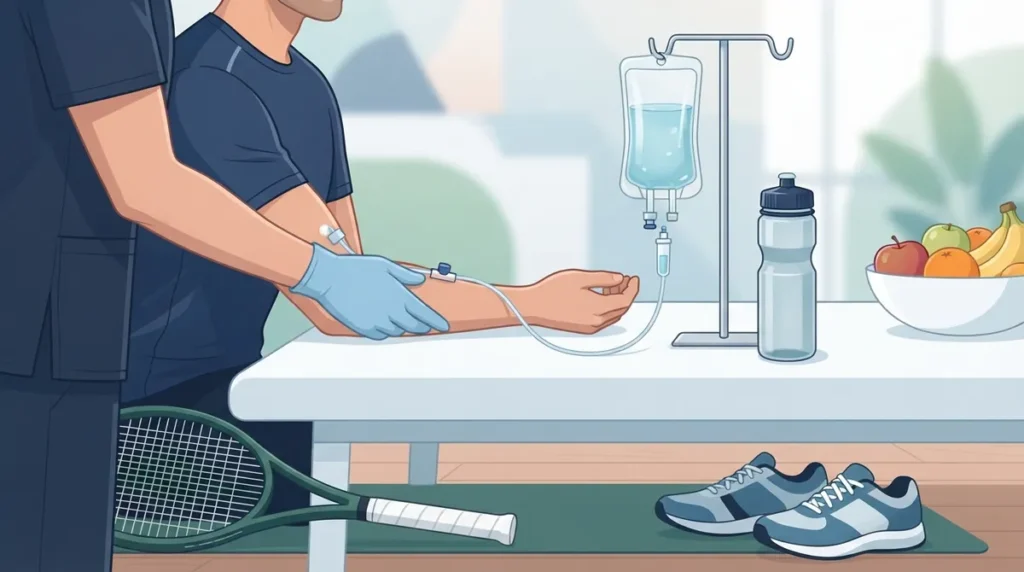
Research does not show that routine IV fluids improve athletic performance, prevent cramps, or beat drinking water, food, and electrolytes for athletes who can drink.
IV fluids are medically appropriate for severe dehydration, exertional heat illness, or persistent vomiting, and should be clinician-led rather than a wellness add-on.
WADA's 2026 Prohibited List bans IV infusions over 100 mL in any 12-hour period, with exceptions for hospital treatment, surgery, and diagnostic tests, so competitive athletes should check rules before booking.
IVs carry risks such as infection, vein inflammation, bleeding, and fluid leaking into tissue, so a licensed clinician should review your health history before any infusion.
You train hard. You sweat harder. So when a friend says an IV drip fixed their post-race slump, it is easy to wonder if you should try one too. That curiosity makes sense, and we are glad you are asking before you book.
Here is the honest truth about IV hydration for athletes: it is not a magic performance boost. Research does not show that routine IV fluids beat drinking water, food, and electrolytes for people who can drink. But IV fluids do have a real role in some medical situations, and some athletes enjoy wellness infusions as part of their self-care.
This guide walks you through how to decide. You will learn when IV fluids truly help, what the risks are, what anti-doping rules say, and what to ask a clinic first. Let’s make a smart, safe choice together.

In a med spa, “IV hydration” usually means an elective wellness infusion. It is a bag of fluids, sometimes mixed with vitamins or electrolytes, given through a small tube in your vein. You can read more about how this works in our guide to IV hydration therapy.
This is very different from medical IV treatment. Hospitals and emergency teams use IV fluids when someone is severely dehydrated or very sick. That is urgent care, not a wellness add-on.
Keeping these two ideas apart matters. A relaxing wellness drip is one thing. Emergency treatment for a dangerous heat illness is another. Mixing them up can put an athlete at risk.

Before you spend money or time, look at what the science says. Sports medicine reviews have found no convincing proof that routine IV fluids improve performance. They also did not show that IV drips prevent muscle cramps or beat oral fluids for athletes who can drink.
For most active people, oral rehydration works well when time allows. That means water, a sports drink with sodium, and a balanced meal. It is simple, low cost, and has no needle risk.
So what does that mean for you? If you are hoping an IV will make you faster or stronger, the evidence does not back that up. If you want a calm, supervised self-care session after a tough week, that is a different goal. Be honest with yourself about which one you want.
| Claim | What the Evidence Says |
|---|---|
| IV fluids boost performance | No published evidence supports this as an in-event or post-event aid |
| IV fluids prevent cramps | No high-level evidence shows this |
| IV beats drinking fluids | No advantage for athletes who can drink |
| IV helps severe dehydration | Yes, when a clinician decides it is needed |
There are times when IV fluids are the right call. A clinician may use them in these cases:
The Australian Institute of Sport describes IV fluids as suited to selected clinical situations like these. In severe cases, it notes clinician-led care with monitoring, such as an initial bolus of 0.9% sodium chloride at 10 to 20 mL per kg. That is emergency care. It is not a wellness menu item.
A wellness clinic is not the place for a medical emergency. Please go to urgent care or call 911 if you or a teammate has any of these signs:
These can signal heat illness or severe dehydration. Fast medical care can protect your health. Do not wait for an appointment slot.
Oral hydration has almost no risk. An IV does. Putting a needle and tube into a vein can lead to:
Serious problems are possible, even if they are not common. That is why a licensed clinician should review your health history and decide if an infusion fits you. People with heart, kidney, or blood pressure concerns need extra care.
Good clinics use sterile supplies, screen every client, and explain what is in the bag. If a place skips these steps, walk away.
This step is vital for competitive athletes. The World Anti-Doping Agency (WADA) 2026 Prohibited List bans IV infusions or injections totaling more than 100 mL in any 12-hour period. There are exceptions, such as legitimate hospital treatment, surgery, and clinical diagnostic tests.
Other exceptions or therapeutic use rules may apply too. You can review the current list on the WADA Prohibited List page. Here is a simple plan:
A wellness drip that breaks the rule could put your eligibility at risk. A quick check now saves a lot of stress later.
Use this quick guide to compare your options. It is a starting point, not medical advice.
| Situation | Best First Step |
|---|---|
| Normal training day | Water, electrolytes, and food |
| Long race or hot weather | Planned fluids with sodium before, during, and after |
| Mild tiredness after a hard week | Sleep, meals, and oral fluids |
| Wanting a calm self-care session | Talk with a clinician about an elective infusion |
| Severe dehydration or heat illness | Emergency medical care |
Many athletes find that simple habits do the heavy lifting. Our own tips in living well in the desert can help if you train in the dry Nevada heat.
A good clinic will welcome your questions. Here are the ones to ask:
Be careful with big promises. No wellness infusion should be sold as a proven performance booster, a cramp cure, or a stand-in for medical care. Claims about added vitamins need evidence for that ingredient, that dose, and that goal.
If you are cleared by a clinician and not bound by anti-doping rules, an elective infusion can be a pleasant wellness choice. Many clients like the quiet time and the feeling of care. Some blends, like a Myers cocktail, are popular for general wellness.
Think of it as a treat, not a training tool. Keep your base habits strong:
You may also like our look at IV hydration mistakes to avoid and our guide on how peptides support muscle recovery and performance if recovery is on your mind.
If you live and train in Pahrump, you know how fast the desert can dry you out. Hot, dry air means you lose fluids quickly, even on easy days. That makes smart hydration habits even more important.
At Enhanced Aesthetics & Wellness, we believe in honest, customized care. We will talk through your goals, your health, and whether an infusion even makes sense. You can see what neighbors say when you visit us on Google. For a wider look at what we offer, check our guide to the best med spa treatments in Pahrump.
Here is a clear path you can follow:
The best approach to IV hydration for athletes is a smart, balanced one. IV fluids are powerful tools for real medical needs, but they are not proven performance enhancers. For most athletes who can drink, food and oral fluids do the job.
If you are curious about an elective wellness infusion, we would love to talk it through with you. Contact us with your questions, or book an appointment to start the conversation. You can also follow along on our Instagram for more wellness tips.
Q: Do IV hydration drips improve athletic performance?
A: Not as far as the research shows. Sports medicine reviews found no solid proof that routine IV fluids boost performance or beat oral fluids for athletes who can drink. Food, water, and electrolytes are the best place to start.
Q: When might an athlete medically need IV fluids?
A: IV fluids may be needed for severe dehydration, exertional heat illness, or when vomiting stops you from keeping fluids down. These are medical situations that call for a clinician’s care, not a routine wellness drip.
Q: Are IV hydration infusions allowed under WADA rules?
A: It depends on the amount and the reason. The 2026 WADA Prohibited List bans IV infusions or injections over 100 mL in any 12-hour period, with exceptions like hospital treatment, surgery, and diagnostic tests. Always check the current rules with your anti-doping body before an infusion.
Q: What are the risks of IV hydration at a wellness clinic?
A: An IV can cause infection, vein inflammation, bleeding, or fluid leaking into nearby tissue. Serious problems are possible. A licensed clinician should review your health history before any infusion.
Q: Can an IV drip prevent muscle cramps or speed recovery?
A: There is no high-level evidence that IV fluids prevent cramps or speed recovery in athletes who can drink. Good sleep, meals, and oral fluids with sodium are your best tools. An elective drip should never be treated as a guaranteed fix.
Summer hormone reset for women over 40 in Pahrump. Boost energy, balance mood, and feel your best with Bio-Identical Hormone Therapy therapy today.

Achieve sustainable weight loss with practical meal planning tips. Learn how to plan, prep, and portion for long-term success.
