
Laser Hair Removal Basics: Say Goodbye to Shaving for Good
Discover Laser Hair Removal Basics in Pahrump, NV. Enjoy smooth, lasting results with Enhanced Aesthetics & Wellness.


Large, high-quality studies do not show IV vitamin or nutrient infusions reduce muscle soreness or speed recovery in healthy people, so expect a wellness treat rather than proven repair.
For most people who can drink, oral water and electrolytes work as well and cost far less; ACSM suggests about 1.5 liters of fluid per kilogram of body weight lost.
IV rehydration is medically justified for severe dehydration, body weight loss above about 7%, or inability to keep fluids down; dizziness, confusion, or fainting require urgent care.
Sleep 7 to 9 hours, eat enough protein, and plan rest days; these basics drive recovery far more than any drip. Choose clinics that screen you, use sterile technique, and never promise miracles.
You finish a tough workout, and your legs feel like wet cement. Then you see an ad for an IV drip that promises to fix sore muscles fast. It sounds amazing. But does IV therapy for muscle recovery really work, or is it mostly clever marketing?
Here is the honest answer: it depends. IV hydration is a real medical tool. But the proof that it speeds up muscle repair in healthy people is limited. Many people still enjoy these infusions as part of a wellness routine, and that is perfectly fine when it is done safely.
In this friendly guide, we will walk through 10 key things to know in 2026. You will learn what goes into these drips, what the science says, and how to stay safe. Whether you are a weekend athlete, a busy professional, or someone who simply wants to feel your best, you will leave with clear, honest answers.
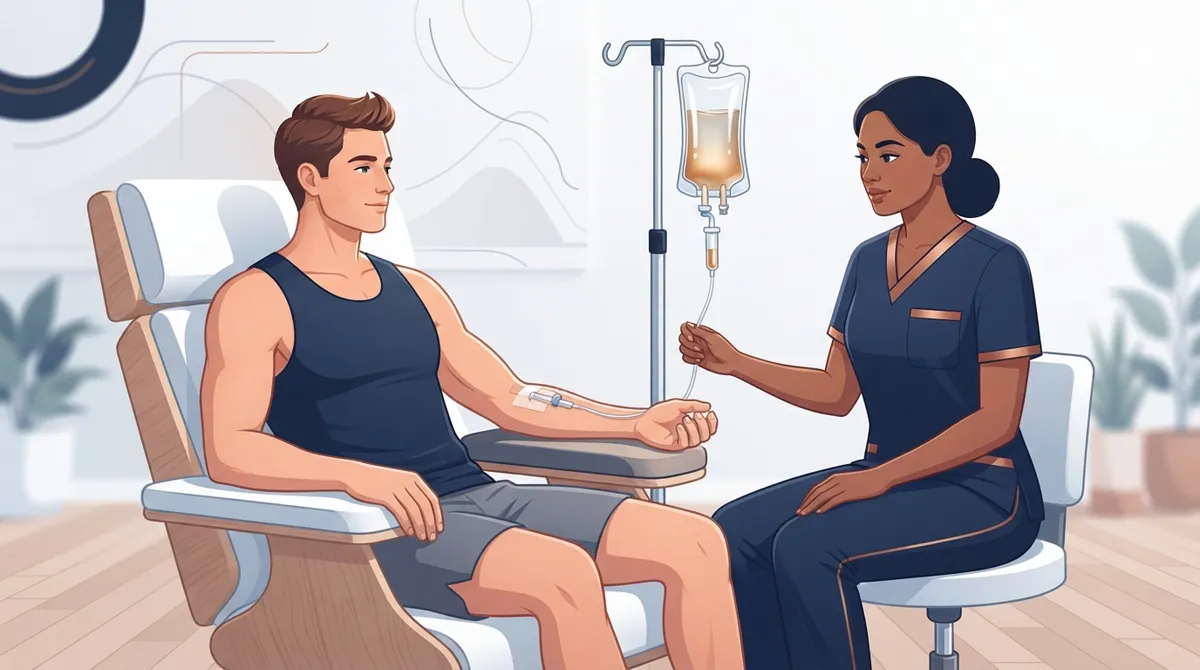
In a med spa setting, a “muscle recovery” IV is usually a bag of fluids with added extras. These extras often include electrolytes, vitamins, minerals, or amino acids. The formula changes from clinic to clinic.
Think of it as a custom wellness infusion. It is not a magic cure. It is a way to deliver fluids and nutrients straight into your bloodstream under medical care.
At Enhanced Aesthetics & Wellness in Pahrump, our IV hydration therapy is built around your needs and a proper health review. We never treat it as a one-size-fits-all fix.
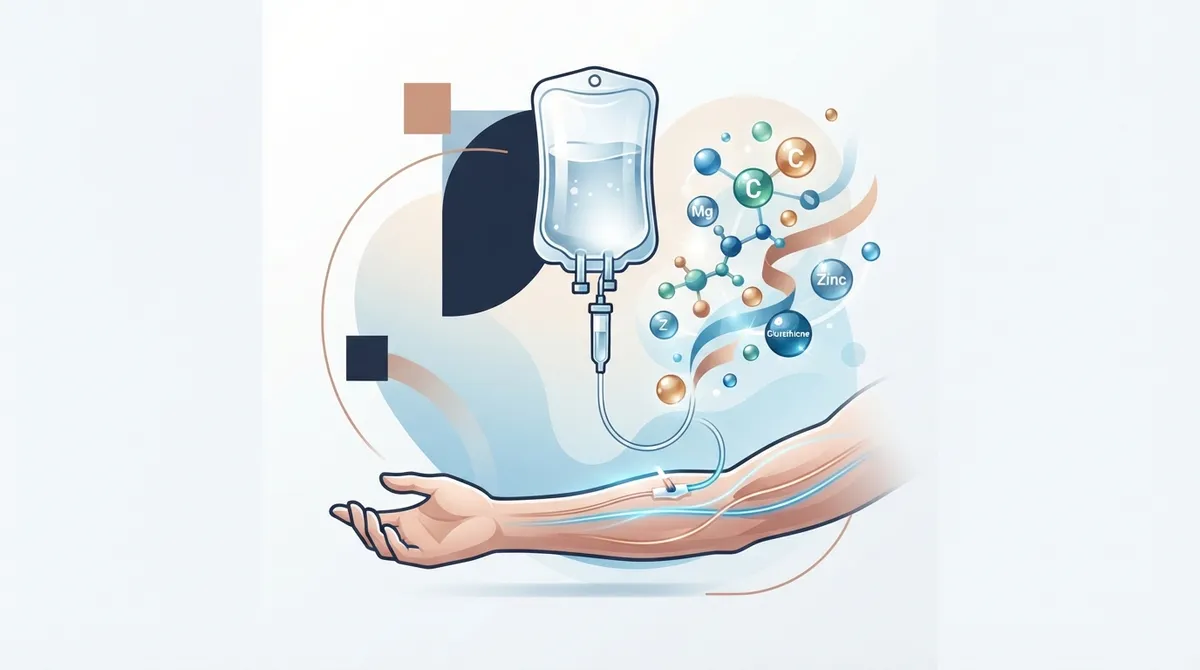
Most recovery-style IVs start with a base of saline or similar fluid. Then providers may add other ingredients based on your screening.
Remember, “popular” does not always mean “proven.” Ingredients in a drip are not guaranteed to improve soreness or strength.
Let’s be real with each other. Large, high-quality studies do not show that IV vitamin or nutrient infusions reduce muscle soreness or boost recovery in otherwise healthy people. Reviews and professional guidance keep pointing to this same gap in the evidence.
A review of IV fluid use in athletes found no strong proof that IV fluids prevent muscle cramps or improve performance. It also does not support routine IV use when you can drink fluids normally.
That does not mean you will feel nothing. Many people feel refreshed after an infusion. But feeling good and proven muscle repair are two different things.
Here is where many people are surprised. For most people who can drink, oral fluids and electrolytes are the preferred way to rehydrate after exercise. IV fluids generally offer no proven recovery edge over drinking.
Guidance from the American College of Sports Medicine says that for fast, full recovery after dehydration, people may drink about 1.5 liters of fluid for every kilogram of body weight lost. That is a simple, low-cost plan.
| Factor | Oral Hydration | IV Hydration |
|---|---|---|
| Best for | Most post-workout needs | Special medical needs or wellness preference |
| Proven recovery edge | Well supported | Not established in healthy people |
| Cost | Low | Higher |
| Procedure risks | Very low | Bruising, vein irritation, infection |
| Medical oversight | Not needed | Required |
IV fluids do have a real and important place. They may be appropriate for severe dehydration. They are also used when a person cannot keep fluids down, such as with ongoing vomiting or diarrhea.
Sports medicine guidance describes IV rehydration as potentially justified when body weight loss is greater than about 7%, or when drinking is not possible. That is a clinical decision, not a routine spa choice.
If you feel dizzy, confused, faint, or cannot stop vomiting after exercise, please seek urgent medical care. Do not wait for a spa appointment.
An IV raises your blood volume quickly. That part is true. But a fast rise in blood volume does not prove better muscle repair, less soreness, or better athletic performance.
Muscle recovery depends on many things. Sleep, protein, total calories, smart training, and rest days all matter a lot. A drip may feel like a reset, but it cannot replace those basics.
If you want a deeper look at nutrition and recovery support, you may enjoy our guide on how peptides support muscle recovery and performance.
Every IV carries some risk. A good provider will talk about these openly with you.
People with kidney, heart, or liver disease may face higher risk. So may people who are pregnant or taking certain medications. Serious events are uncommon but have been reported in case reports, and there is no reliable population-wide number for wellness clinic adverse events.
Not everyone is a good fit for a wellness IV. Please speak with a qualified provider first if any of these apply to you:
A careful health review is not red tape. It is how a clinic keeps you safe. If a place skips screening, that is a red flag.
Choosing the right clinic matters more than choosing the right bag. The FDA has noted that compounded IV mixtures are not FDA-approved as finished products, and it has warned about contamination when products are made under unclean conditions.
Here is a simple checklist you can use:
| What to Look For | Why It Matters |
|---|---|
| Medical assessment before treatment | Finds hidden risks |
| Qualified prescriber and trained staff | Safer dosing and care |
| Sterile preparation and technique | Lowers infection risk |
| Written informed consent | You know the benefits and risks |
| Emergency plan | Ready if something goes wrong |
| Honest claims | No promises of miracle results |
For more tips, read our guide on mistakes to avoid when choosing a wellness clinic in Pahrump. You can also see what neighbors say by checking Enhanced Aesthetics & Wellness reviews on Google.
If your goal is feeling stronger and bouncing back faster, the best plan has several parts. An IV can be one piece, but it should not be the whole plan.
Living in the desert adds one more challenge: dry heat pulls moisture from your body fast. Our tips on living well in the desert without wrecking your skin are a nice companion read. And if you are curious how infusions stack up against pills, see IV drip vs. oral supplements.
Even without proven muscle repair, some people enjoy IV hydration as self-care. It can fit into a busy life as a calm hour to rest and recharge.
The key is honest expectations. Think of it as a supportive extra, not a shortcut.
IV therapy for muscle recovery can be a nice wellness add-on, but it is not a proven fix for sore muscles. For most people, drinking fluids, eating well, and resting do the heavy lifting. IV fluids shine mainly when there is a true medical need.
If you are curious, choose a clinic that screens you carefully, explains the risks, and never overpromises. At Enhanced Aesthetics & Wellness, we believe in honest guidance and customized care for every client in Pahrump, Nevada.
Ready to talk about what makes sense for you? Contact us with your questions, or book an appointment to meet our team. We would love to help you feel your best, safely and naturally.
For a deeper look at IV science and safety, see this review on the science behind intravenous vitamin therapy, the American College of Sports Medicine’s guidance on exercise and fluid replacement, and the Cleveland Clinic’s overview of IV vitamin therapy.
Q: Does IV therapy help muscle recovery after a workout?
A: The evidence is limited for healthy people. IV fluids can replace lost fluid, but studies do not clearly show they reduce soreness or speed up muscle repair. Many people still enjoy them as a wellness treat when done safely.
Q: Is an IV drip better than drinking water or an electrolyte drink?
A: For most people who can drink, oral fluids and electrolytes work just as well and cost much less. IV fluids are mainly helpful for severe dehydration or when you cannot keep fluids down.
Q: What are the risks of IV hydration or vitamin therapy?
A: Possible risks include bruising, vein irritation, infection, allergic reactions, dosing errors, and fluid or electrolyte imbalance. People with kidney, heart, or liver disease should be extra careful and talk with a provider first.
Q: How can I tell if an IV clinic is medically safe?
A: Look for a health screening before treatment, a qualified prescriber, trained staff, sterile practices, written consent, and an emergency plan. A trustworthy clinic will also be honest and never promise miracle results.
Q: When is IV fluid treatment medically necessary after exercise?
A: IV fluids may be needed for severe dehydration, such as large body weight loss, or when you cannot drink because of vomiting or diarrhea. If you feel faint, confused, or very unwell, seek urgent medical care right away.
Discover Laser Hair Removal Basics in Pahrump, NV. Enjoy smooth, lasting results with Enhanced Aesthetics & Wellness.

Discover what professional facial treatments can do for your skin in 2026. From laser peels to Morpheus8, find the best med spa options for your goals.
