
12 Face Lifting Laser Treatments That Actually Work in 2026
Discover 12 face lifting laser treatments that deliver real results in 2026. From Morpheus8 to CoolPeel, find the perfect non-surgical solution for younger-looking skin.


Current evidence does not show that elective IV fluids improve performance, prevent cramps, or prevent dehydration in healthy athletes who can drink; oral fluids and electrolytes are preferred.
Limit body-mass loss during exercise to about 2%, per ACSM; for a 150-lb athlete that's roughly 3 lb, and losing 2% vs. 1% raised heart rate and perceived effort in heat.
IV fluids are medically appropriate for severe dehydration, exertional heat illness, or vomiting that prevents drinking; confusion, fainting, or a racing heart requires urgent medical care.
Competitive athletes under WADA rules should know that IV infusions totaling over 100 mL in 12 hours are generally prohibited, so check the Prohibited List before any infusion.
You train hard. You sweat harder. Then a friend tells you an IV drip will fix everything and have you crushing your next workout. It sounds amazing, right? Here at Enhanced Aesthetics & Wellness, we hear this a lot. People are curious about iv hydration for athletic performance, and we love that you’re asking smart questions about your body.
So let’s have an honest chat. IV hydration is a real medical tool, and it can be a lovely wellness treat. But the research does not show that elective IV fluids boost performance in healthy athletes who can drink. We think you deserve the full picture before you roll up a sleeve.
In this guide, we’ll walk through five key facts. You’ll learn what IV hydration can and can’t do, when it’s truly needed, and how to stay safe. Think of this as a friendly talk with someone who wants you to feel your best, with no hype and no pressure.

Let’s start with the big one. IV hydration is often marketed for athletic recovery and performance. But current evidence does not show that elective IV fluids improve performance, prevent cramps, or prevent dehydration in otherwise healthy athletes.
That might feel disappointing, and that’s okay! It just means your best tools are simpler than you thought. For athletes who can drink, oral fluids and electrolytes are generally the preferred choice. IV fluids have not shown an advantage over oral rehydration in routine situations.
Staying hydrated does matter. The American College of Sports Medicine (ACSM) suggests aiming to limit body-mass loss during exercise to no more than 2%. For a 150-lb athlete, that’s about 3 lb.
ACSM also points to a cycling study in heat. Riders who lost 2% of their body weight had a higher heart rate, higher perceived effort, and greater glycogen use than riders who lost 1%. So hydration is important. The question is simply how you get it.
An IV drip feels dramatic. You sit back, the fluid flows, and you feel cared for. That experience can feel great, and the relaxation is real. But feeling pampered is different from gaining a proven athletic edge. We’d rather be upfront about that.
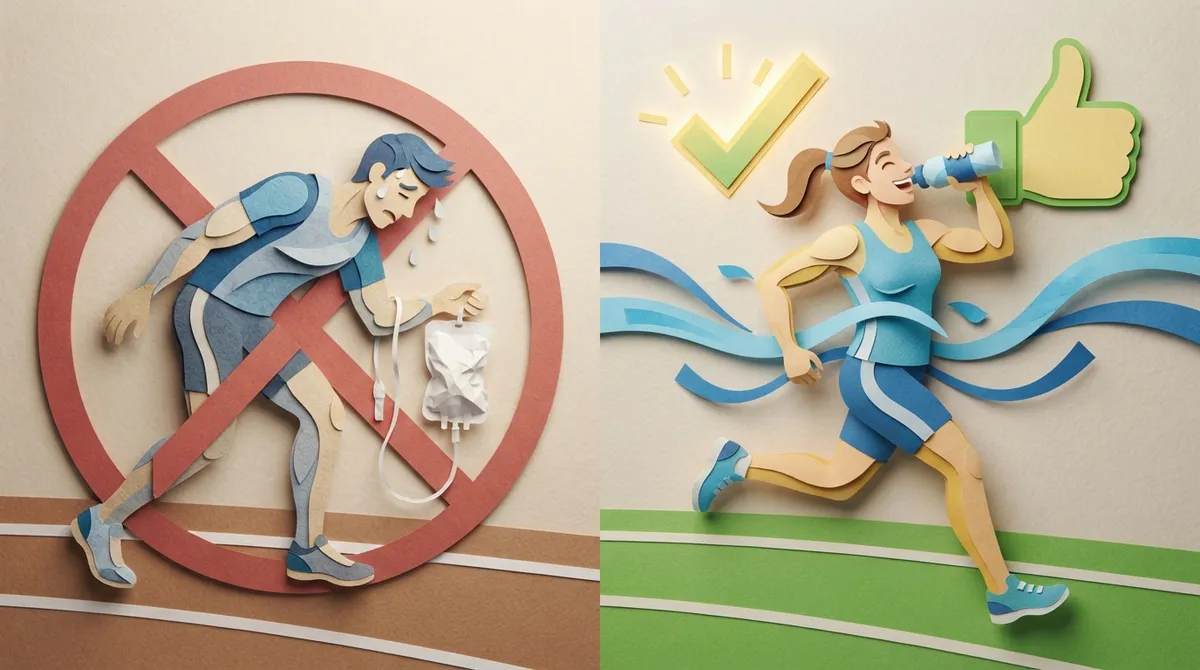
Here’s the good news. For most active people, rehydrating is easy, cheap, and safe. Your gut is very good at absorbing fluid when you’re healthy and able to drink.
The National Athletic Trainers’ Association recommends oral fluids for moderate or severe hypohydration when they are tolerated. IV fluids are saved for cases where oral fluids can’t be tolerated or where ongoing losses exceed intake.
Living in the desert? Our Nevada heat can sneak up on you fast. We even have a helpful read on living well in the desert without wrecking your skin, and many of those hydration tips help your workouts too.
Now, we don’t want to make IV therapy sound bad. It isn’t! It’s a valuable medical treatment in the right setting. The key is knowing when that is.
IV fluids are medically appropriate in selected situations. An appropriately licensed clinician should guide the assessment and treatment.
If you feel confused, faint, or very weak, or you have a racing heart or can’t stop vomiting, please do not wait for a spa appointment. Seek urgent medical care. A wellness visit is not a substitute for emergency treatment.
| Situation | Best Approach | Why |
|---|---|---|
| Mild to moderate fluid loss, able to drink | Oral fluids and electrolytes | Safe, simple, and effective |
| Routine post-workout recovery | Oral fluids, food, and rest | No proven advantage from IV |
| Vomiting, can’t keep fluids down | Medical evaluation, possibly IV | Oral intake is not working |
| Suspected heat illness | Emergency medical care | Needs fast, supervised treatment |
| Wanting a relaxing wellness boost | Optional IV session with screening | Personal choice, not a performance fix |
Every treatment has trade-offs, and IV therapy is no different. A trustworthy clinic will talk about risks openly. We believe you should hear them from us.
Here’s something many people don’t know. IV fluids are regulated as drugs. Adding vitamins or other ingredients may count as compounding, which has federal and state rules. Requirements also vary by location and by a provider’s scope of practice. That’s why a licensed clinician and careful screening matter so much.
This is the kind of thing we love explaining. If you want to read more, check out our post on IV hydration mistakes to avoid for faster recovery in Pahrump.
A good answer to that last question is a green flag. We’d always rather send you home with a water bottle than sell you something you don’t need.
This one surprises people. If you compete under World Anti-Doping Agency (WADA) rules, an IV can cause real trouble. Under WADA rules, IV infusions or injections totaling more than 100 mL in a 12-hour period are generally prohibited. Exceptions exist, such as hospital treatment or a valid therapeutic use exemption.
Please verify the current Prohibited List and the rules for your sport before any infusion. Rules can change, and the responsibility sits with the athlete. When in doubt, ask your governing body first.
If you’re a weekend warrior who never gets tested, this may not apply. But it’s worth a quick check before you book.
Absolutely, for the right reasons. Many of our guests enjoy IV hydration as a wellness experience, not a performance hack. If you’ve had a long, hot week and want to feel refreshed, a screened and supervised session can be a nice treat.
At Enhanced Aesthetics & Wellness in Pahrump, Nevada, we offer IV hydration therapy. Our Myers Cocktail starts at $150, with add-ons like glutathione, biotin, and zinc. We’ll talk through your goals, your health history, and whether it makes sense for you. Curious how it all works? Our guide on what to expect at a med spa walks you through it.
Many people also love how hydration supports their skin and glow. Our team has written about what IV drip hydration can do for your skin and wellness. That’s where the aesthetic side of our work shines.
Active people often ask about recovery tools beyond fluids. Some explore how peptides support muscle recovery and performance, or NAD therapy. We’ll always tell you what the evidence supports and where it’s still limited. Our Biote Neutraceuticals may also be a gentle fit for daily wellness support.
Here’s a friendly game plan you can use right away. It works for runners, lifters, hikers, and anyone who moves their body.
Individual needs differ. Your size, sport, climate, and health all play a part. A personal plan beats a one-size-fits-all drip every time.
Here’s what we want you to take away. IV hydration is a real medical tool, but it isn’t a proven shortcut to better athletic performance for healthy people who can drink. Water, electrolytes, food, and rest do the heavy lifting.
If you’re curious about IV therapy as a wellness treat, we’d love to chat. We’ll screen you carefully, explain the risks, and tell you honestly if it’s not the right fit. See what our neighbors say on Google by visiting Enhanced Aesthetics & Wellness on Google, and follow along on our Instagram for more tips.
Ready to talk through your goals? Contact us with your questions, or book an appointment to meet our team in Pahrump. We’re cheering you on!
Q: Does IV hydration improve athletic performance?
A: Current evidence does not show that elective IV fluids improve performance in healthy athletes who can drink. Oral fluids and electrolytes are generally the preferred choice. IV fluids are mainly a medical treatment for situations like severe dehydration.
Q: Is an IV drip better than drinking water or sports drinks after exercise?
A: For most people, no. IV fluids have not shown an advantage over oral rehydration in routine situations. If you can drink and keep fluids down, water, electrolytes, and a balanced meal usually do the job.
Q: When might an athlete medically need IV fluids?
A: IV fluids may be appropriate for severe dehydration, exertional heat illness, or when vomiting prevents you from drinking. A licensed clinician should assess you in these cases. If you feel confused, faint, or very ill, seek urgent medical care.
Q: Are IV hydration infusions allowed under WADA anti-doping rules?
A: Under WADA rules, IV infusions or injections over 100 mL in a 12-hour period are generally prohibited, unless an exception applies. Examples include hospital treatment or a valid therapeutic use exemption. Always check the current Prohibited List before getting an infusion.
Q: What should I ask a medical spa before getting IV hydration?
A: Ask who evaluates you, what credentials they hold, and how they screen your health history. Also ask where the fluids and additives come from and what the risks are. A caring clinic will tell you if oral hydration is a better fit.
Discover 12 face lifting laser treatments that deliver real results in 2026. From Morpheus8 to CoolPeel, find the perfect non-surgical solution for younger-looking skin.

Discover everything about CO2 laser treatment, from how it works to finding the best provider near you. Learn about benefits, costs, and what to expect!
