
KYBELLA® for Double Chin Reduction: Your Non-Invasive Confidence Boost
Discover how KYBELLA® for double chin reduction can boost your confidence. Safe, effective, and FDA-approved.

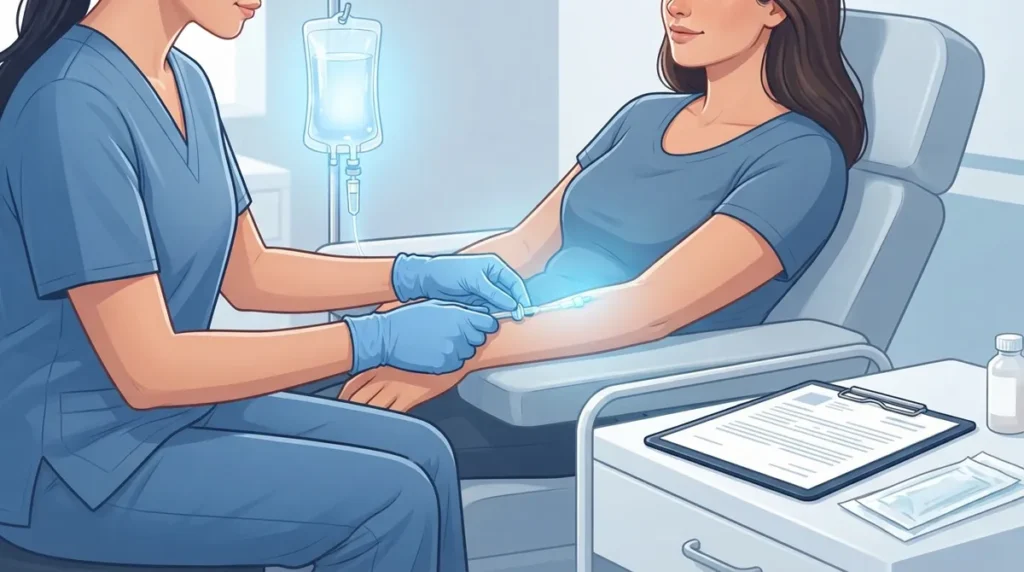
IV hydration therapy has limited clinical evidence for cosmetic claims in healthy people; most reported benefits come from personal stories rather than large controlled studies, so it should be viewed as a relaxing wellness add-on, not a medical cure.
Fat-soluble vitamins (A, D, E, K) in IV drips can accumulate in your body over time and pose serious risks for people with kidney, liver, or heart conditions, requiring careful consideration before treatment.
Always choose a provider who reviews your complete medical history before treatment, uses sterile technique, explains specific ingredients, and provides an emergency response plan; skipping these steps is a major red flag.
IV hydration therapy carries real medical risks including bruising, vein inflammation, allergic reactions, infections, and electrolyte imbalances, so selecting a clinic with licensed medical oversight is essential for your safety.
For generally healthy people eating a balanced diet, oral supplements may be equally effective and significantly cheaper than IV therapy, which works best as a relaxing wellness treatment rather than a medical necessity.
The med spa IV hydration industry generates billions in revenue with minimal FDA regulation, making due diligence critical; ask about provider credentials, sterile technique, and avoid clinics promising guaranteed results or cures.
You’ve probably seen the photos. Someone relaxing in a comfy chair, arm hooked to a small bag of fluid, looking totally at ease. IV hydration therapy has become one of the most talked-about treatments in medical aesthetics today. But before you book your first drip, let’s talk about what this treatment actually does, who it’s really for, and how to make sure you’re getting it somewhere safe.
At Enhanced Aesthetics & Wellness in Pahrump, Nevada, we believe in honest conversations about our treatments. That means telling you the good, the limits, and the questions worth asking before you roll up your sleeve. Let’s dig in together, friend to friend.

IV hydration therapy means fluids go straight into your vein through a small needle. These fluids often include electrolytes, vitamins, minerals, and sometimes antioxidants like glutathione. Because the mixture skips your stomach, it enters your bloodstream fast.
In medical spas, this treatment is popular as an add-on for energy, hydration, and glow. Our own IV hydration therapy menu includes options like the Myers Cocktail, plus add-ons such as glutathione, biotin, and zinc. It’s a relaxing experience, and many clients say they feel refreshed afterward.
That said, it’s important to understand this is an elective wellness service. It is not a proven medical treatment for anti-aging, and it does not replace a doctor’s care for illness.

The med spa industry has grown fast. In 2022 alone, it brought in about $15 billion in revenue nationwide. A 2025 JAMA Internal Medicine investigation found that roughly 10% of that came from IV hydration spas alone. The number of med spas jumped from around 5,431 in 2018 to many more today.
People love the idea of a quick reset. Life gets busy. Between work, kids, sun exposure, and travel, our bodies can feel drained. A hydration treatment feels like pressing a refresh button. It’s simple to understand why so many people are curious.
But popularity doesn’t always equal proof. Let’s look at what the science actually says.
Here’s the honest truth: for generally healthy people, strong clinical evidence backing many cosmetic claims is limited. A 2025 review found that evidence for elective IV vitamin therapy in healthy individuals remains thin. Most reports of glowing skin or better energy come from personal stories, not large controlled studies.
A 2025 dermatology review also found weak evidence that IV vitamins or antioxidants beat oral intake for skin results, unless someone has an actual deficiency. In other words, if your body already has enough of a vitamin, adding more through an IV probably won’t make your skin glow brighter.
This doesn’t mean the treatment has zero value. It can feel great, and staying hydrated matters. But it should be seen as a relaxing wellness add-on, not a medical cure or guaranteed anti-aging fix.
IV fluids are genuinely helpful when someone cannot absorb nutrients well by mouth, or needs fast fluid replacement due to illness. This is different from elective cosmetic use in healthy people. A trained provider should always screen you first to understand your true needs.
Every medical procedure carries some risk, even ones that seem simple. IV therapy is no exception. Knowing the risks helps you make a smart, confident choice.
| Risk | What It Means |
|---|---|
| Bruising or pain | Common at the needle site, usually minor |
| Phlebitis | Inflammation of the vein, can cause redness and soreness |
| Infiltration or extravasation | Fluid leaks into tissue instead of the vein |
| Allergic reaction | Ranges from mild to severe, including anaphylaxis |
| Infection | Can happen if sterile technique isn’t followed |
| Electrolyte imbalance | Too much or too little of certain minerals |
| Vitamin toxicity | Fat-soluble vitamins like A, D, E, and K can build up in the body |
Fat-soluble vitamins are worth extra attention. Unlike water-soluble vitamins, your body doesn’t just flush out the extra. This buildup can be risky, especially for people with kidney, liver, or heart conditions.
A recent U.S. News report highlighted growing concern among health experts about the IV hydration trend, especially around mobile services and clinics with limited medical oversight.
This treatment isn’t right for everyone. Being upfront about that is part of responsible care. You may need to avoid or delay treatment if you:
A good provider will always ask about your health history before treatment. If a clinic skips this step, that’s a red flag.
Not all IV hydration providers follow the same standards. The FDA issued a compounding risk alert back in October 2021, warning about insanitary conditions found at some medical offices, IV hydration clinics, and mobile IV services. That alert still matters today.
Here’s how to protect yourself when choosing where to get treated.
At Enhanced Aesthetics & Wellness, our team reviews your health background carefully before any treatment. We believe transparency builds trust, and trust is everything in medical aesthetics. You can also visit us on Google — Enhanced Aesthetics & Wellness to see how our Pahrump community feels about their experience with us.
Many clients ask if IV really beats a good multivitamin. The honest answer depends on your body and your needs.
| Factor | IV Hydration | Oral Supplements |
|---|---|---|
| Absorption speed | Fast, bypasses digestion | Slower, through the gut |
| Best for | Fast fluid needs, absorption issues | Daily maintenance in healthy people |
| Risk level | Higher due to needle and infusion | Lower, minimal invasive risk |
| Cost | Higher per session | Lower over time |
| Evidence for cosmetic benefit | Limited, mostly anecdotal | Similar limited evidence without deficiency |
If you’re generally healthy and eating a balanced diet, oral vitamins may do the job just fine. IV therapy tends to shine most as a comfort treatment, not a medical necessity, for people without a diagnosed deficiency.
Wondering what to expect at a well-run clinic? Here’s a simple walk-through.
This process should never feel rushed. If a clinic skips the health history step, or hands you a drip without explanation, walk away.
Many clients enjoy combining hydration therapy with other services. For example, some pair a hydration session with SkinPen Microneedling or a Deep Laser Peel for a full wellness day. Others prefer to schedule it around Neurotoxins appointments or Dermal Fillers visits, though timing should always be discussed with your provider first.
If you live in a dry desert climate like Pahrump, hydration matters even more. Check out our guide on how to live well in the desert without wrecking your skin for extra tips between visits.
A confident, transparent provider will welcome these questions. That openness is a good sign you’re in safe hands.
IV hydration therapy can be a relaxing, feel-good part of your wellness routine. It’s not a miracle cure, and it’s not right for everyone. But when done by trained professionals, with honest expectations, it can be a nice treat for your body.
The key is choosing a provider who values your safety as much as your comfort. Ask questions. Share your health history. Expect real answers, not big promises.
Our team stays connected with our Pahrump community through our Instagram and our Facebook page, where we share tips, updates, and behind-the-scenes looks at our treatments. We also encourage you to explore trusted resources like Biote if you’re curious about hormone health alongside your aesthetic goals.
Ready to talk through your options with a real person who cares about your safety and comfort? Contact us today, or go ahead and book an appointment to start your personalized wellness journey with Enhanced Aesthetics & Wellness in Pahrump, Nevada. We can’t wait to help you feel your best, safely and confidently.
Q: What is IV hydration therapy at a medical spa?
A: It’s a treatment where fluids, vitamins, and minerals go straight into your vein through a small IV line. Many clients enjoy it as a relaxing wellness add-on, though it’s important to know it’s elective and not a medical cure.
Q: Can IV hydration therapy improve my skin or slow aging?
A: There’s limited strong evidence proving IV vitamins beat oral intake for skin glow, unless you have an actual deficiency. Many reports of brighter skin come from personal experience rather than large clinical studies, so keep expectations realistic.
Q: What are the biggest risks with IV hydration therapy?
A: Risks include bruising, vein irritation, allergic reactions, infection, and imbalances in electrolytes or vitamins. That’s why it’s so important to choose a provider who reviews your health history and uses proper sterile technique.
Q: Who should avoid getting an IV hydration treatment?
A: People with kidney, liver, or heart conditions, pregnant individuals without medical clearance, and anyone with known allergies to the ingredients should talk to a doctor first. A good clinic will always screen you before treatment.
Q: How can I tell if an IV hydration clinic is safe?
A: Look for licensed medical oversight, a thorough health history review, clear ingredient information, and a real emergency plan. If a clinic skips these steps or promises guaranteed results, it’s best to look elsewhere.
Discover how KYBELLA® for double chin reduction can boost your confidence. Safe, effective, and FDA-approved.

The Impact of Semaglutide on Weight Loss can revolutionize obesity management & help you achieve lasting results.
