
What Are Some Affordable Skincare Trends For 2024
Affordable Skincare Trends For 2024: Explore budget-friendly, effective skincare tips and innovations for radiant, healthy skin.


Choose the right filler based on your specific facial needs: HA for fine lines, CaHA for volume, Sculptra for gradual results.
Hyaluronic acid fillers offer versatility and are reversible, making them ideal for first-time filler users seeking natural enhancements.
Combination filler treatments can provide customized, comprehensive facial rejuvenation by targeting different areas with specialized products.
Consultation with an experienced provider is crucial to determine the most appropriate filler type and treatment approach for your goals.
Most filler treatments are quick, with minimal downtime and immediate results, typically taking 15-30 minutes.
Different fillers have varying durations, ranging from 6 months for HA fillers to up to 5 years for PMMA fillers.
Modern fillers not only add volume but can also stimulate natural collagen production, improving skin quality over time.
Dermal fillers have changed the game in the world of beauty and anti-aging. If you’re looking to smooth out wrinkles, add volume to your face, or enhance your natural features, you’re in the right place. These injectable treatments offer quick results without surgery. They’re popular for a good reason – they work.
In this guide, we’ll walk you through 14 types of dermal fillers available in 2026. You’ll learn what makes each one special, how long they last, and which areas they work best for. Whether you’re new to fillers or looking to try something different, this information will help you make smart choices about your skin.
At Enhanced Aesthetics & Wellness in Pahrump, Nevada, we help people understand their options and choose the right treatments for their goals. Let’s dive into the world of fillers and find what works for you.
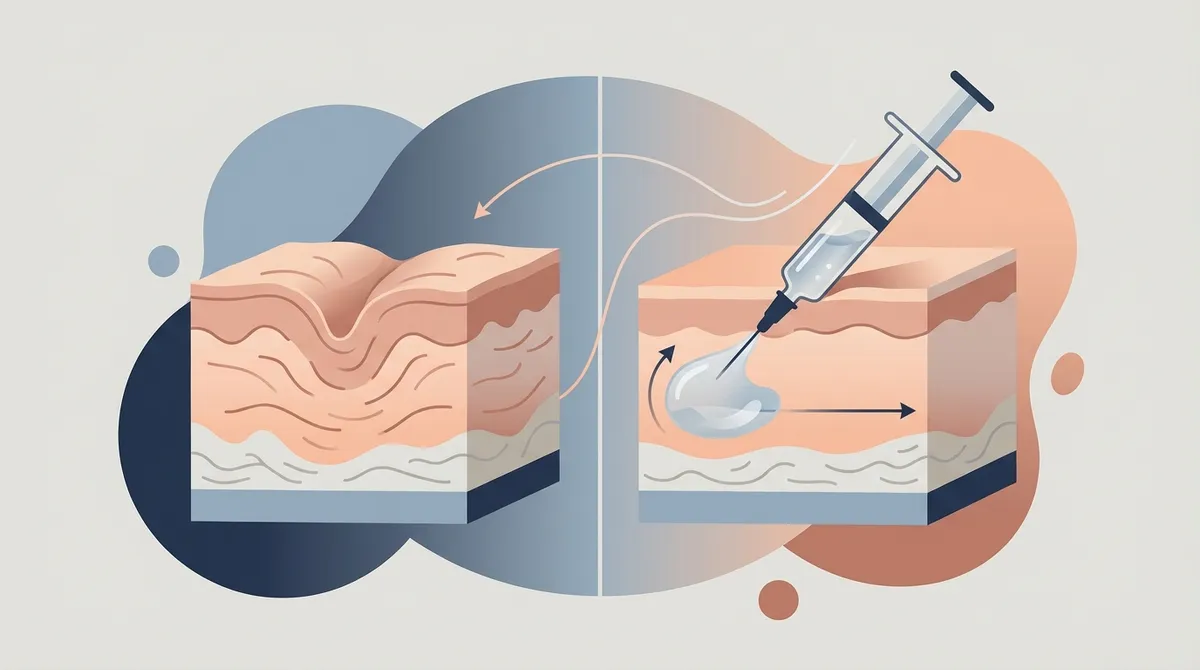
Dermal fillers are gel-like substances that doctors inject under your skin. They work by filling in wrinkles, adding volume, and smoothing out your face. Think of them as a way to plump up areas that have lost fullness over time.
These treatments are quick. Most sessions take 30 minutes or less. You’ll see results right away, though some fillers work gradually over time. The best part? There’s little to no downtime. You can get back to your day almost immediately.
Different fillers use different ingredients. Some use hyaluronic acid, which your body makes naturally. Others use calcium or synthetic materials. Each type has its own benefits and works best for specific concerns.

Hyaluronic acid (HA) fillers are the rock stars of the filler world. Your body already makes this substance naturally. It keeps your skin hydrated and plump. As you age, you make less of it. That’s where HA fillers come in.
These fillers work great for lips, cheeks, and smile lines. They give you instant results that look natural. One big advantage? If you don’t like the results, your doctor can reverse them with a special enzyme called hyaluronidase.
Most HA fillers last between 6 to 18 months. The exact time depends on which product you choose and where it’s injected. Popular brands include Juvéderm, Restylane, and Belotero.
HA fillers are reversible, which gives you peace of mind. They’re also very versatile. You can use them for many different areas of your face. Plus, they tend to cause fewer allergic reactions because they’re so similar to what your body makes naturally.
These fillers attract water, which helps keep your skin looking fresh and hydrated. This makes them perfect for fine lines and areas that need subtle enhancement.

Juvéderm Voluma is a specific type of HA filler designed for your cheeks and mid-face area. It’s thicker than other HA fillers, which makes it perfect for adding structure and lift.
This filler can last up to two years, which is longer than most HA products. It’s FDA-approved and has been helping people restore youthful volume since it hit the market.
If you’ve noticed your cheeks looking flatter or your face losing its youthful contours, Voluma might be your answer. It lifts and adds volume where you need it most.

Restylane isn’t just one product – it’s a whole family of fillers. Each one is designed for specific areas and concerns. This gives you lots of options to customize your treatment.
Restylane-L works well for moderate to severe facial wrinkles. Restylane Silk is perfect for lip enhancement and the fine lines around your mouth. Restylane Lyft targets your cheeks and hands.
These products typically last 6 to 12 months. They’re well-studied and have a strong safety record. Many people start with Restylane because it offers predictable, natural-looking results.
Calcium hydroxylapatite (CaHA) fillers are heavier-duty than HA products. They’re made from a mineral found naturally in your bones. This makes them denser and better for deeper wrinkles and facial contouring.
Radiesse is the most well-known CaHA filler. It does two things at once. First, it fills in wrinkles and adds volume immediately. Second, it stimulates your body to make more collagen over time. This gives you longer-lasting results.
These fillers typically last 12 to 15 months. They work great for your jawline, cheeks, and hands. They’re also good for people who need more structural support in their face.
One unique feature of CaHA fillers is their ability to kickstart collagen production. Your body gradually replaces the filler with your own natural collagen. This means you’re not just getting temporary volume – you’re actually improving your skin’s quality over time.
However, these fillers can’t be dissolved like HA fillers. This means you need to be more certain about your treatment plan before you start.
Radiesse deserves its own mention because it’s so popular for facial contouring. This CaHA filler is like a sculptor’s tool for your face. It’s thick enough to create definition but smooth enough to look natural.
Doctors love using Radiesse for the jawline and chin area. It creates sharp, defined contours that last. It’s also great for hands that show signs of aging.
Results appear immediately, but they get even better over the next few weeks as collagen builds up. Most people enjoy their results for a year or more.
Poly-L-lactic acid fillers work differently than HA or CaHA products. They don’t give you instant volume. Instead, they stimulate your body to produce collagen over several months.
Sculptra is the most popular poly-L-lactic acid filler. It’s perfect if you have significant volume loss and want natural-looking, long-lasting results. You’ll need multiple treatment sessions spaced a few weeks apart.
The results develop slowly, which means no one will notice a sudden change. Your face gradually looks more youthful and fuller. Results can last more than 2 years, making this one of the longest-lasting options available.
Sculptra works best for people with significant facial volume loss. If you’ve noticed hollowing in your temples, cheeks, or under your eyes, this might be your solution. It’s also great if you prefer subtle, gradual improvements over dramatic changes.
Keep in mind that you’ll need patience with this treatment. It takes several months to see full results. But many people find the natural-looking outcome worth the wait.
Let’s talk more about Sculptra specifically. This filler is unique because it’s a collagen stimulator rather than just a space filler. It works deep in your skin to rebuild its structure from the inside out.
Most people need about three treatment sessions over a few months. Each session takes about 30 minutes. The results appear gradually, which makes them look incredibly natural.
Sculptra is FDA-approved for facial wrinkles and folds. It’s also used off-label for other areas. Many people appreciate that the results can last up to two years or even longer with proper care.
Polymethylmethacrylate (PMMA) fillers are semi-permanent. They contain tiny microspheres that stay in your skin and provide long-lasting support. These microspheres are mixed with collagen that your body absorbs over time.
Bellafill is the most popular PMMA filler in the United States. It’s FDA-approved for nasolabial folds (smile lines) and acne scars. Results can last up to five years or more.
Because PMMA fillers are semi-permanent, you need to be absolutely sure about your treatment plan. They can’t be dissolved or easily removed. But for people who want long-lasting results, they’re an excellent choice.
PMMA fillers work by creating a framework that your body fills in with collagen. The microspheres stay in place permanently, providing ongoing support. This makes them ideal for deeper wrinkles and scars that need long-term correction.
These fillers require more expertise to inject properly. Make sure you choose an experienced provider if you’re considering PMMA products.
Bellafill is worth discussing on its own because it’s the only filler FDA-approved for both wrinkles and acne scars. If you have pitted acne scars that make you self-conscious, this could be life-changing.
The treatment combines PMMA microspheres with bovine collagen. Your body absorbs the collagen in about three months. But the microspheres stay behind, continuing to provide support for years.
Most people see improvement within a few weeks. The results get better over time as your body produces more collagen around the microspheres. For nasolabial folds, results can last up to five years.
Collagen fillers were some of the first dermal fillers available. While they’re less common now, they’re still used in some situations. These fillers use animal or human-derived collagen to add volume and smooth wrinkles.
The results are immediate but don’t last as long as newer options. Most collagen fillers last 3 to 4 months. Because they’re broken down relatively quickly, you’ll need frequent touch-ups.
Today, most people choose HA or other synthetic fillers instead. But collagen fillers can still be useful for certain applications, especially when combined with other treatments.
Fat grafting isn’t technically a commercial filler product, but it’s worth mentioning. This technique takes fat from one part of your body and injects it into your face. It’s a natural option that uses your own tissue.
The procedure is more involved than regular filler injections. You need liposuction to harvest the fat first. But the results can be very long-lasting. Some of the transferred fat becomes permanent.
Fat grafting works well for large volume loss. It’s also good if you want to avoid synthetic materials. However, not all the transferred fat survives. You might need multiple sessions to achieve your desired results.
Many people get the best results by using multiple types of fillers together. This approach lets your provider customize your treatment for different areas of your face.
For example, you might use HA fillers for your lips and a CaHA filler for your jawline. Or you could combine Sculptra for overall volume loss with HA fillers for fine lines. This strategy gives you the benefits of each product where it works best.
At Enhanced Aesthetics & Wellness, we often recommend combination approaches. This helps us achieve natural-looking results that address all your concerns at once.
The filler industry keeps evolving. In 2026, we’re seeing new formulations that last longer and feel more natural. Some newer products include ingredients that further stimulate collagen production.
Advanced HA fillers now have better lifting capacity. They can support your facial structure while still feeling soft and natural. Some brands are also developing fillers with built-in numbing agents for more comfortable treatments.
Researchers are working on fillers that integrate even better with your natural tissue. The goal is products that last longer, look more natural, and require fewer touch-ups over time.
With so many options, how do you choose? The right filler depends on several factors. Your age, skin condition, and specific concerns all matter. Your goals and budget play a role too.
Here’s a simple guide to help you think about your options:
The best approach is to consult with an experienced provider. They can assess your face, listen to your goals, and recommend the right products for you. Don’t be afraid to ask questions about each option.
| Filler Type | Main Ingredient | Duration | Best For | Reversible |
|---|---|---|---|---|
| Hyaluronic Acid | HA | 6-18 months | Lips, fine lines, general volume | Yes |
| Calcium Hydroxylapatite | CaHA | 12-15 months | Deeper wrinkles, jawline, hands | No |
| Poly-L-Lactic Acid | PLLA | 2+ years | Significant volume loss, gradual results | No |
| PMMA | Microspheres + Collagen | Up to 5 years | Deep wrinkles, acne scars | No |
Most filler treatments follow a similar process. First, your provider will clean the treatment area. They might apply numbing cream to make you more comfortable. Many modern fillers also contain lidocaine, which numbs as they’re injected.
The injection process usually takes 15 to 30 minutes. You might feel some pressure or slight pinching. Most people find the discomfort very manageable. Your provider will inject the filler in specific points or along certain lines.
After the injections, your provider might massage the area to distribute the product evenly. You’ll see results right away with most fillers. Some swelling and redness are normal. These side effects usually fade within a few days.
One reason people love fillers is the minimal downtime. You can usually return to normal activities right away. But there are some things you should avoid for the first 24 to 48 hours.
Don’t exercise vigorously right after treatment. Avoid extreme temperatures like saunas or ice baths. Don’t massage the treated area unless your provider tells you to. And stay out of direct sunlight as much as possible.
Some swelling and bruising are normal. You can use ice packs to reduce swelling. Arnica cream or supplements may help with bruising. Sleep with your head elevated for the first night to minimize swelling.
Most side effects resolve within a week. If you experience severe pain, significant asymmetry, or vision changes, contact your provider immediately. These are rare but serious complications that need quick attention.
Filler costs vary based on several factors. The type of filler matters. HA fillers typically cost less per syringe than longer-lasting options like Sculptra or Bellafill. Your geographic location affects pricing too.
Most fillers are priced by the syringe. You might need one to several syringes depending on your treatment area and goals. Your provider’s experience level also influences the cost. More experienced injectors often charge more, but their expertise is worth it.
Think of fillers as an investment in yourself. While the upfront cost might seem high, consider how long the results last. A filler that lasts two years might actually be more cost-effective than one that needs replacing every six months.
Dermal fillers are generally very safe when administered by qualified professionals. The FDA regulates these products to ensure they meet safety standards. But like any medical procedure, there are potential side effects.
Common side effects include swelling, bruising, redness, and tenderness at injection sites. These are temporary and usually resolve within a week. Some people experience small bumps under the skin, which typically fade over time.
Serious complications are rare but possible. They include infection, allergic reactions, and vascular occlusion (blocked blood vessels). This is why choosing an experienced, qualified provider is so important. They know how to inject safely and handle complications if they occur.
Tell your provider about all medications and supplements you take. Some can increase bruising risk. If you have a history of severe allergies or autoimmune conditions, discuss this before treatment.
Fillers aren’t the only option for facial rejuvenation. Understanding how they compare to other treatments helps you make informed decisions. Botox is often confused with fillers, but they’re quite different.
Botox relaxes muscles that cause wrinkles. It’s great for forehead lines, crow’s feet, and frown lines. Fillers add volume and fill in creases. Many people use both products together for comprehensive results.
Morpheus8 is a radiofrequency microneedling treatment that tightens skin and stimulates collagen. It works well with fillers but addresses different concerns. Laser treatments like CoolPeel® Treatment resurface skin and improve texture.
For maximum results, many people combine multiple treatments. Your provider can create a personalized plan that addresses all your concerns. This might include fillers for volume, Botox for wrinkles, and skin treatments for texture and tone.
How long fillers last is one of the most common questions we hear. The answer depends on several factors. The type of filler is the biggest factor. HA fillers last 6 to 18 months. CaHA fillers last 12 to 15 months. PLLA fillers can last over 2 years. PMMA fillers can last up to 5 years or more.
Where the filler is placed also matters. Areas with more movement, like your lips, break down filler faster. Areas with less movement, like your cheeks, make filler last longer. Your metabolism plays a role too. If you have a fast metabolism, you’ll break down fillers more quickly.
Your lifestyle affects filler longevity as well. Sun exposure, smoking, and stress can all shorten how long your results last. Taking good care of your skin helps fillers work their best for as long as possible.
Your results depend heavily on who does your injections. Look for a provider with proper training and credentials. Board-certified dermatologists, plastic surgeons, and experienced nurse injectors are good choices.
Ask to see before-and-after photos of actual patients. Look for natural-looking results that match your aesthetic goals. Don’t be swayed by extremely low prices – they often indicate inexperienced providers or questionable products.
A good provider takes time to understand your goals. They should explain your options clearly and set realistic expectations. They should also have a plan for handling complications if they arise.
Check out our before & after gallery to see real results from actual patients. Reading reviews can also help you choose wisely. Look for providers with consistently positive feedback about their skill, bedside manner, and results.
Seeing actual results helps you understand what fillers can do. Look at before-and-after photos online, but remember that your results may vary. Everyone’s face is unique, and what works for one person might not be the same for you.
Many people report feeling more confident after filler treatments. They like looking refreshed without looking “done.” Natural-looking results are the goal for most patients. You want people to notice you look great, not that you’ve had work done.
Some patients start with small amounts of filler to see how they like it. You can always add more, but taking it out is harder with non-reversible fillers. A gradual approach often leads to the most satisfying results.
Don’t forget to check out our reviews on Google to hear from real patients about their experiences with dermal fillers and other treatments at our practice.
If you’ve decided to try fillers, proper preparation helps ensure the best results. Start by scheduling a consultation with a qualified provider. Come prepared with questions and photos of looks you like.
Avoid blood-thinning medications and supplements for about a week before treatment if possible. This includes aspirin, ibuprofen, fish oil, and vitamin E. These can increase bruising. Check with your doctor before stopping any prescribed medications.
Don’t drink alcohol for 24 hours before your appointment. Alcohol thins your blood and can lead to more bruising. Come to your appointment with a clean face, free of makeup. This reduces infection risk.
Plan your appointment timing carefully. If you have a big event coming up, schedule your treatment at least two weeks in advance. This gives any swelling or bruising time to resolve completely.
The filler industry continues to evolve. Researchers are developing new formulations that last even longer and feel more natural. Some future fillers might last three to five years while still being reversible.
We’re also seeing better understanding of facial anatomy. This leads to more precise injection techniques and better results. Three-dimensional approaches to facial rejuvenation are becoming standard.
Technology is improving too. New injection techniques and tools help providers place filler more accurately. This means less product used, better results, and fewer complications.
In Pahrump, Nevada, Enhanced Aesthetics & Wellness stays current with the latest advances in filler technology. We’re committed to offering our patients the best, most innovative treatments available.
Choosing to get dermal fillers is a personal decision. Take your time to research your options and find a provider you trust. Don’t feel pressured to do more than you’re comfortable with.
Start with a thorough consultation. A good provider will listen to your concerns and create a customized treatment plan. They should explain the pros and cons of different filler types for your specific situation.
Remember that you can always start conservatively and add more later. It’s easier to add volume than to correct overfilled areas. Trust your instincts – if something doesn’t feel right, it’s okay to wait or get a second opinion.
Fillers can be life-changing for the right person. They offer a non-surgical way to look more refreshed and youthful. With proper research and the right provider, you can achieve beautiful, natural-looking results.
You’ve learned about 14 different types of dermal fillers and how they can help you achieve your aesthetic goals. From quick-acting HA fillers to long-lasting PMMA options, there’s a solution for virtually every concern.
The key is working with experienced professionals who understand facial anatomy and have an artistic eye. At Enhanced Aesthetics & Wellness in Pahrump, Nevada, we specialize in creating natural-looking results that enhance your unique beauty. We take time to understand your goals and recommend the right treatments for you.
Whether you’re interested in smoothing fine lines, adding volume to your cheeks, or enhancing your lips, we’re here to help. Our team stays current with the latest techniques and products to give you the best possible outcomes.
Ready to explore your options? Schedule your personalized consultation today and discover how dermal fillers can help you look and feel your best. We’ll answer all your questions and create a treatment plan designed just for you. Your journey to refreshed, confident beauty starts here.
Q: What is the difference between hyaluronic acid and calcium hydroxylapatite fillers?
A: Hyaluronic acid fillers are lighter and more versatile, perfect for lips and fine lines. They last 6-18 months and can be dissolved if needed. Calcium hydroxylapatite fillers are denser and better for deeper wrinkles and facial contouring. They stimulate collagen production, last 12-15 months, but cannot be reversed. Think of HA as the flexible option and CaHA as the structural support.
Q: How long do dermal fillers last and when should I get touch-ups?
A: Filler longevity varies by type. HA fillers last 6-18 months, CaHA fillers about 12-15 months, PLLA fillers over 2 years, and PMMA fillers up to 5 years. Schedule touch-ups when you notice results fading, usually a few weeks before they fully disappear. Your provider can assess your needs and recommend the right timing for maintenance treatments.
Q: Are dermal fillers safe and what are the common side effects?
A: Dermal fillers are very safe when administered by qualified professionals. Common side effects include temporary swelling, bruising, redness, and tenderness that resolve within a week. Serious complications like infection or vascular issues are rare but possible. Choosing an experienced provider and following aftercare instructions minimizes risks and ensures the best results.
Q: Can I combine dermal fillers with other aesthetic treatments?
A: Yes, combining fillers with other treatments often gives the best results. Many people pair fillers with Botox for comprehensive facial rejuvenation. You can also combine them with treatments like Morpheus8, PRP therapy, or laser procedures. Your provider can create a customized plan that addresses all your concerns for optimal, natural-looking outcomes.
Q: Which dermal filler is best for nasolabial folds and smile lines?
A: For nasolabial folds and smile lines, hyaluronic acid fillers like Juvéderm or Restylane work great for mild to moderate lines. For deeper folds, calcium hydroxylapatite fillers like Radiesse provide better structural support. If you want long-lasting results, Bellafill (a PMMA filler) can last up to five years for these areas. Your provider will recommend the best option based on the severity of your lines.
Affordable Skincare Trends For 2024: Explore budget-friendly, effective skincare tips and innovations for radiant, healthy skin.

Discover trusted laser hair removal close to Pahrump, real pricing, prep tips, and how to choose a safe, experienced provider nearby.
