
How to Find Real Kybella Results Near Pahrump
Discover how Kybella near Pahrump can help you finally address stubborn chin fat with safe, FDA-approved injections and local expert care.


For most healthy people with mild dehydration, drinking water or an electrolyte drink is enough, and an IV adds risk without extra benefit.
IV hydration is a medical option for moderate to severe dehydration, vomiting, or when fluids cannot be kept down, not a routine wellness upgrade.
Before booking an IV, ask who reviews your health history, who places the line, whether medical oversight is available, and exactly what doses are used.
Oral rehydration solutions, with measured glucose and electrolytes, are best after diarrhea, vomiting, or a stomach bug, while many sports drinks carry more sugar.
No strong evidence shows IV vitamin drips improve skin, energy, or hangovers in healthy people; skin hydration depends on fluids, moisturizer, SPF, sleep, and proven treatments.
IV safety varies by state, and risks include bruising, infection, allergic reactions, and dosing errors, so people with kidney or heart disease, high blood pressure, or pregnancy should consult a doctor first.
You have a long weekend behind you, a skin appointment ahead, and a bottle of electrolyte drink in your hand. Then you see a friend post about her IV drip glow. Now you wonder if you are doing hydration all wrong. We get this question a lot, and it is a good one.
Here is the honest truth: iv hydration vs electrolyte drinks is not a contest with one clear winner. They do different jobs. Mixing them up can cost you money, time, and sometimes your comfort. In 2026, wellness trends move fast, and it is easy to feel like a drip is always the smarter pick. It is not.
In this guide, we walk through five common mistakes people make when choosing between the two. You will learn when a simple drink is plenty, when an IV makes sense, and what to ask before you book. Whether you are a busy professional, a skincare fan, or just curious, you will leave with clear answers and a bit more confidence.
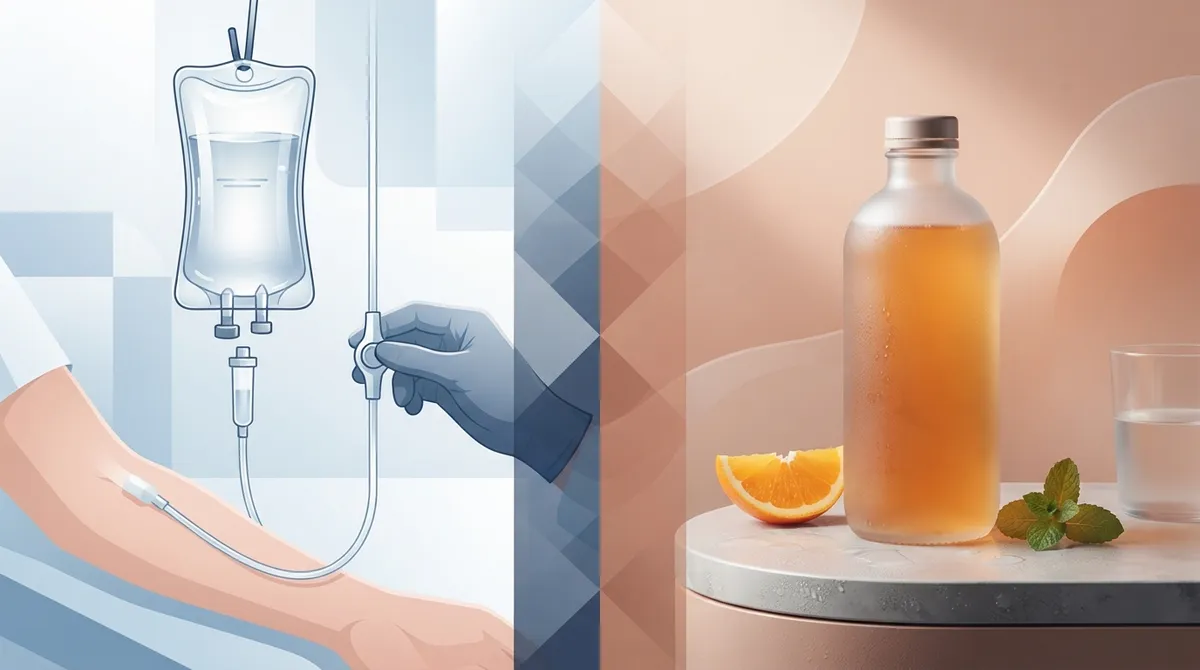
Let us start with the basics. IV hydration puts fluid straight into a vein. An electrolyte drink is something you sip, and your gut absorbs it over time. Both can replace fluid and minerals. They are just not interchangeable in every situation.
| Feature | IV Hydration | Electrolyte Drinks |
|---|---|---|
| How it enters the body | Directly into a vein | Through the stomach and gut |
| Best for | Moderate to severe fluid loss, or when drinking is not possible | Mild dehydration and daily fluid needs |
| Convenience | Needs an appointment and a trained provider | Grab and go |
| Main risks | Bruising, vein irritation, infection, dosing errors | Too much sugar or sodium in some products |
| Medical screening | Needed | Not needed for most healthy people |
For most healthy people with mild dehydration, drinking fluids is the right move. Oral rehydration solutions, which mix glucose and electrolytes in measured amounts, work especially well after diarrhea or vomiting. IV fluids are a medical tool for more serious needs. If you want a deeper look at the drip side, see What Is IV Hydration, and Is It Right for You?
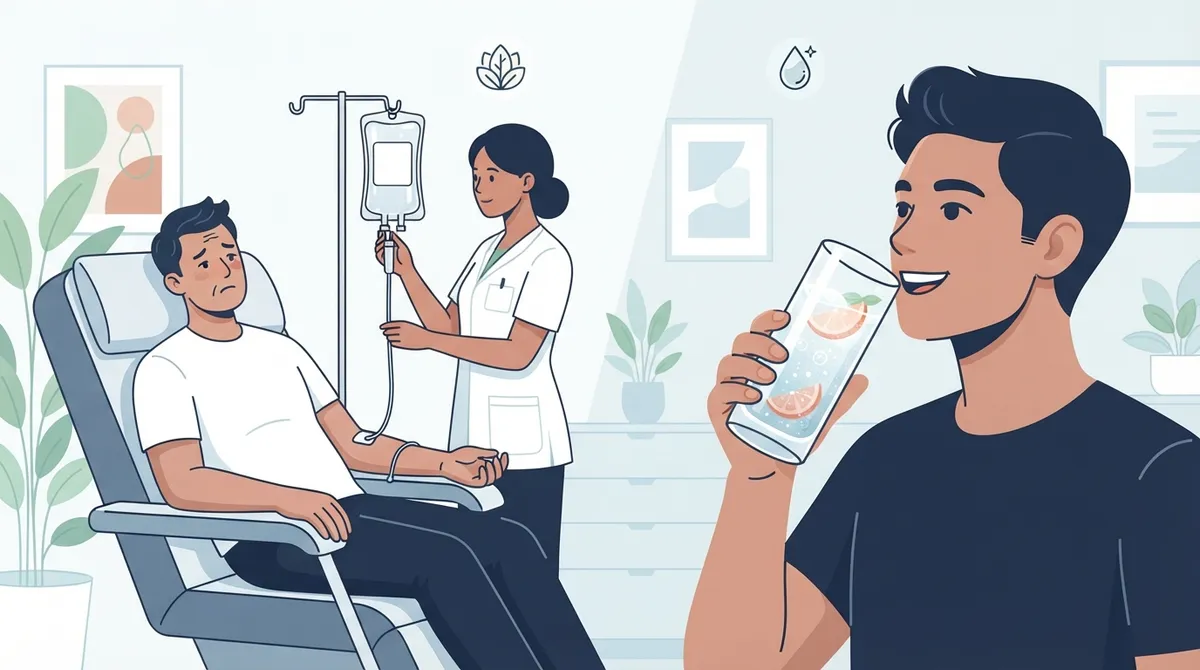
This is the biggest one. A drip sounds powerful, so people assume it must beat a drink. But more direct does not always mean better for you.
If you are mildly thirsty after a hot Pahrump afternoon, a tall glass of water or an electrolyte drink usually does the job. Your body is great at absorbing fluid when your gut is working normally. An IV adds a needle, a clinic visit, and added risk, without extra benefit in that case.
IV hydration shines when a person is moderately to severely dehydrated, cannot keep fluids down, or has tried drinking and still feels awful. Those are medical situations. Severe symptoms need a proper medical check, not a wellness drip.
Not sure which side of the line you are on? Our team breaks this down in How to Choose Between IV Therapy vs Oral Rehydration.
Here is a number worth knowing. A 2025 report on IV hydration services found that more than 85% of clinics approached by researchers recommended specific IV cocktails for symptoms like fatigue or colds. Only about one in four required a medical consultation first, and fewer than 25% warned about possible side effects. That is a lot of drips with very little talking.
Screening matters because IV fluids are not right for everyone. People with kidney disease, heart disease, high blood pressure, or pregnancy may face extra risks. Added vitamins can also interact with medicines. A good provider asks about your health history before anything goes in your arm.
Before you book any drip, ask these questions:
If you cannot get clear answers, that is your sign to pause. We share more on this in How to Choose Safe Intravenous Hydration Therapy.
We love healthy skin here, so we want to be straight with you. Many people book IV drips hoping for a glow. It is a lovely idea. But the evidence does not show that IV vitamin drips improve skin in otherwise healthy people.
A 2023 review found no high-quality evidence supporting IV vitamin therapy for people without a severe deficiency, critical illness, or a specific medical condition. In plain words: if you are healthy and well nourished, a drip is unlikely to transform your skin.
Skin hydration comes from several places. Drinking enough fluid helps. So does a good moisturizer, sun protection, and sleep. For deeper results, professional treatments built for skin do the heavy lifting. Our guide, 13 Honest Facts About IV Hydration and Skin Health (2026), goes into this more. You can also compare options in IV Drips vs. Skin Treatments: What Really Boosts Beauty?
This matters a lot in the desert, where dry air pulls moisture from your skin all day. Living well in Nevada heat takes a plan, not a single fix.
Now for the other side. Electrolyte drinks are handy, but not all are equal. Some are packed with sugar and made for athletes in long events, not for someone sitting at a desk.
It also helps to know the difference between a regular electrolyte drink and an oral rehydration solution. An ORS has glucose and salts in carefully measured amounts, so your gut absorbs fluid well during illness. Many sports drinks are not built that way.
Here is a simple way to choose:
Curious how drinks stack up against drips for active people? Read IV Hydration vs Sports Drinks: Which Is Right for You? and IV Hydration vs. Oral Fluids: Which Boosts Energy Best?
We get it. A comfy chair, a warm blanket, and a drip can feel like a spa day. That calm feeling is real. But IV treatment is still a medical procedure, and it carries risks that a drink does not.
Possible problems include bruising, vein irritation, infection, allergic reactions, and dosing errors. Too much fluid or too many electrolytes can also stress the body. Extra vitamins are not always harmless, and some can cause problems at high doses.
The FDA has raised concerns about wellness IV treatments in unregulated settings. Rules also vary from state to state, and there is no single federal standard for med spas. A 2025 report found that 32 of 50 states had some rule related to IV hydration services, and only four were rated as having comprehensive oversight. That means you have to do some homework yourself.
For a clear look at the tradeoffs, see Why Get IV Hydration? Benefits, Risks & What’s Real.
Let us wrap the decision into something simple. Think of it as a ladder. Start at the bottom and only climb when you need to.
Notice that skincare goals do not push you up the ladder. If your goal is smoother, brighter, firmer skin, treatments made for skin are a better match. Options like SkinPen Microneedling or a CoolPeel treatment target the skin itself, which no drink or drip can do.
Some people need more caution with IV fluids. If you have kidney or heart disease, high blood pressure, or you are pregnant, talk with your own doctor first. The same goes for anyone who takes regular medicines. A short chat now can save you trouble later.
Men, women, and everyone in between deserve the same careful care. Whether you are a professional with a packed schedule or someone easing into wellness, a good provider will slow down, ask questions, and tell you the truth, even when the truth is “you just need a drink and some rest.”
Hydration is a real topic in a dry, hot place like Pahrump. Between sunny days, outdoor plans, and the occasional big night out, many of us feel the pull of a quick fix. At Enhanced Aesthetics & Wellness, we believe in giving you honest options, not pressure. We offer IV hydration as part of a thoughtful wellness approach, and we will always tell you when a simple drink is enough. You can see what neighbors say about us when you visit us on Google — Enhanced Aesthetics & Wellness.
If you are curious about our drips and what they include, take a look at our IV Hydration Therapy page. For general research on fluids and dehydration, the Centers for Disease Control and Prevention and the U.S. Food and Drug Administration are trusted starting points. The Cleveland Clinic overview of IV vitamin therapy is also a helpful read.
When you weigh iv hydration vs electrolyte drinks, the smart answer is: match the tool to the need. Electrolyte drinks and oral rehydration solutions handle most everyday hydration. IV hydration is a medical option for moderate to severe cases or when drinking is not working. Neither one is a magic skin treatment, and neither replaces good habits.
Avoid the five mistakes above, ask good questions, and choose a team that puts your health first. If you would like personalized guidance, we would love to help. Contact us with your questions, or book an appointment and let us build a plan that fits you.
Q: Is IV hydration better than drinking an electrolyte drink?
A: Not always! For most healthy people with mild dehydration, drinking fluids or an oral rehydration solution works just as well. IV hydration is a better fit when dehydration is moderate to severe, or when you cannot drink or keep fluids down.
Q: When do you need IV fluids instead of oral rehydration?
A: IV fluids are used when someone is severely dehydrated, cannot keep liquids down, or has tried oral rehydration without success. If you feel very weak, dizzy, or confused, please get a medical assessment rather than a wellness drip.
Q: Do IV hydration drips improve skin, energy, or hangovers?
A: Many people feel better after a drip, but strong evidence for added skin, energy, or hangover benefits in healthy people is limited. A drip may help if you are truly dehydrated, yet it is not a proven beauty treatment on its own.
Q: Are IV hydration treatments at med spas safe?
A: They can be safe when a trained, licensed provider screens you and uses clear dosing. Risks like bruising, vein irritation, infection, and allergic reactions still exist, so always ask about credentials, ingredients, and medical oversight before you book.
Q: What is the difference between an electrolyte drink and an oral rehydration solution?
A: An oral rehydration solution blends glucose and electrolytes in measured amounts to help your gut absorb fluid during illness. Many electrolyte or sports drinks are made differently and may carry more sugar, so check the label for your needs.
Discover how Kybella near Pahrump can help you finally address stubborn chin fat with safe, FDA-approved injections and local expert care.

If you’re considering a Morpheus8 face treatment, you may be wondering what benefits you can expect. This cutting-edge treatment can improve the appearance of wrinkles,
