
Choose Kybella Treatment in Pahrump to Target Stubborn Fat
Kybella treatment in Pahrump targets submental fat without surgery or downtime. Get lasting results today.

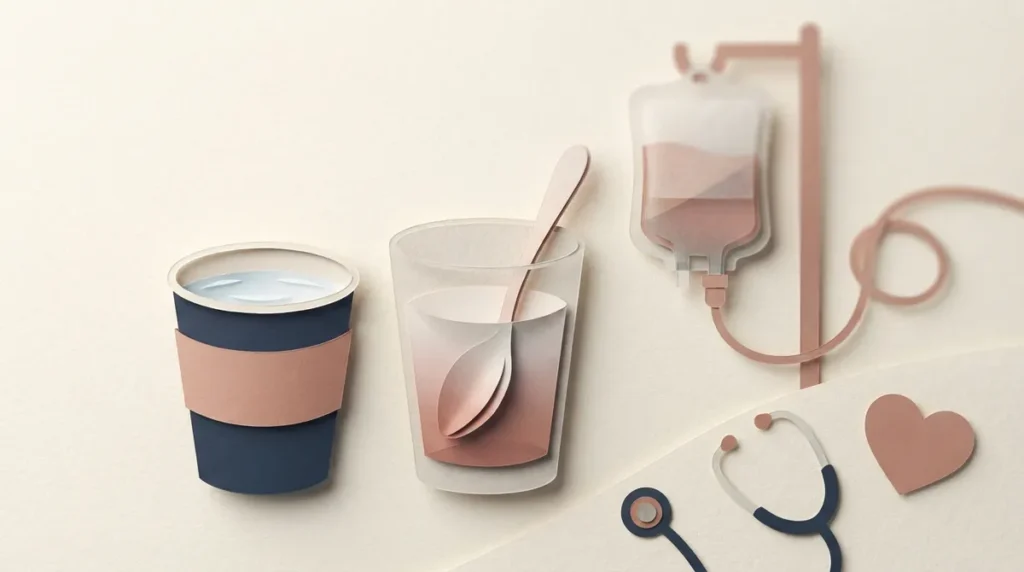
For most people who can drink and absorb fluids, oral rehydration (water or an oral rehydration solution) is the preferred first step, since IV fluids are reserved for cases where needs can't be met by mouth.
Oral rehydration solutions contain water, salts, and a little glucose, which helps the gut absorb water and sodium, making them effective for fluid loss from diarrhea or heavy sweating.
Seek urgent care instead of a wellness drip for confusion, fainting, a very fast heartbeat, no urination for many hours, vomiting that won't stop, or blood in stool or vomit.
Elective IV hydration carries risks including bruising, infection, vein inflammation, fluid overload, and electrolyte imbalances, so proper screening and sterile technique matter.
People with kidney disease, heart disease, diabetes, or high blood pressure should consult their doctor before using rehydration products or booking an IV drip.
Current research does not firmly prove that elective IV drips improve skin, boost energy, or cure hangovers, so keep expectations realistic if you choose one.
You feel run down. Your skin looks dull. Maybe you spent a long weekend in the Nevada sun, or you just finished a tough workout. Now you wonder: should I drink an electrolyte drink, or book an IV drip? It is a fair question, and you are not alone in asking it.
Here is the good news. Both options can play a role in how you feel. But they are not the same, and one is not always better than the other. When it comes to iv therapy vs oral rehydration, the right pick depends on your body, your symptoms, and your goals.
In this friendly guide, we will walk you through how each option works, when each one makes sense, and what risks to know about. We will also show you how to decide with confidence. You will leave with a clear, simple plan, and no pressure from us. Let’s dive in!
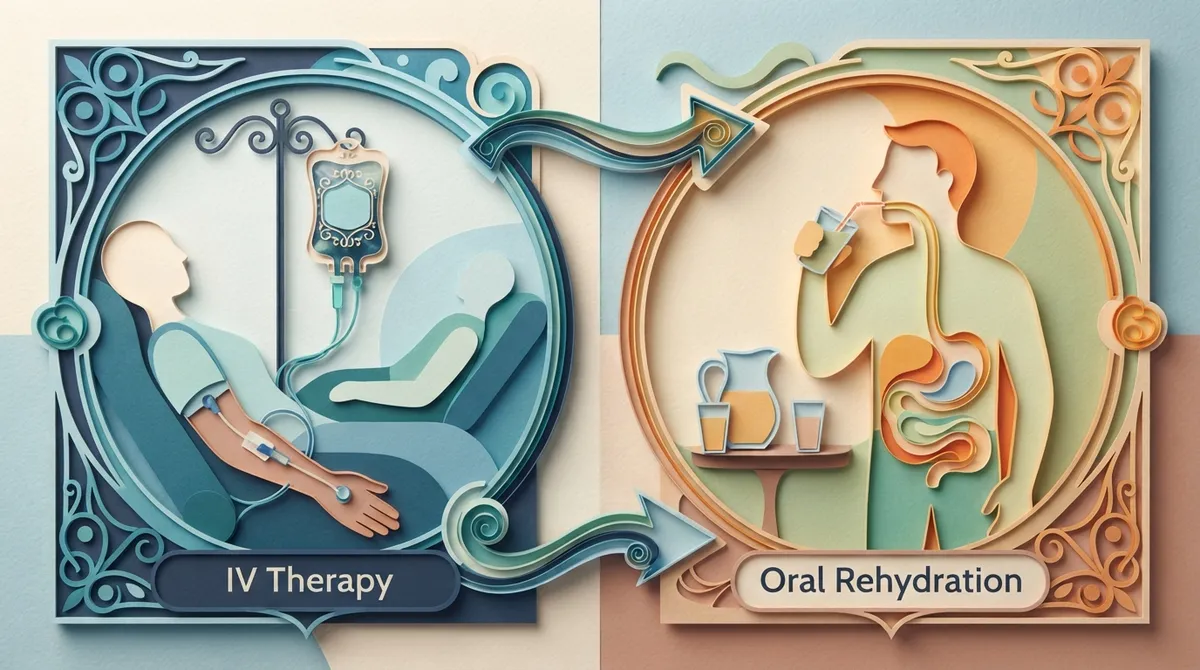
Let’s start with the basics. Both methods aim to bring fluids and key minerals back into your body. The big difference is how they get there.
Oral rehydration means you drink fluids. This can be plain water, an electrolyte drink, or an oral rehydration solution (ORS). An ORS has water, salts, and a little glucose. The glucose helps your gut absorb water and sodium better. That is why ORS can work well when you lose fluids from diarrhea or heavy sweating.
Plain water is great for daily needs. But when you lose a lot of minerals, water alone may not replace them. That is where an electrolyte mix can help.
IV therapy sends fluids straight into a vein through a small tube. In a medical aesthetics setting, this is usually an elective wellness service. It is often called a hydration drip or vitamin infusion. Common add-ons include vitamins, minerals, and antioxidants.
It is important to separate two things here. One is medically needed IV fluid for true dehydration. The other is an elective wellness drip. They are not the same. Hospital IV care is for people who cannot drink or absorb enough fluid. A wellness drip is a choice, not a cure for a diagnosed problem.
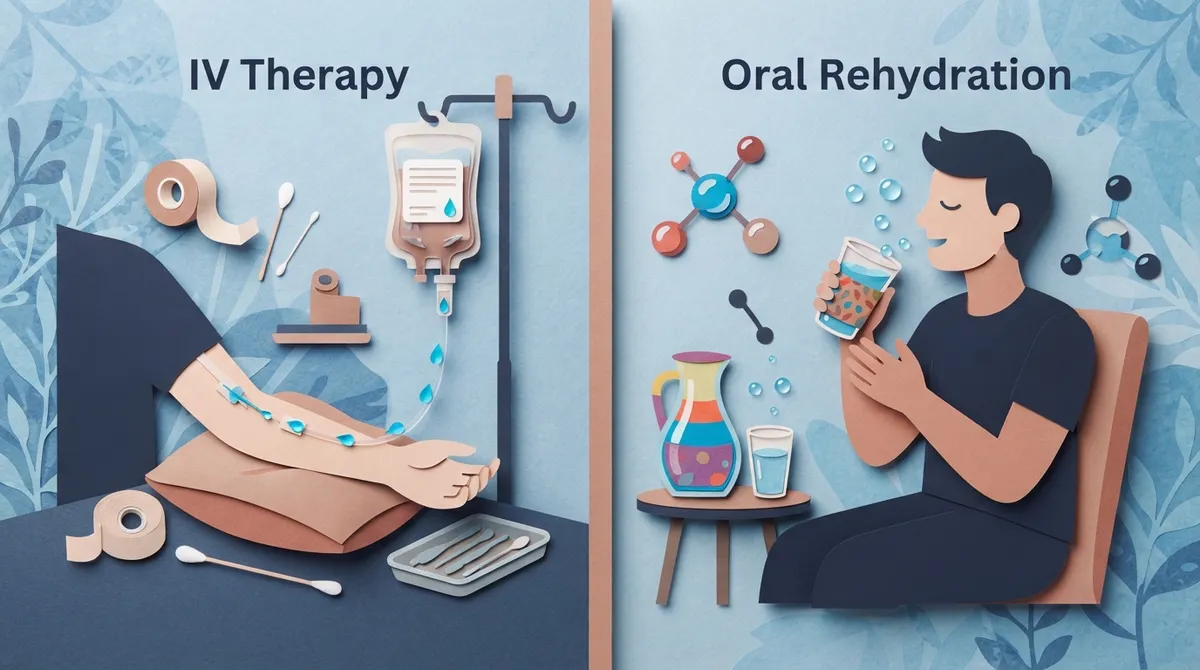
A quick table can make things clearer. Here is how the two options stack up.
| Feature | Oral Rehydration | IV Therapy (Elective) |
|---|---|---|
| How it is delivered | You drink it | Fluid enters a vein |
| Best for | Mild to moderate fluid loss in people who can drink | Clients seeking a supervised wellness infusion |
| Convenience | Easy, at home, low cost | Requires an appointment and a clinic visit |
| Speed | Often works within a short time as you sip | Delivers fluid directly, in about 30 to 60 minutes |
| Main risks | Low; stomach upset or too much sugar or salt | Bruising, vein irritation, infection, fluid overload |
| Medical need | First-line choice for most people | Not needed for routine hydration |
Notice something? Oral rehydration is the starting point for most people. IV therapy is an extra option, not a must-have.
Clinical guidance is clear on this. Hospital guidelines from NICE say IV fluids should be used only when a person’s needs cannot be met by mouth or by a feeding tube. They also say IV fluids should be stopped as soon as possible. That tells us something useful: if you can drink and keep fluids down, drinking is usually the preferred path.
Oral rehydration is a great fit when you:
Daily water needs vary. NICE lists routine adult maintenance needs at about 25 to 30 mL per kg of body weight each day, adjusted for the person. That is a medical guideline, not a rule for everyone. Your needs may be higher in Pahrump’s dry desert heat.
There are times when a drip is not a luxury. It is a medical need. IV fluids may be appropriate when:
These cases need a clinical check, and sometimes urgent care. A wellness drip at a med spa is not built for this. If you have these signs, go to urgent care or the emergency room instead. We cover that difference in more detail in our guide on IV hydration vs. ER care.
Please do not wait it out if you notice any of these:
These are signs of significant dehydration. They call for medical evaluation, not a beauty drip.
Many people come to a med spa asking about IV drips for skin, energy, or hangover relief. Let’s be honest and clear here. A drip puts fluid directly into a vein. But that does not make it better for someone who is not dehydrated and can drink just fine.
Claims that elective IV hydration improves skin, boosts energy, or cures hangovers should be viewed with care. Current research does not firmly prove these benefits. We would rather tell you the truth than oversell a treatment. For a balanced look, read our honest take in 5 Honest Truths About IV Hydration Glow in 2026.
That said, some people enjoy IV hydration as a supervised wellness treat. If you feel good after a session, that is a valid personal experience. The key is to go in with realistic goals and the right screening. You can learn more about what is real and what is hype in Why Get IV Hydration? Benefits, Risks & What’s Real.
Safety matters, so let’s talk about it openly. Drinking an ORS carries very low risk for most healthy people. Still, too much salt or sugar can be a concern for some.
IV therapy has more possible risks because it bypasses your body’s natural gut controls. These can include:
Risk can be higher if you have certain health conditions, or if the fluid type or amount is not right for you. That is why screening, sterile technique, and trained clinical oversight really matter. Our article on how to choose safe intravenous hydration therapy goes deeper on this topic.
Some people should talk with their own doctor before using rehydration products or booking a drip. This includes people with:
Individual advice is best here. A good provider will ask about your history first, and will tell you if a drip is not right for you.
Still unsure? Use this easy path to find your best fit.
Good news: simple habits go a long way, especially in a dry climate like ours. Try these ideas:
Want to compare drinks more closely? See our take on IV hydration vs sports drinks and our look at IV hydration vs oral fluids.
If you decide to try a drip, a few smart questions protect you. Here is a quick list to bring with you:
A trustworthy provider welcomes these questions. They should never present an elective infusion as a replacement for a diagnosis or emergency care. For more help, check Clinic IV vs. Drip Bar: Which IV Hydration Is Safer?
At Enhanced Aesthetics & Wellness in Pahrump, Nevada, our mission is to enhance your natural beauty and support your overall well-being. We offer IV hydration therapy, including a Myers Cocktail with add-ons like glutathione, biotin, and zinc. We see it as an elective wellness option, not a magic fix.
We believe in honest guidance. If oral rehydration is the better choice for you, we will say so. If your symptoms need a doctor, we will point you to proper medical care. Want to see how a Myers drip works? Read how to get a Myers Cocktail IV therapy in Pahrump.
You can also see what our community says by checking Enhanced Aesthetics & Wellness reviews on Google. Hydration is just one piece of looking and feeling your best. Pairing good habits with treatments like skin care and SkinPen microneedling may support your glow goals over time.
So, which wins in the iv therapy vs oral rehydration debate? For most people who can drink and absorb fluids, oral rehydration is the smart first step. It is simple, low cost, and backed by clinical guidance. IV therapy has a place when medically needed, and some people enjoy it as an elective wellness treat. Just keep your expectations grounded and choose a clinic that puts safety first.
Have questions about what fits your body and your goals? Contact us and our friendly team will talk it through with you. Ready to move forward? You can book an appointment anytime. For wider science-based health guidance, you can also explore resources from NICE’s guidance on intravenous fluid therapy, which explains when IV fluids are truly needed. We would love to help you feel your best, the safe and smart way.
Q: Is IV hydration better than drinking water or an oral rehydration solution?
A: Not for most people! If you can drink and absorb fluids, water or an oral rehydration solution is usually the preferred first choice. IV hydration puts fluid straight into a vein, but that does not make it better when you are not truly dehydrated.
Q: When is an IV drip medically necessary for dehydration?
A: A drip may be needed when dehydration is severe, when you cannot safely drink, or when you have constant vomiting or large ongoing fluid losses. These cases need a clinical check and sometimes urgent care, so please head to a doctor or the ER.
Q: Can an IV hydration drip improve my skin or give me a lasting glow?
A: The research does not firmly prove that elective IV drips improve skin or give a lasting glow. Some people feel refreshed after a session, which is a real experience. We always suggest keeping your expectations realistic and pairing good hydration habits with proven skin care.
Q: Are wellness IV drips safe, and who should avoid them?
A: With proper screening and trained staff, many healthy people tolerate them well. Risks include bruising, infection, vein irritation, and fluid overload. People with kidney disease, heart disease, or diabetes should talk to their doctor first.
Q: What should I ask a med spa before booking IV therapy?
A: Ask who reviews your health history, who places and monitors the IV, what is in the bag, and how they handle side effects. A caring provider will welcome your questions and will tell you honestly if a drip is not right for you.
Kybella treatment in Pahrump targets submental fat without surgery or downtime. Get lasting results today.

Discover the signs of oily skin and effective ways to manage excess sebum with expert tips from Enhanced Aesthetics & Wellness.
