
The Benefits of Morpheus8 Loose Skin Treatment at Enhanced Aesthetics & Wellness
Discover how Morpheus8 loose skin treatment at Enhanced Aesthetics & Wellness can tighten and rejuvenate your skin for a youthful glow.


For most healthy people who can drink and keep fluids down, a sports drink or water is the right first step; IV fluids are a medical treatment, not a routine upgrade.
Sports drinks suit long, intense exercise with heavy sweating, while plain water works for light activity; they should not be used for vomiting or diarrhea.
For diarrheal illness or vomiting, an oral rehydration solution is the better choice, since CDC guidance says sports drinks don't replace those fluid losses correctly.
A 2023 review found no high-quality evidence that IV vitamin therapy helps healthy people without a severe deficiency, critical illness, or specific medical condition.
Elective IV drips carry risks like vein inflammation, infection, allergic reactions, and fluid or electrolyte imbalance, so a medical history review and licensed clinician oversight are essential.
Before booking an IV drip, ask who reviews your medical history, which licensed clinician oversees the service, what is in the bag, and what happens if you have a reaction.
You’ve just finished a long hike, a hot day by the pool, or a tough workout. You’re tired, thirsty, and wondering how to bounce back fast. Do you grab a sports drink from the fridge, or book an IV drip? It’s a fair question, and one we hear a lot.
Here’s the short version: for most healthy people, a drink is the right first step. IV fluids are a medical treatment, not a routine upgrade. But there is more to the story, and it matters if you care about your skin, your energy, and your overall well-being.
In this guide, we’ll compare iv hydration vs sports drinks in plain language. You’ll learn how each one works, when each makes sense, what the risks are, and what to ask before you ever book a drip. Think of this as a friendly chat with someone who wants you to feel your best, safely.
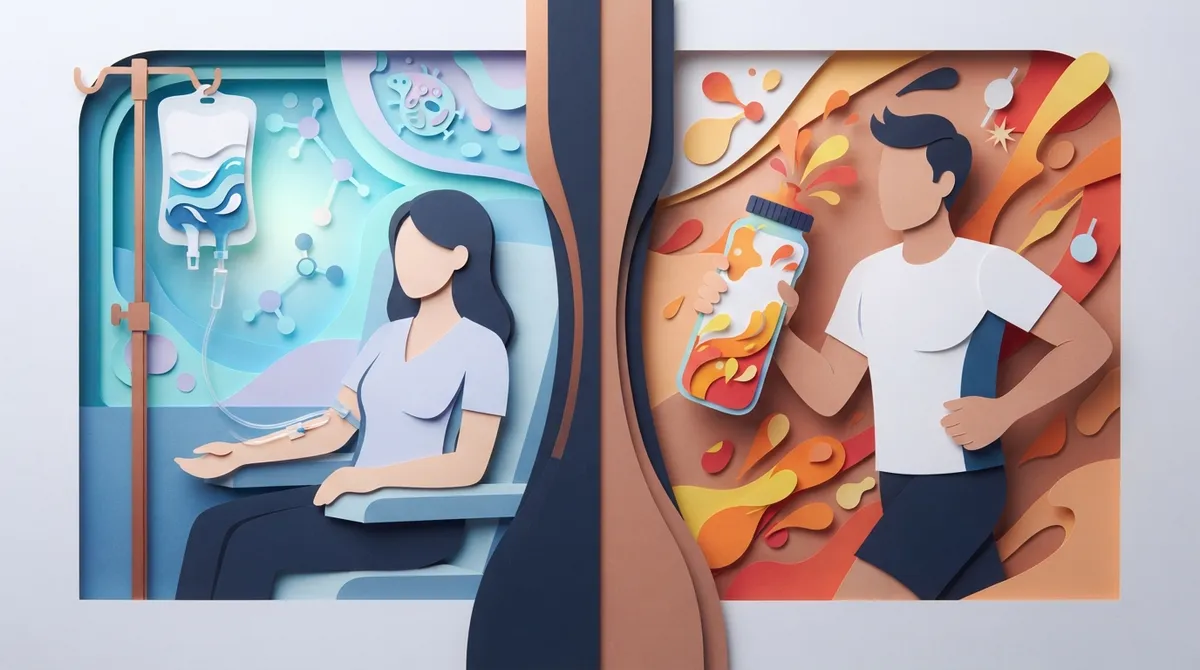
The biggest difference is how fluid gets into your body.
A sports drink goes through your mouth and stomach. Your gut absorbs the water, sugar, and electrolytes over time. An IV infusion sends fluid straight into a vein through a small catheter. That skips the digestive system completely.
That sounds like a clear win for IV. But faster is not always better, and it is not always needed. If you can drink and keep fluids down, your body is very good at rehydrating through your mouth.
Sports drinks are made for people who sweat a lot during long, hard exercise. They usually contain:
They are easy to find, low in cost, and have no needle involved. For a long run or a full day of outdoor work in the Nevada heat, they can be a handy tool.
IV hydration delivers a sterile fluid, often a saline solution, right into your bloodstream. In a clinic setting, some blends may include added vitamins or minerals. You can read more about what IV hydration is and who it may suit before you decide.
In a hospital, IV fluids are used when someone is severely dehydrated, can’t keep fluids down, or has poor circulation. In a wellness setting, the goal is usually elective. That is a very different purpose, and it matters.
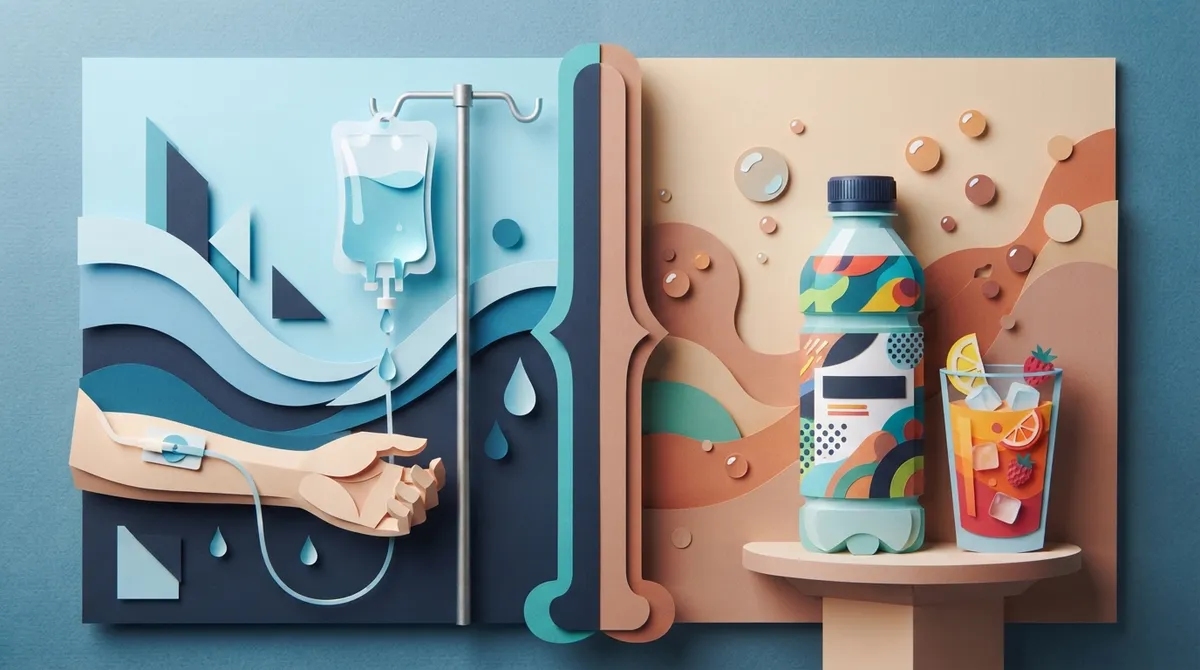
Here is a quick look at how the two options stack up.
| Feature | Sports Drinks | IV Hydration |
|---|---|---|
| How it enters the body | By mouth, through digestion | Directly into a vein |
| Best for | Replacing fluid and electrolytes during long, intense exercise | Cases where drinking isn’t enough or isn’t possible |
| Typical setting | Home, gym, sports field | Medical or clinic setting with trained staff |
| Main risks | Extra sugar, not ideal for stomach illness | Bruising, vein irritation, infection, allergic reaction, fluid or electrolyte problems |
| Cost | Low | Higher |
| Medical screening needed | No | Yes, it should be |
Sports drinks are a good fit in a few simple situations.
For a short walk or a quick gym session, plain water is often just fine. Sports drinks add sugar, so they are not needed for light activity.
Here is something many people don’t know. If you are dehydrated from vomiting or diarrhea, a sports drink is not the best pick. CDC guidance says sports drinks don’t replace those losses correctly and should not be used to treat diarrheal illness. An oral rehydration solution is made for that job, and it is the better choice.
IV fluids are a real medical tool. Clinical guidance generally reserves them for:
If you have these signs, you need medical care, not a spa menu. Severe symptoms include confusion, a very fast heartbeat, fainting, very little urine, or being unable to keep any fluids down. Those call for prompt medical evaluation, and in an emergency, that means calling 911 or heading to an emergency room. If you want to understand where a clinic ends and a hospital begins, this guide on IV hydration vs. ER care explains it well.
Let’s be honest, because you deserve a straight answer. Many wellness IV drips are marketed for glowing skin, more energy, a stronger immune system, or “detox.” The evidence for these claims in healthy people is limited.
A 2023 review, as summarized by the Center for Science in the Public Interest, found no high-quality evidence supporting IV vitamin therapies for people without a severe deficiency, critical illness, or specific medical condition. That doesn’t mean nobody ever feels better after a drip. Some people do feel refreshed. But feeling good and having proven benefits are not the same thing.
If you’re curious about the skin side of things, our article on honest facts about IV hydration and skin health goes deeper without the hype. And for a balanced look at the bigger picture, see does IV hydration really work.
A 2025 national analysis of IV hydration clinics raised some eyebrows. Researchers found that only about one in four clinics required a medical consultation beforehand, and fewer than one in four warned about possible side effects. More than 85% recommended a specific infusion based on symptoms, often without first asking about medical history.
The same reporting noted that rules vary a lot by state. Of the 50 states, 32 had some rule or policy related to IV hydration, and only four were classified as having comprehensive oversight. Rules can change, so it’s smart to check current requirements where you live.
The takeaway is simple. Who treats you, and how carefully they screen you, matters a great deal.
Sports drinks are low risk for most healthy adults. The main downside is extra sugar and calories, especially if you’re drinking them when you don’t need them.
IV treatment carries risks that oral drinks do not:
Added vitamins and minerals can also cause harm at high doses, or in people with certain health conditions or medications. This is why a proper health history is so important. Our guide on IV hydration side effects walks through what to watch for.
Talk with a medical provider first if you have:
Elective IV hydration is not right for everyone, and a good provider will tell you so.
Not sure which way to go? Walk through these steps.
Whether you’re in Pahrump or anywhere else, these questions help you spot a careful provider. If you want a deeper checklist, see how to choose safe intravenous hydration therapy.
A trustworthy clinic welcomes these questions. If you get vague answers or pressure to book on the spot, take a step back.
Many of us love a good skincare moment. But glowing skin rarely comes from one single fix. Hydration helps your body work well, yet visible results usually come from a full plan that may include medical-grade skincare, professional facials, and treatments chosen for your goals.
If your main goal is your complexion, it may help to compare options in IV drips vs. skin treatments. You may be surprised by what moves the needle most.
At Enhanced Aesthetics & Wellness in Pahrump, Nevada, our mission is to enhance your natural beauty and support your overall well-being with customized care. We believe in clear, honest guidance first. That means telling you when a simple drink will do, and when a different option is a better fit. Want to hear what others say? See what our Enhanced Aesthetics & Wellness clients say on Google.
If you live in the high desert, you know the sun and dry air can zap your energy fast. A few easy habits go a long way:
These small steps support both your body and your skin. For more ideas, check out how to live well in the desert without wrecking your skin.
You can also find helpful general guidance on hydration and fluid safety from trusted public health sources like the CDC’s clinical overview on food safety and illness, which explains why oral rehydration solution is preferred over sports drinks for diarrheal illness.
So, which wins? It depends on you and your situation.
IV hydration is a real medical tool, but it isn’t a routine upgrade to your wellness routine. The safest choice is the one matched to your needs.
Ready to talk through your goals with a caring team? Contact us with your questions, or book an appointment to explore a plan that fits you. We’d love to help you look and feel your best, the safe way.
Q: Is IV hydration better than drinking a sports drink?
A: Not for most healthy people. If you can drink and keep fluids down, oral fluids are usually the first choice. IV fluids are a medical treatment for cases like severe dehydration or when drinking isn’t possible, not a routine upgrade.
Q: Can sports drinks treat dehydration from vomiting or diarrhea?
A: They aren’t the best option. CDC guidance says sports drinks don’t replace fluid losses from diarrheal illness correctly. An oral rehydration solution is made for that purpose and is the better choice.
Q: Are IV vitamin drips proven to improve skin, energy, or immunity?
A: The evidence is limited for healthy people. A 2023 review found no high-quality support for IV vitamin therapy in people without a severe deficiency or specific medical condition. Some folks feel refreshed, but that isn’t the same as proven benefit.
Q: What are the risks of IV hydration at a med spa?
A: Risks include pain, bruising, vein inflammation, infection, allergic reactions, and fluid or electrolyte problems. Added vitamins can also be harmful at high doses or with certain conditions and medications, so a proper medical screening matters.
Q: When should dehydration be treated by a medical professional?
A: Get medical care if you have confusion, fainting, a very fast heartbeat, very little urine, or can’t keep any fluids down. In an emergency, call 911 or go to the nearest emergency room.
Discover how Morpheus8 loose skin treatment at Enhanced Aesthetics & Wellness can tighten and rejuvenate your skin for a youthful glow.
Discover how IV vitamin infusion therapy at a med spa near you can boost skin glow, speed up aesthetic recovery, and restore your energy fast.
