
Pahrump’s Top Laser Treatment For Wrinkles On Face
Say goodbye to fine lines with laser treatment for wrinkles on face at Enhanced Aesthetics in Pahrump. Book your consultation today.


CO2 lasers excel at cutting and engraving non-metallic materials like wood, acrylic, leather, and paper, but struggle with reflective metals.
Fiber lasers outperform CO2 lasers in metal cutting, operating up to six times faster at similar power levels for thin sheet metal.
Diode lasers offer a budget-friendly, compact option for hobbyists, but have limited power and material compatibility compared to CO2 systems.
In medical aesthetics, CO2 laser resurfacing provides dramatic skin rejuvenation with deeper collagen remodeling, but requires 1-2 weeks of recovery.
Fractional CO2 lasers create microscopic treatment zones, offering a balanced approach with reduced downtime and lower complication risks.
The wavelength of a laser significantly impacts its performance, with CO2 lasers at 10.6 μm and fiber lasers at 1.06 μm offering different material interaction capabilities.
Erbium lasers provide gentler skin resurfacing with faster healing, making them ideal for patients with moderate skin concerns and limited downtime.
Choosing the right laser technology can feel overwhelming, whether you’re looking at industrial cutting machines for your workshop or considering aesthetic treatments for your skin. CO2 lasers have been around for decades and remain incredibly popular, but how do they stack up against fiber lasers, diode lasers, erbium lasers, and other alternatives? Understanding the key differences will help you make an informed decision that fits your specific needs and budget.
In this guide, we’ll walk you through everything you need to know about CO2 lasers compared to their competitors. We’ll explore how wavelength affects performance, which materials or tissues each technology handles best, and what to expect in terms of cost, recovery time, and results. Whether you’re a small business owner investing in equipment or someone considering laser skin resurfacing, this article will give you the clarity you need to choose wisely.
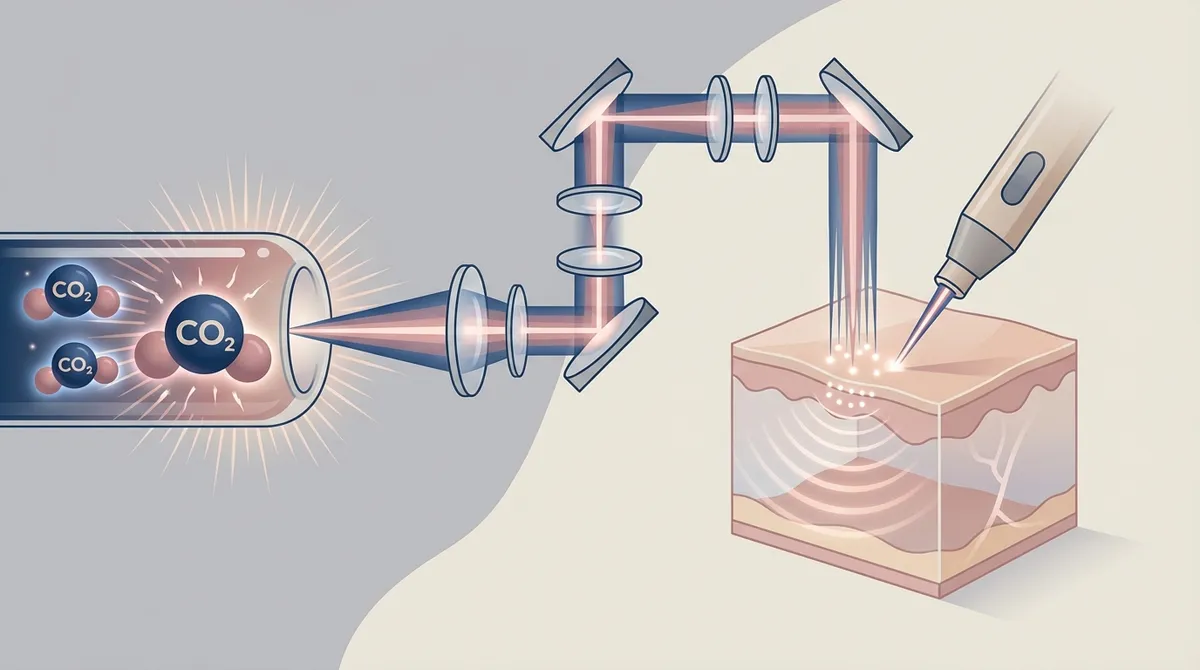
CO2 lasers generate a long-wavelength infrared beam at approximately 10.6 micrometers (μm), produced within a gas mixture of carbon dioxide, nitrogen, and helium. This specific wavelength is what makes CO2 lasers unique and powerful. The 10.6 μm beam is strongly absorbed by non-metallic materials and by water in biological tissue, giving CO2 lasers exceptional versatility across both industrial and medical applications.
In industrial settings, this wavelength allows CO2 lasers to cut and engrave materials like wood, acrylic, leather, paper, glass, and many plastics with remarkable precision. In medical aesthetics, the water absorption characteristic makes CO2 lasers particularly effective for skin resurfacing because human skin tissue contains abundant water. When the laser energy is absorbed, it vaporizes the targeted tissue layers, removing damaged skin and stimulating deep collagen production for rejuvenation.
The technology typically requires larger equipment with substantial cooling systems to manage heat generation. While this makes CO2 systems bulkier than some alternatives, their proven track record and broad material compatibility keep them popular. CoolPeel® Treatment represents one modern advancement in CO2 laser technology, offering the benefits of traditional CO2 resurfacing with reduced downtime.
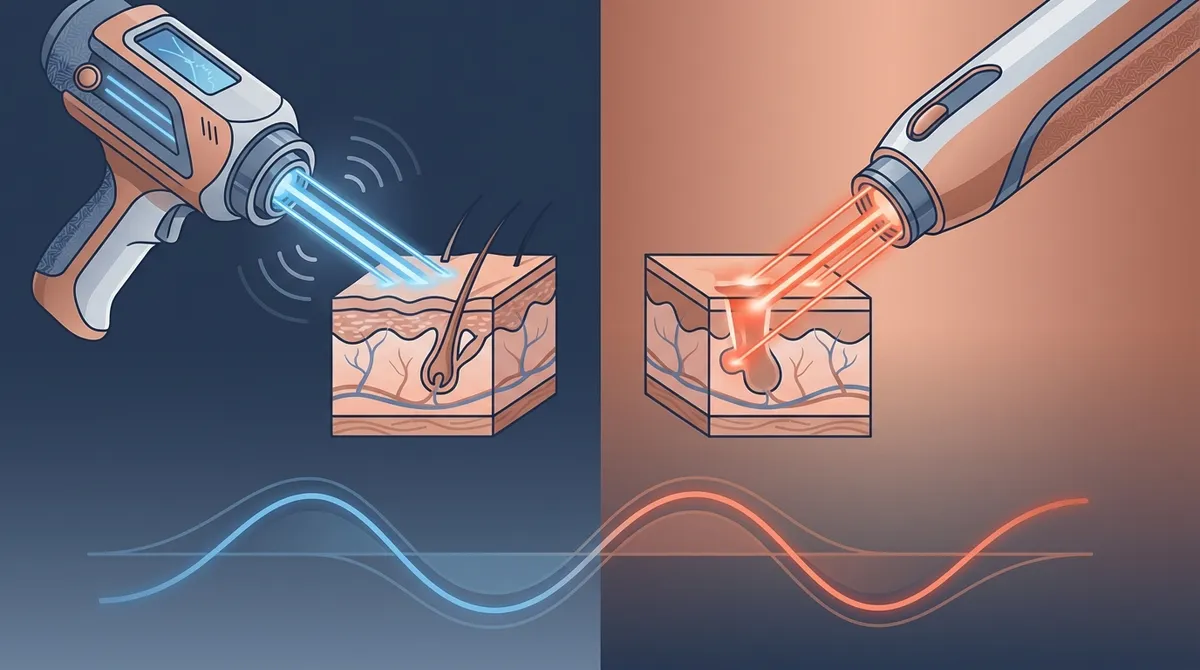
When comparing CO2 and fiber lasers for industrial cutting and engraving, wavelength makes all the difference. Fiber lasers emit light at approximately 1.06 μm, which is about ten times shorter than CO2’s 10.6 μm wavelength. This fundamental difference dramatically affects how each laser interacts with various materials.
CO2 lasers excel at cutting and engraving non-metallic materials. They handle wood, acrylic (including clear acrylic that many other lasers struggle with), leather, paper, cardboard, rubber, fabric, and certain ceramics beautifully. However, they’re less efficient when working with reflective metals like aluminum, copper, brass, and stainless steel because these materials don’t absorb the 10.6 μm wavelength well.
Fiber lasers, conversely, shine when cutting thin to medium-thickness metal sheets. The shorter 1.06 μm wavelength is absorbed much more readily by metallic surfaces, making fiber lasers the go-to choice for metal fabrication shops. For cutting 1mm sheet metal, fiber lasers can operate up to about six times faster than CO2 lasers at similar power levels. Even at 5mm thickness, fiber lasers maintain roughly twice the cutting speed of CO2 systems.
Fiber lasers typically produce smaller spot sizes than CO2 lasers—often up to 90% smaller—which translates to narrower cutting kerfs and higher precision on thin materials. However, CO2 lasers can deliver smoother edge finishes on thicker materials, though they require higher power and longer cutting times to achieve this.
The cross-sectional area of a CO2 laser beam can be approximately three times larger than a comparable fiber laser beam, and the overall volume requirement can be about four times higher. This impacts not only the physical size of the equipment but also the optics and cooling systems needed.
Here’s where fiber lasers pull ahead significantly. CO2 laser systems generally have lower electrical efficiency and require larger, more expensive chillers to manage heat. This results in higher operating costs, larger facility footprints, and more energy consumption compared to fiber lasers producing similar cutting power. For businesses focused on metal fabrication, the faster cutting speeds and lower operating costs of fiber lasers often justify their higher initial purchase price.
For workshops that primarily work with non-metals or need the smoothest possible edges on thick materials, CO2 lasers remain the better investment despite their operational disadvantages.
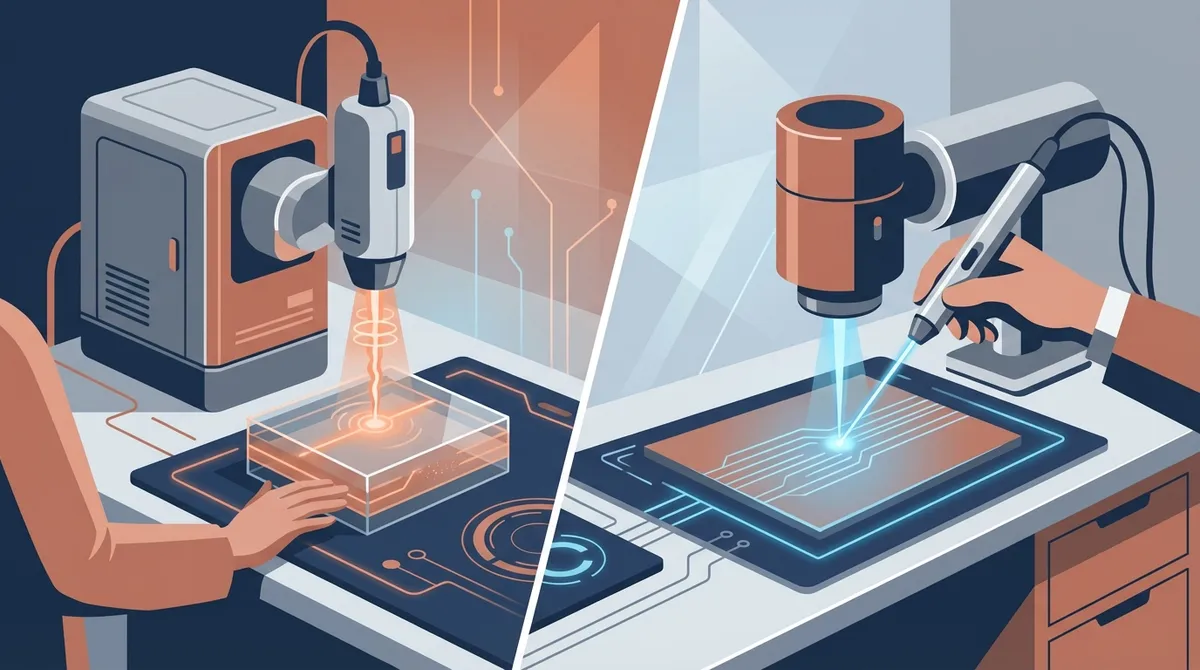
In the world of hobby and small-business laser engraving, the debate between CO2 and diode lasers centers on power, versatility, and budget. These two technologies serve different niches, and understanding their strengths helps you avoid buyer’s remorse.
Typical hobby and small-shop CO2 laser engravers run between 40-150 watts, providing substantial cutting power for a wide range of materials and thicknesses. Diode lasers, meanwhile, commonly operate at lower power levels—often between 5-20 watts for consumer units, though some newer models reach 40+ watts.
This power difference directly impacts what you can accomplish. CO2 lasers cut through thicker materials faster and handle a broader material palette. Diode lasers work well for engraving and cutting thin materials but struggle significantly with clear acrylic, glass, and thicker woods that CO2 systems handle easily.
Diode lasers emit shorter wavelengths (typically 800-980 nm) that interact differently with materials compared to CO2’s 10.6 μm beam. This wavelength difference means diode lasers can’t effectively process transparent materials like clear acrylic or glass—the beam simply passes through without sufficient absorption. They also have difficulty with lighter-colored woods and materials that don’t readily absorb their wavelength.
CO2 lasers don’t face these limitations. Their longer wavelength is absorbed by virtually all non-metallic materials, making them the more versatile choice if you plan to work with diverse materials or accept varied customer projects.
Diode lasers win on portability, footprint, and initial cost. They’re typically more compact, lighter, and significantly cheaper than CO2 systems. For hobbyists with limited space and budget who primarily engrave leather, dark woods, and similar materials, diode lasers offer an accessible entry point into laser crafting.
However, CO2 systems provide much better value if you’re serious about production work or need professional-grade results across multiple material types. The higher initial investment pays off through greater capability, faster processing, and the ability to take on more complex projects. If you’re considering laser treatments for your own self-care routine, laser hair removal uses different specialized technology optimized for safe hair follicle targeting.
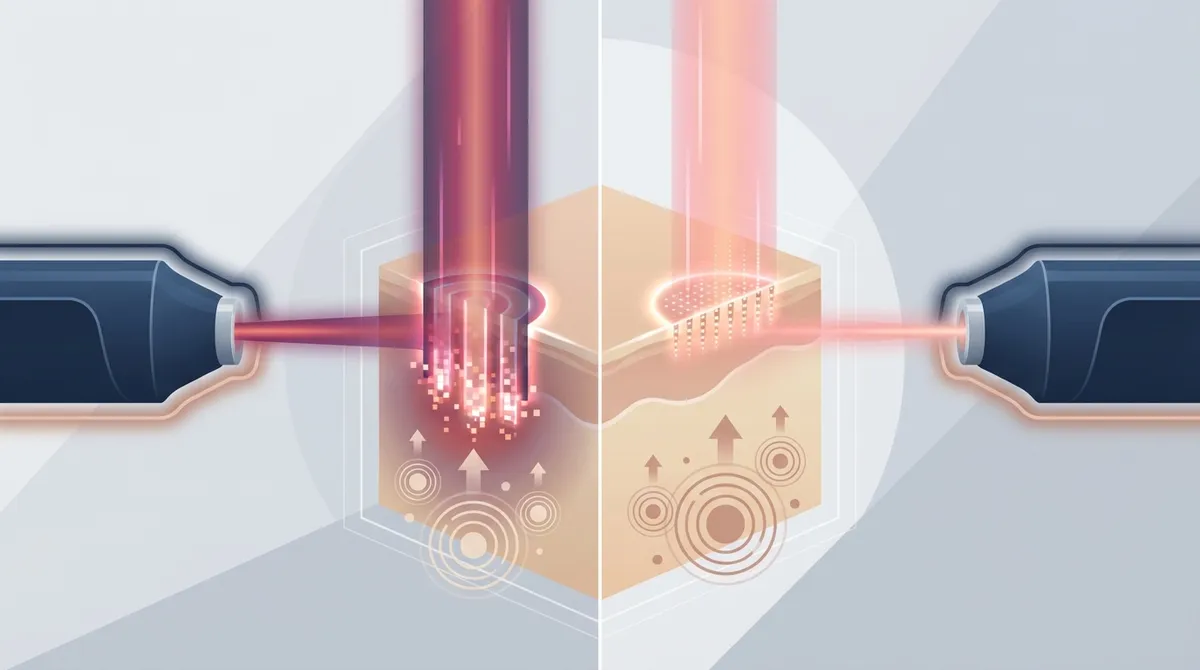
When it comes to aesthetic treatments, understanding the differences between CO2 and erbium lasers can help you choose the right approach for your skin concerns and lifestyle. Both technologies resurface skin by removing damaged layers, but they do so with different intensities and recovery profiles.
CO2 lasers work by ablating water-rich skin tissue. Since human skin contains abundant water, the 10.6 μm wavelength is highly absorbed, creating controlled tissue vaporization that removes damaged surface layers while generating significant heat in surrounding tissue. This heat penetration stimulates robust collagen remodeling deep within the dermis, leading to dramatic tightening and long-lasting improvements.
Erbium lasers operate at a different wavelength (around 2.94 μm) that’s absorbed even more efficiently by water in tissue. This means erbium lasers ablate tissue with less residual heat, resulting in more superficial treatment with faster healing. Think of CO2 as the intensive, transformative option and erbium as the gentler, quicker-recovery alternative.
For deep wrinkles, advanced sun damage, significant scarring, and substantial texture issues, CO2 laser resurfacing provides more dramatic results that last longer. The aggressive collagen stimulation creates tightening effects that can turn back the clock years. However, this intensity comes with a trade-off: recovery typically takes 1-2 weeks, with redness potentially lasting several weeks longer. The treatment carries higher risks of pigment changes, especially for darker skin types.
Erbium lasers offer a middle ground—noticeable improvements with considerably shorter downtime, often just 3-7 days. Results are less dramatic than CO2 but still effective for moderate wrinkles, mild to moderate sun damage, and texture refinement. Many patients appreciate the reduced risk profile and faster return to normal activities.
At Enhanced Aesthetics & Wellness, we offer advanced laser treatments including Deep Laser Peel options that can be customized to your specific skin concerns and tolerance for downtime. Our experienced practitioners assess your skin type, goals, and lifestyle to recommend the most appropriate laser technology for optimal results.
Consider CO2 laser resurfacing if you:
Consider erbium or other gentler lasers if you:
Beyond the CO2 versus erbium debate, other laser technologies offer distinct advantages for specific aesthetic concerns. Understanding where fractional lasers and Nd:YAG systems fit into the picture helps you see the complete landscape of options.
Traditional “fully ablative” CO2 lasers remove the entire surface layer of treated skin. Fractional CO2 lasers, however, create thousands of microscopic treatment zones surrounded by untouched skin. This fractional approach preserves islands of healthy tissue that accelerate healing and reduce complications while still delivering significant collagen remodeling benefits.
Fractional CO2 treatments offer a middle ground between traditional full-field CO2 resurfacing and gentler options like erbium. Downtime typically ranges from 4-7 days rather than 1-2 weeks, with less risk of scarring and pigmentation changes. Results aren’t quite as dramatic as full ablative CO2 but substantially exceed what you’d achieve with non-ablative treatments.
Nd:YAG lasers operate at 1064 nm wavelength and penetrate deeper into skin without ablating the surface. They’re particularly valuable for treating vascular concerns (spider veins, rosacea, broken capillaries), hair removal on darker skin tones, and stimulating collagen in deeper dermal layers without surface damage.
Unlike CO2 lasers that excel at surface texture improvement and tightening, Nd:YAG technology addresses subsurface issues with minimal to no downtime. Many patients benefit from combining treatments—using Nd:YAG for vascular issues or deep collagen stimulation, then adding fractional or full CO2 resurfacing for surface texture refinement.
For comprehensive skin rejuvenation that addresses multiple concerns, treatments like Morpheus8 combine radiofrequency energy with microneedling to remodel collagen at various depths. This technology complements laser treatments beautifully and can be an excellent option for those seeking significant improvements without traditional laser downtime.
Budget considerations play a major role in choosing laser technology, whether you’re purchasing equipment or investing in aesthetic treatments. The costs extend beyond initial purchase price or treatment fees to include operating expenses, maintenance, and long-term value.
For business owners, CO2 laser systems typically cost less upfront than comparable fiber lasers but carry higher operating expenses. A mid-range CO2 cutter might run $8,000-$25,000 for small business use, while fiber lasers with similar cutting capabilities often start around $15,000-$40,000. However, the fiber laser’s superior electrical efficiency, lower maintenance requirements, and reduced cooling costs can recover that price difference within 2-3 years of regular use.
Diode laser engravers represent the budget entry point, with capable units available for $300-$3,000. While they lack the power and versatility of CO2 systems, they’re perfect for hobbyists and small operations with limited material needs. The key is honestly assessing whether the material limitations will restrict your business growth or creative projects.
In medical aesthetics, CO2 laser resurfacing typically costs more per treatment than gentler alternatives—often $1,500-$4,000 for full-face treatment depending on the intensity and technology used. Erbium treatments generally range $1,000-$2,500, while fractional CO2 falls somewhere between. Non-ablative laser treatments often cost $500-$1,500 but typically require a series of 3-5 sessions for optimal results.
When evaluating costs, consider the longevity of results. CO2 laser resurfacing might require just one treatment every 5-10 years, while gentler options may need maintenance sessions every 1-3 years. The higher upfront cost can actually represent better long-term value if you’re seeking maximum correction with minimal treatments over time.
Enhanced Aesthetics & Wellness offers complimentary consultations where we can discuss treatment costs in detail and create a customized plan that fits your aesthetic goals and budget. Schedule your consultation to explore which laser technology offers the best value for your specific concerns.
Understanding the safety profile of different laser technologies helps you make informed decisions and set appropriate expectations for both industrial and medical applications.
CO2 lasers operating at 10.6 μm wavelength require specific safety protocols. The infrared beam is invisible, necessitating proper safety glasses, enclosed work areas, and careful attention to reflected beams. The longer wavelength means standard protective eyewear designed for visible light won’t protect against CO2 laser exposure.
Fiber and diode lasers, with their shorter wavelengths, require different safety equipment but can be equally hazardous to eyes if proper precautions aren’t followed. All laser systems also create fumes when cutting or engraving materials, requiring adequate ventilation or fume extraction systems. CO2 lasers cutting certain materials (especially plastics) can produce particularly noxious or toxic fumes that demand robust ventilation.
In medical aesthetics, CO2 laser treatments carry the most significant side effect profile due to their aggressive action. Expected side effects include pronounced redness lasting 2-4 weeks, swelling for several days, and the possibility of temporary or permanent pigmentation changes, especially in darker skin types (Fitzpatrick types IV-VI). Rare but serious risks include scarring, infection, and prolonged healing.
Erbium and fractional lasers have milder side effect profiles—shorter redness duration, less swelling, and lower risk of pigmentation problems. Non-ablative lasers like Nd:YAG typically cause only temporary redness and mild swelling that resolves within hours to a few days.
Proper patient selection and experienced practitioners dramatically reduce complication risks. At Enhanced Aesthetics & Wellness, our team carefully evaluates your skin type, medical history, and realistic expectations before recommending any laser treatment. We follow strict protocols to ensure safety and optimize outcomes while minimizing risks.
After exploring how CO2 lasers compare to fiber, diode, erbium, and other technologies, you’re equipped to make an informed choice. The “best” laser depends entirely on your specific situation, goals, and constraints.
Choose a CO2 laser system if you primarily work with non-metallic materials, need versatility across woods, acrylics, leather, paper, and glass, or require the smoothest edge quality on thicker materials. The larger footprint and higher operating costs are worthwhile trade-offs when your projects demand this material compatibility.
Opt for a fiber laser if metal fabrication is your primary focus, you need maximum cutting speed on thin to medium sheets, and you want to minimize long-term operating costs. The higher initial investment pays dividends through superior efficiency and speed on metallic materials.
Consider a diode laser if you’re a hobbyist or small creator working primarily with wood, leather, and dark materials, you have space and budget constraints, and you don’t need to process clear acrylics or glass. Just understand the power limitations before committing.
CO2 laser resurfacing makes sense when you have significant skin damage requiring dramatic correction, can accommodate meaningful downtime for healing, have realistic expectations about the intensive nature of treatment, and have been cleared as a good candidate by an experienced practitioner.
Gentler alternatives like erbium, fractional, or non-ablative lasers work better if you need to minimize recovery time, have darker skin tones with higher risk profiles for aggressive ablative treatments, prefer a gradual improvement approach over one intensive session, or want to test laser treatments before committing to more aggressive options.
Many patients achieve optimal results through staged treatments or combination approaches. A skilled aesthetic provider can design a customized treatment plan that might include SkinPen Microneedling, laser resurfacing, and injectables like Botox or Dermal Fillers to address your concerns comprehensively.
Understanding how different people and businesses successfully use various laser technologies can help you envision which option best serves your needs. Let’s look at some practical scenarios that illustrate these technologies in action.
Sarah runs a custom gift shop offering personalized cutting boards, engraved glassware, and leather goods. She invested in a 100-watt CO2 laser system because her diverse product line required cutting thick maple boards, engraving clear glass champagne flutes, and detailing leather journals. The CO2 technology handles all these materials beautifully. While her electricity costs are higher than a friend who runs a metal fabrication shop with a fiber laser, the versatility allows her to accept virtually any custom engraving project that comes through the door.
Conversely, Jake’s metal fabrication business focuses exclusively on cutting stainless steel, aluminum, and brass components for local manufacturers. His fiber laser cuts thin sheets up to six times faster than comparable CO2 systems, giving him a significant competitive advantage on turnaround time. The lower operating costs mean better profit margins on every job, and the investment paid for itself within two years despite the higher purchase price.
At 52, Jennifer decided to address decades of sun damage and deep wrinkles from her years as a competitive sailor. After consultation, she chose full CO2 laser resurfacing understanding it would require two weeks away from social activities. The dramatic results—significantly tightened skin, reduced wrinkles, and improved texture—exceeded her expectations. Three years later, she still looks years younger and considers the downtime well worth the transformation.
Meanwhile, 38-year-old Michael wanted to refresh his appearance before his sister’s wedding but only had a week to recover. Fractional CO2 treatment gave him noticeable improvement in skin texture and tone with just five days of social downtime. While not as dramatic as Jennifer’s transformation, the results perfectly suited his goals and timeline. He’s since returned for maintenance treatments every 18 months to preserve his refreshed appearance.
These examples demonstrate that there’s no universally “better” laser technology—only the option that best matches your specific needs, constraints, and expectations. The key is working with knowledgeable professionals who understand the strengths and limitations of each technology and can guide you to the right choice.
Whether you’re investing in laser equipment for your business or considering laser aesthetic treatments for yourself, you now understand the fundamental differences between CO2 lasers and their primary alternatives. The wavelength, material compatibility, power, recovery time, and cost factors all play crucial roles in determining which technology delivers the best results for your situation.
For industrial applications, honestly assess your material needs, production volume, and facility capabilities. Don’t just chase the lowest purchase price—factor in operating costs, maintenance requirements, and how equipment limitations might restrict your business growth. Most reputable suppliers offer demonstrations and trial periods that let you test equipment with your specific materials before committing.
For aesthetic treatments, remember that the most aggressive treatment isn’t always the best choice, nor is the gentlest option always inadequate. The ideal approach matches your skin concerns, lifestyle, risk tolerance, and expectations. A thorough consultation with an experienced aesthetic provider will evaluate all these factors and recommend a customized treatment plan.
At Enhanced Aesthetics & Wellness in Pahrump, Nevada, we combine state-of-the-art laser technologies with extensive experience to deliver safe, effective treatments tailored to each client’s unique needs. Our comprehensive approach considers your skin type, aesthetic goals, and lifestyle to recommend the most appropriate treatments—whether that’s CO2 laser resurfacing, gentler alternatives, or complementary procedures that maximize your results. Check out our Facebook page to see real patient results and learn more about our range of services.
Ready to discover which laser treatment is right for your skin? Contact our team today to schedule your complimentary consultation. We’ll assess your concerns, explain your options in detail, and create a personalized treatment plan that helps you achieve your aesthetic goals safely and effectively.
Q: What’s the main difference between CO2 and fiber lasers for cutting?
A: The main difference is wavelength and material compatibility. CO2 lasers emit 10.6 μm infrared light that excels at cutting non-metals like wood, acrylic, leather, and glass, while fiber lasers emit 1.06 μm light that’s absorbed much better by metals, making them faster and more efficient for cutting steel, aluminum, and other metallic materials. Fiber lasers can cut thin metal sheets up to six times faster than CO2 lasers at similar power levels.
Q: How does CO2 laser skin resurfacing compare to erbium laser treatments?
A: CO2 laser resurfacing provides more dramatic, longer-lasting results by ablating tissue and generating significant heat that stimulates deep collagen remodeling, making it ideal for severe wrinkles, sun damage, and scars. However, it requires 1-2 weeks of recovery time. Erbium lasers offer gentler resurfacing with less heat, resulting in faster healing (3-7 days) but less dramatic results, making them better suited for moderate concerns and patients who can’t accommodate extended downtime.
Q: Are CO2 lasers worth the higher operating costs compared to fiber lasers?
A: It depends on your material needs and business focus. If you primarily work with non-metallic materials like wood, acrylic, leather, paper, or glass, CO2 lasers are worth the investment despite higher electricity costs and larger cooling requirements. However, if your work focuses on cutting metal sheets, fiber lasers offer dramatically faster cutting speeds and lower operating costs that typically recover the higher purchase price within 2-3 years, making them the better long-term investment for metal fabrication.
Q: Can I use a diode laser instead of a CO2 laser to save money?
A: Diode lasers work well for hobbyists and small projects involving dark woods, leather, and similar materials, offering significant cost savings and compact size. However, they lack the power and versatility of CO2 systems—they struggle with clear acrylic and glass (which CO2 handles easily), can’t cut thick materials as quickly, and have limited capability with lighter-colored materials. If you need professional results across diverse materials or plan to take on varied customer projects, investing in a CO2 system provides much better long-term value.
Q: What’s the recovery time difference between CO2 and fractional laser treatments?
A: Traditional full-field CO2 laser resurfacing typically requires 1-2 weeks of social downtime, with redness potentially lasting several weeks longer. Fractional CO2 treatments offer a middle ground with 4-7 days of downtime because they preserve islands of untreated skin between microscopic treatment zones, accelerating healing while still delivering significant collagen remodeling. The fractional approach reduces complication risks compared to full ablative CO2 while providing more dramatic results than non-ablative alternatives.
Say goodbye to fine lines with laser treatment for wrinkles on face at Enhanced Aesthetics in Pahrump. Book your consultation today.

Relieve menopause symptoms with estradiol replacement. Restore hormonal balance and improve your quality of life.
