
Aesthetic Services Pahrump Open Now: Your 2026 Guide
Find aesthetic services in Pahrump open now. Learn hours, treatments, and how Enhanced Aesthetics & Wellness fits same-day visits.

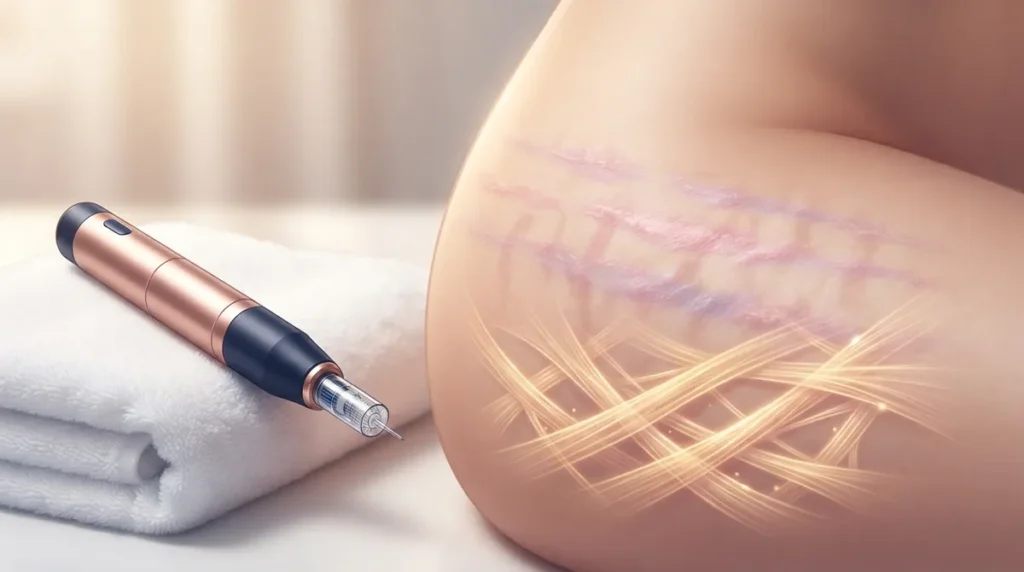
Skin tightening treatments for stretch marks cannot fully erase them; they work by triggering collagen remodeling to soften texture and reduce how visible the marks are.
Newer red or purple striae may respond better to treatment than older pale white striae, which often show more modest improvement.
Research suggests microneedling, microneedle RF, and fractional CO2 laser perform similarly in effectiveness, so the best choice depends on your skin tone, downtime, and comfort.
Deeper skin tones face higher post-inflammatory hyperpigmentation risk, and microneedling may carry lower PIH risk than ablative CO2 laser, so a provider should review your skin type first.
Treatments are typically delivered as a series of sessions spaced several weeks apart, with results building gradually over time.
Sun protection before and after treatment and avoiding picking or scratching during healing help protect results and reduce pigment changes.
Let’s start with a little honesty and a lot of kindness. Almost everyone has a stretch mark somewhere. They show up after pregnancy, growth spurts, weight changes, or gym gains. They are a normal part of life, and they do not mean anything is wrong with you.
Still, many people want them to look softer. That is why “skin tightening for stretch marks” is such a popular search. But here is the part most ads skip: these treatments do not erase stretch marks, and they do not magically tighten a whole area of skin. What they can do is help rebuild collagen and smooth the texture so marks stand out less.
In this friendly guide, we will walk through what stretch marks are, which medical-aesthetic options may help, and what the research says in 2026. We will also share how to pick the right plan for your skin. Think of it as a chat with a knowledgeable friend, minus the sales pitch.
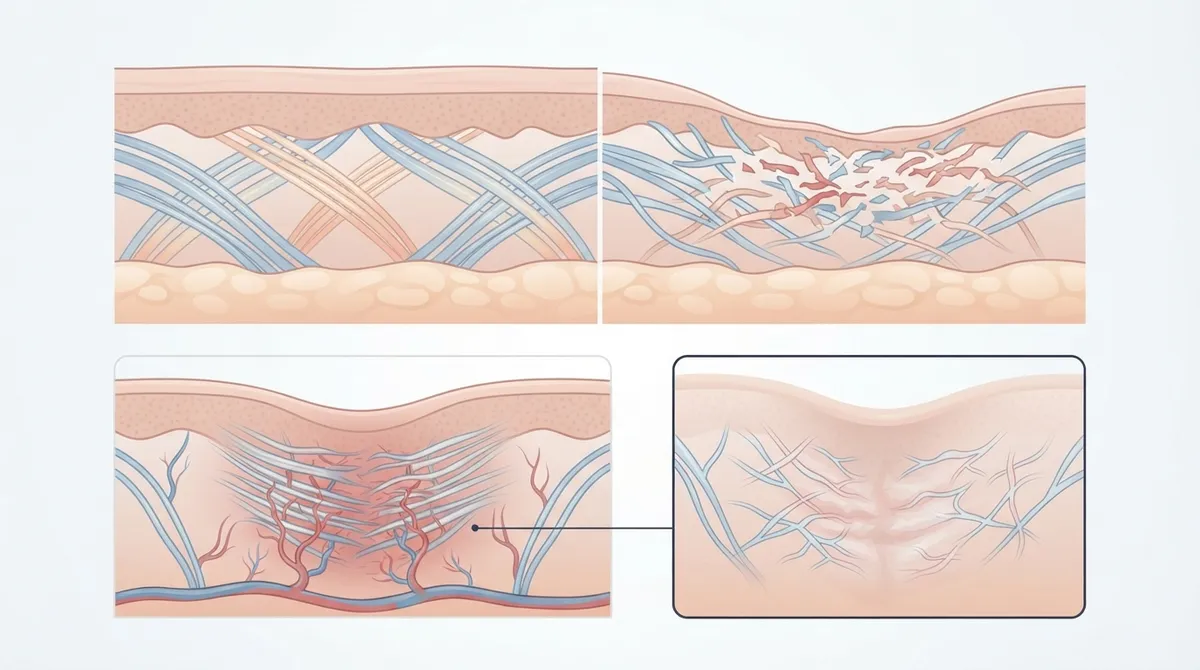
Stretch marks, called striae distensae in medical terms, are small scars in the dermis. That is the layer of skin below the surface. They form when skin stretches fast and the collagen and elastin fibers change.
Common triggers include:
Because they are true dermal scars, no cream can wipe them out. That is why professional treatments focus on remodeling the skin rather than “removing” the marks.
Not all stretch marks are the same, and the type matters.
Newer marks may respond better to some treatments. Older marks can still improve, but the changes are often more modest. A trained provider can tell which stage you have and plan around it.
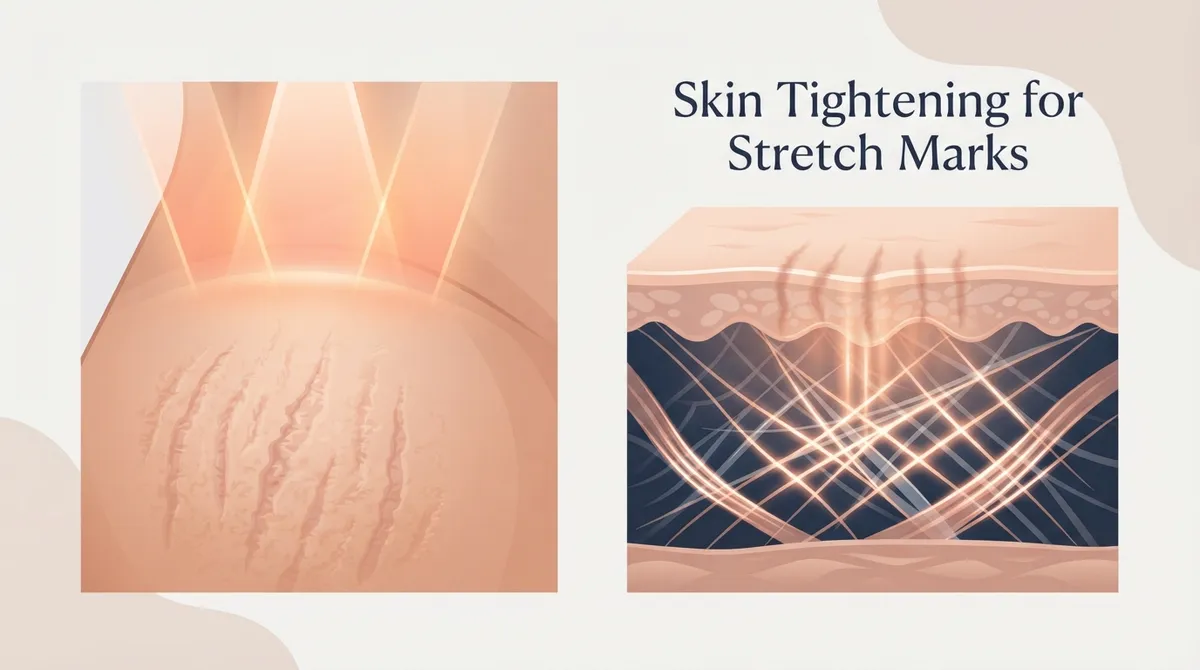
In a med spa, skin tightening for stretch marks usually means treatments that trigger the skin to repair itself. The goal is to improve texture, firmness, and color. It is not to pull the skin tight like a facelift.
These tools work by creating tiny, controlled “micro-injuries” in the skin. Your body responds by making fresh collagen. Over several weeks, that can soften the look of a mark.
The main options are:
Each one has strengths. Let’s break them down.
Microneedling uses very fine needles to make tiny channels in the skin. This kicks off your natural healing process and collagen production. It is a well-known option for texture concerns, and it is often a good place to begin.
If you want to learn more about how it works, our guide to microneedling covers the basics. You can also explore our SkinPen microneedling service.
A 2024 systematic review of 11 studies looked at microneedling for stretch marks. It included six randomized controlled trials and five non-randomized studies. The review found microneedling was broadly comparable to laser treatments in effectiveness. It also reported less post-inflammatory hyperpigmentation (PIH), which is dark discoloration after skin injury. The trade-off was that microneedling caused more treatment discomfort than laser.
Microneedling RF adds heat energy to the needle treatment. The needles go into the skin, and radiofrequency warms the deeper layers. This extra heat may boost collagen remodeling and firmness.
This is the option most people picture when they think of “tightening.” Our guides on Morpheus8 and skin tightening and RF microneedling explain the technology in plain language. We also share how it compares to the classic version in Morpheus8 vs. traditional microneedling. You can even read about Morpheus8 for stretch marks specifically.
A 2020 network meta-analysis reviewed 14 trials with 651 participants. It estimated that bipolar RF combined with topical tretinoin had the highest probability of favorable clinical results (84.5%) and patient satisfaction (95.7%). Bipolar RF alone came next (75.3% and 84.3%). These are ranking probabilities, not a promise that a set percent of people will improve. The authors also called for larger, better-quality trials.
Fractional lasers treat tiny columns of skin and leave the tissue between them untouched. That speeds healing and still sparks collagen renewal. There are two main types:
In the same 2020 analysis, fractional CO₂ laser had a 72.0% estimated probability of ranking highest for clinical effectiveness and 58.1% for patient satisfaction among the lasers compared.
If you are curious about laser basics, see our overview of CO2 laser for skin rejuvenation. For planning your time off, our post on CO2 laser downtime is a helpful read. You can also see the DEKA treatment page for another laser option.
Here is the honest answer: no single treatment is proven best for everyone. The studies are fairly small and use different settings, so results vary. Several recent reviews compared the top options head to head.
| Study | What It Compared | Key Finding |
|---|---|---|
| 2024 meta-analysis | Microneedle RF vs. fractional CO₂ laser | No significant difference in clinician-rated (OR 1.27) or patient-rated (OR 0.72) improvement. PIH was less frequent with microneedle RF (OR 0.24). |
| 2024 systematic review | Microneedling vs. laser | Comparable effectiveness (P = 0.35). Less PIH with microneedling, but more treatment pain. |
| 2025 meta-analysis (6 trials, 166 patients) | Fractional CO₂ vs. microneedling | Over 70% of patients improved with either. No significant difference in improvement (RR 0.97). PIH was higher with CO₂ (RR 8.37), though the wide confidence interval calls for caution. |
| 2020 network meta-analysis | Multiple therapies, 14 trials | Bipolar RF, especially with tretinoin, and fractional CO₂ ranked well. Larger trials are still needed. |
The big takeaway? These treatments often perform similarly. So the smarter question is not “which is strongest?” but “which is safest and best suited to my skin and schedule?”
This is one of the most important parts of choosing a treatment. Deeper skin tones are more prone to post-inflammatory hyperpigmentation. That means a dark patch can appear after the skin heals from irritation or injury.
The research hints that microneedling and microneedle RF may carry a lower PIH risk than ablative CO₂ laser. But “lower risk” is not “no risk.” Your provider should review your skin phototype, past scarring, and sun habits before picking a device and settings.
If pigment is already a worry for you, our guide to hyperpigmentation treatments may help.
Every plan is personal, but most journeys look something like this:
Most side effects are mild and temporary. Still, you deserve the full picture:
Ablative lasers can mean more downtime and a higher pigment risk. Sun protection before and after treatment helps a lot. Our article on living well in the desert without wrecking your skin has easy tips, which matter in sunny Nevada.
Many people ask about stretch marks right after having a baby. It is a great time to start thinking about a plan, but safety comes first. A qualified medical professional should check your pregnancy and breastfeeding status before any treatment. Topical tretinoin, for example, is generally avoided during pregnancy.
For new moms, our post on postpartum body rejuvenation offers more ideas. Be kind to yourself, too. Your body just did something amazing.
Treatments work best when your daily routine backs them up. A few easy habits can help:
Supportive skin care can also help the whole process. See our look at collagen benefits for skin and how to improve skin texture for more.
Here is the heart of it. Skin tightening for stretch marks can make marks softer, smoother, and less noticeable. It usually cannot remove them completely. The best results tend to come from a thoughtful plan and a few sessions, not a single visit.
Your goals might be a little different than your neighbor’s, and that is okay. Some people want smoother texture. Others want less color contrast. Some just want to feel more at ease in a swimsuit. All of those are valid.
If you want to explore the bigger picture of firming options, read our roundup of skin tightening treatments. If you are weighing scar options more broadly, scar treatments that fade scars is worth a look.
Finding a clinic you trust matters as much as the device itself. At Enhanced Aesthetics & Wellness in Pahrump, Nevada, our mission is to enhance your natural beauty and support your well-being with customized treatments. We offer Morpheus8, SkinPen microneedling, and a range of laser options, so your plan can match your skin and your comfort level.
We believe in honest talk. That means telling you what a treatment can and cannot do. If you are unsure how to pick a provider, our checklist on mistakes to avoid when picking an aesthetic wellness clinic can help you ask the right questions. You can also Visit us on Google — Enhanced Aesthetics & Wellness to see what our Pahrump clients say.
Stretch marks are a normal part of being human. If they bother you, you have real options, and you do not have to rush into anything. A simple conversation is a great first step.
When you are ready, contact us with your questions, or book an appointment for a personal skin consultation in Pahrump. We will look at your marks, talk through your goals, and build a plan that feels right for you. You can also stay connected on our Instagram for tips and updates.
For a deeper look at the science, you can read the open-access 2020 network meta-analysis on stretch mark therapies from the National Library of Medicine. And remember, a medical professional should always review your health history before treatment.
Q: Can skin tightening treatments remove stretch marks completely?
A: Not usually, and we love being upfront about that. Stretch marks are dermal scars, so treatments like microneedling, RF, and fractional lasers aim to soften their look and texture rather than erase them. Many people see nice improvement with a series of sessions.
Q: Which works better, microneedling RF or fractional CO₂ laser?
A: Research so far shows they perform quite similarly. A 2024 meta-analysis found no significant difference in improvement, though pigment changes were less frequent with microneedle RF. The best choice depends on your skin tone, downtime, and comfort level.
Q: Do red or white stretch marks respond better to treatment?
A: Newer red or purple marks may respond better to some treatments than older white ones. White marks can still improve, but changes are often more modest. A provider can check your marks and suggest a realistic plan.
Q: How many sessions will I need for stretch marks?
A: Treatment is commonly done as a series, with sessions spaced several weeks apart. The exact number depends on the device, your skin type, and the marks themselves. Studies use many different protocols, so your provider will tailor a plan just for you.
Q: Can I treat stretch marks while pregnant or breastfeeding?
A: It is best to wait and talk with a medical professional first. Your pregnancy and breastfeeding status matter for safety, and some products, like tretinoin, are generally avoided during pregnancy. Once it is safe, we can happily build a plan together.
Find aesthetic services in Pahrump open now. Learn hours, treatments, and how Enhanced Aesthetics & Wellness fits same-day visits.

Learn the real science behind Carbs at Night. Separate myths from facts and make confident nutrition choices today.
